
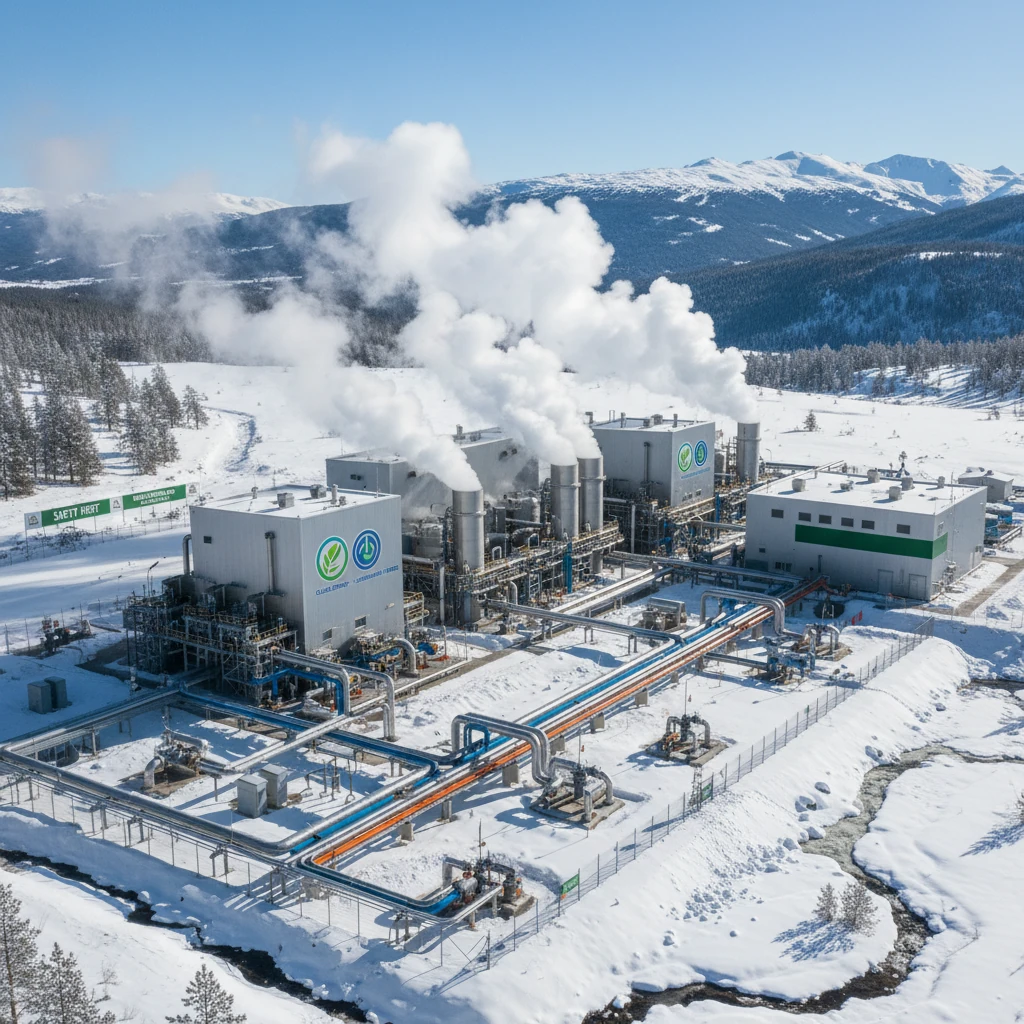
Iran’s First Geothermal Power Plant Nears Grid Connection – A Milestone in Clean Energy and HSE Enhancement
Iran’s first geothermal power plant, located in Meshgin Shahr, Ardabil Province, is on the verge of connecting to the national electricity grid — a landmark project that not only advances renewable energy development but also strengthens safety, health, and environmental (HSE) standards in the energy sector.
According to the Ministry of Energy, Behnam Khaefinejad, project manager for steam power plants at the Thermal Power Generation Company, announced the successful reactivation of the country’s first geothermal well and extraction of geothermal steam. Despite harsh weather conditions of –15°C, the installation and commissioning progress of the Meshgin Shahr geothermal plant has exceeded 95%, and the facility will soon enter operational phase.
Over 650 billion tomans have been invested in this project, covering drilling, well cleaning, plant construction, and infrastructure work. The plant, designed as a pilot project, is located above a geothermal reservoir with an estimated production capacity of 250 MW of electricity.
Khaefinejad emphasized that strict HSE protocols have been implemented throughout all drilling and operation stages, including thermal fluid safety, steam containment, wastewater management, and environmental protection. He noted that geothermal technology eliminates fossil fuel usage, minimizes greenhouse emissions, and significantly reduces both occupational and ecological hazards compared to conventional power plants.
He added that the project has enabled Iran to acquire essential expertise in geothermal resource exploration, design, and sustainable operation. It marks progress toward clean, renewable energy expansion and regional economic development — including potential eco-tourism around geothermal sites.
The next stage will aim to increase production capacity, expand the geothermal reservoir exploitation, and replicate similar plants in other suitable regions of the country.
Situated 25 kilometers south of Meshgin Shahr, the plant represents a key step in achieving energy sustainability, climate responsibility, and enhanced HSE performance nationwide.
In geothermal power generation, the process resembles that of steam turbine plants — except that the heat used to produce steam comes from the Earth’s natural thermal energy rather than fossil fuels such as gas or diesel.
This approach plays a crucial role in reducing carbon emissions, improving HSE compliance, and fostering sustainable energy for future generations.
the end ✅
- source:https://www.ilna.ir/
- author:DGS
- 1404/10/02