
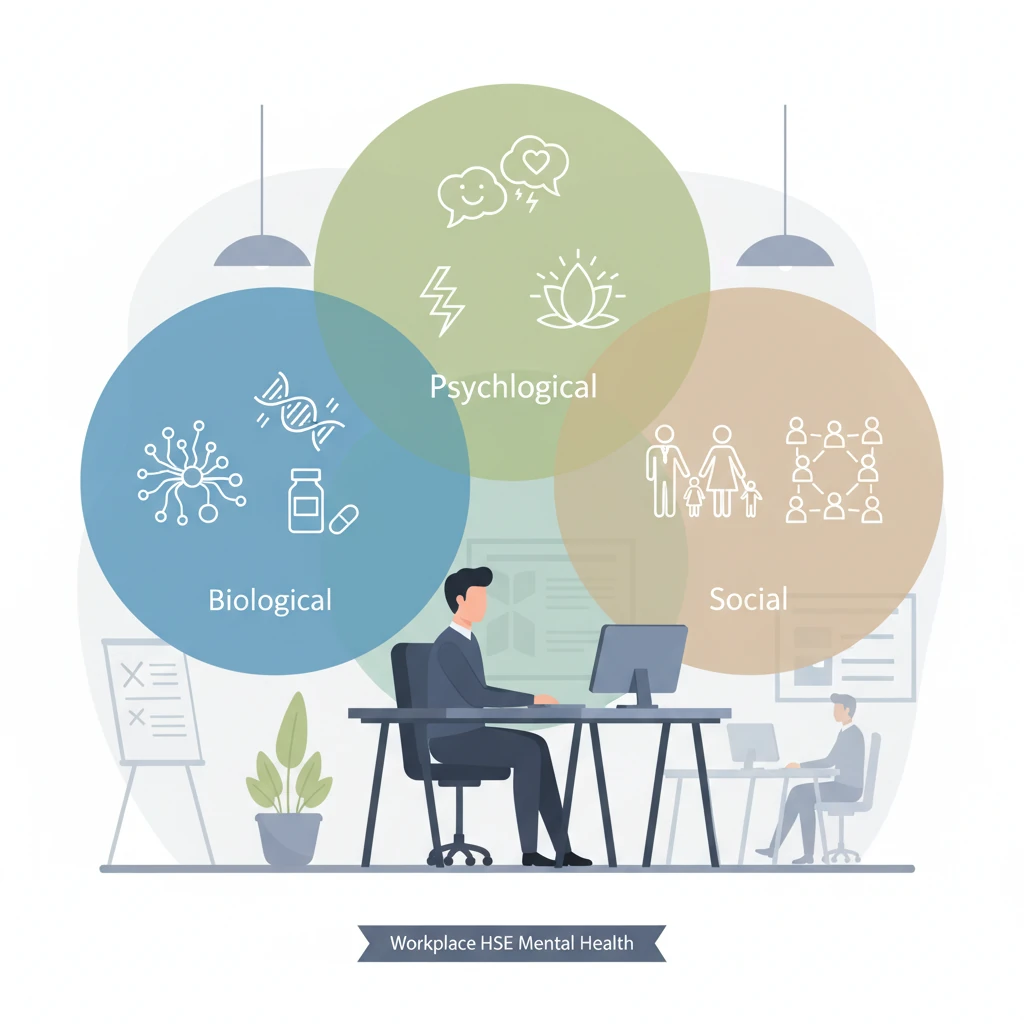
The Interconnection of Biological, Psychological, and Social Factors with Mental Health and Occupational Safety
According to the News Agency of Health and Safety Advocates for the Workforce, quoting ILNA and Webda, Ali-Akbar Esmaili, a psychiatry specialist, emphasized the importance of a comprehensive approach to mental health and stated: Biological, psychological, and social factors simultaneously interact and collectively influence individuals’ mental health. Ignoring any of these dimensions may result in serious personal and organizational consequences.
Referring to the role of environmental stressors, family issues, and the quality of social relationships, he added: Chronic psychological pressures—particularly in high-stress work environments—can contribute to the onset or exacerbation of mental disorders. In this context, individuals’ perceptions of surrounding events and the way they assign meaning to life experiences serve as key psychological factors that significantly affect resilience and vulnerability to mental distress.
Highlighting the HSE (Health, Safety, and Environment) perspective, Esmaili noted: Within HSE management systems, employees’ mental health is a fundamental pillar in preventing occupational accidents, reducing human error, and improving productivity. Assessing mental health without considering working conditions, management styles, job security, and social support in the workplace leads to incomplete and ineffective analyses.
He further stated that mental health is not an abstract concept but is directly reflected in daily functioning—from sleep quality, appetite, personal hygiene, and marital relationships to professional, academic, and social interactions. Any noticeable change in these indicators may serve as a warning sign of emerging mental disorders and reduced individual safety, particularly in sensitive occupational settings.
Esmaili added that decreased job performance, frequent absenteeism, rising workplace and family conflicts, and declining social interactions are among the consequences of neglecting mental health. These issues not only affect individuals but also place organizations at risk by increasing the likelihood of workplace accidents.
In conclusion, the psychiatry specialist emphasized that in many cases, improving work environments, reducing stress-inducing factors, utilizing social work support services, psychological counseling, and problem-solving skills training can significantly enhance mental well-being. However, in certain cases, more specialized interventions such as pharmacological treatment to regulate brain chemistry are essential and should be considered an integral part of a comprehensive workforce health and safety program.
- source:HSENK
- author:DGS
- 1404/10/05