Air Pollution Crisis: A Serious Threat to Public Health and Safety
The Necessity of HSE-Oriented Governance to Reduce Mortality and Economic Losses
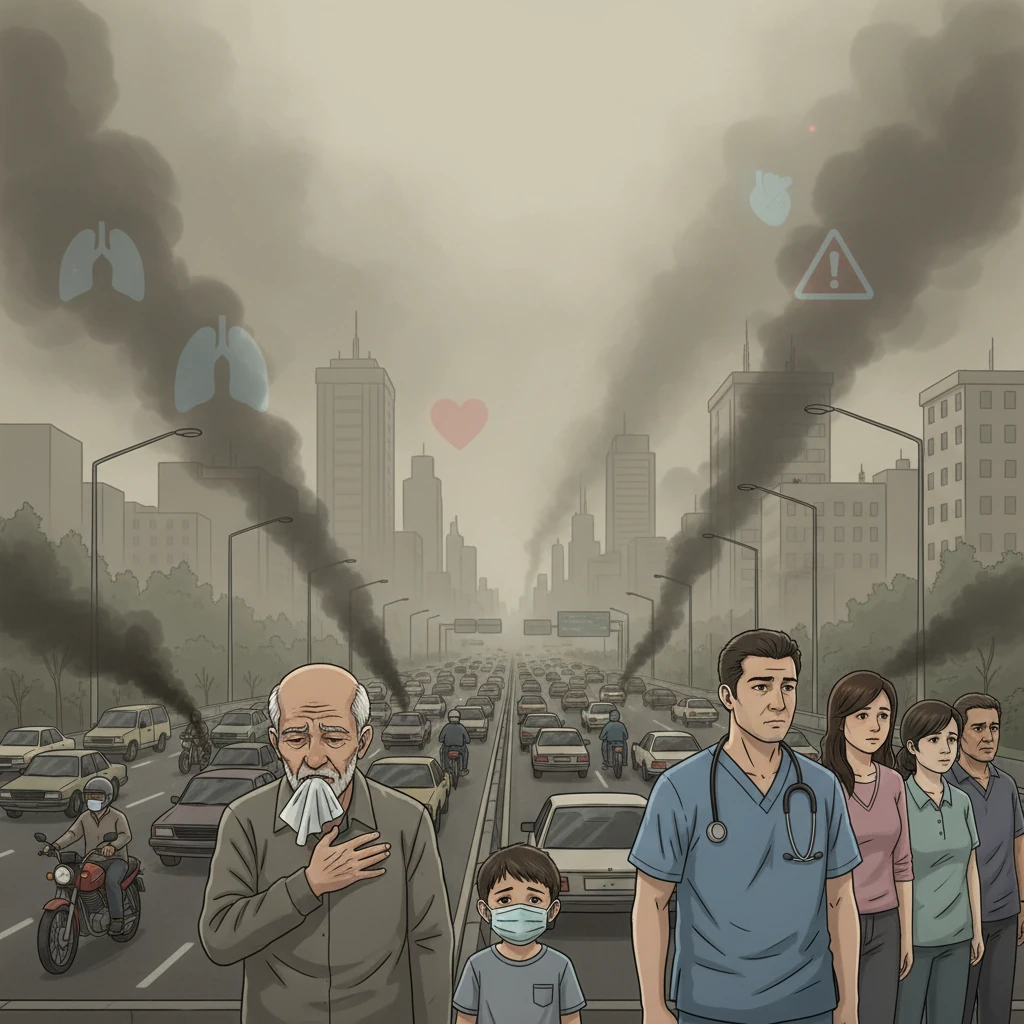
The Deputy Minister of Health, warning about the widespread consequences of air pollution on public health, stated that approximately 57,000 premature deaths and over $18 billion in economic losses are attributed annually to this environmental issue in the country—a figure that underscores the urgent need for a scientific, systematic, and HSE-based approach.
According to ILNA, Dr. Alireza Raeisi, at the “Health Discourse: Polluted Air, Causes, Consequences, and Solutions” meeting, emphasized that air pollution is one of the most significant Health, Safety, and Environment (HSE) risks in Iran. He noted: “This crisis is the product of decades of misguided decisions and patterns, and today it seriously threatens public health, especially vulnerable groups such as the elderly, children, and patients with chronic conditions.”
Air Pollution: A Chronic HSE Risk and a Threat to the Health of Workers and Citizens
Referring to the global nature of air pollution, he added: “Although this phenomenon is not limited to Iran, managing it will not be possible without establishing scientific governance, risk assessment, long-term planning, and decisive policy implementation. From an HSE perspective, air pollution is a chronic and pervasive risk that affects not only citizens’ health but also workforce productivity and occupational safety.”
Global Experiences and the Role of Clean Technologies
The Deputy Minister of Health, citing the experiences of leading countries in air pollution management, said: “In metropolises like Shanghai, gasoline motorcycles have been completely phased out, and the share of electric vehicles in urban transportation has increased significantly. In Iran, a considerable portion of pollutants comes from motorcycles and aging vehicles—an issue that doubles the necessity to accelerate scrapping and fleet replacement programs.”
Raeisi described the development of clean energy as a key HSE strategy and added: “Utilizing solar panels, expanding electric transportation, and reducing dependence on fossil fuels can simultaneously reduce pollutants, improve public health, and move toward a green economy. With over 250 sunny days a year, Iran has high potential for harnessing solar energy.”
Human and Economic Costs and the Gap in Law Enforcement
Emphasizing the heavy burden of air pollution on the country’s health system, he stated: “Approximately 57,000 deaths are attributed annually to air pollution, and particulate matter smaller than 2.5 microns plays a significant role in causing cardiovascular, respiratory, and even cancer diseases. The economic damage of this situation is also estimated at between 17and18 billion per year—a warning and unforgivable figure from an HSE management perspective.”
The Deputy Minister of Health, referring to the Clean Air Law, clarified: “This law is comprehensive in content and based on health and environmental principles, but the main challenge lies in its implementation. Revenues from environmental fines should be purposefully allocated to reducing pollutants, preventing diseases, and compensating for health damages.”
Health: The Red Line of Sustainable Development
Raeisi concluded by emphasizing the priority of health in macro decision-making: “Industrial development and job creation without considering HSE requirements are not justifiable. Government actions in the field of electric vehicle development, scrapping aging vehicles, and expanding clean energy are signs of a supportive and responsible approach toward public health.”
He noted: “Effectively combating air pollution requires coordinated participation from the government, the private sector, and the general public. Only through a scientific, systematic, and HSE-oriented approach can this national risk be controlled and the continuation of human and economic losses be prevented.”
- source:https://www.ilna.ir/
- author:DGS
- 1404/10/08