
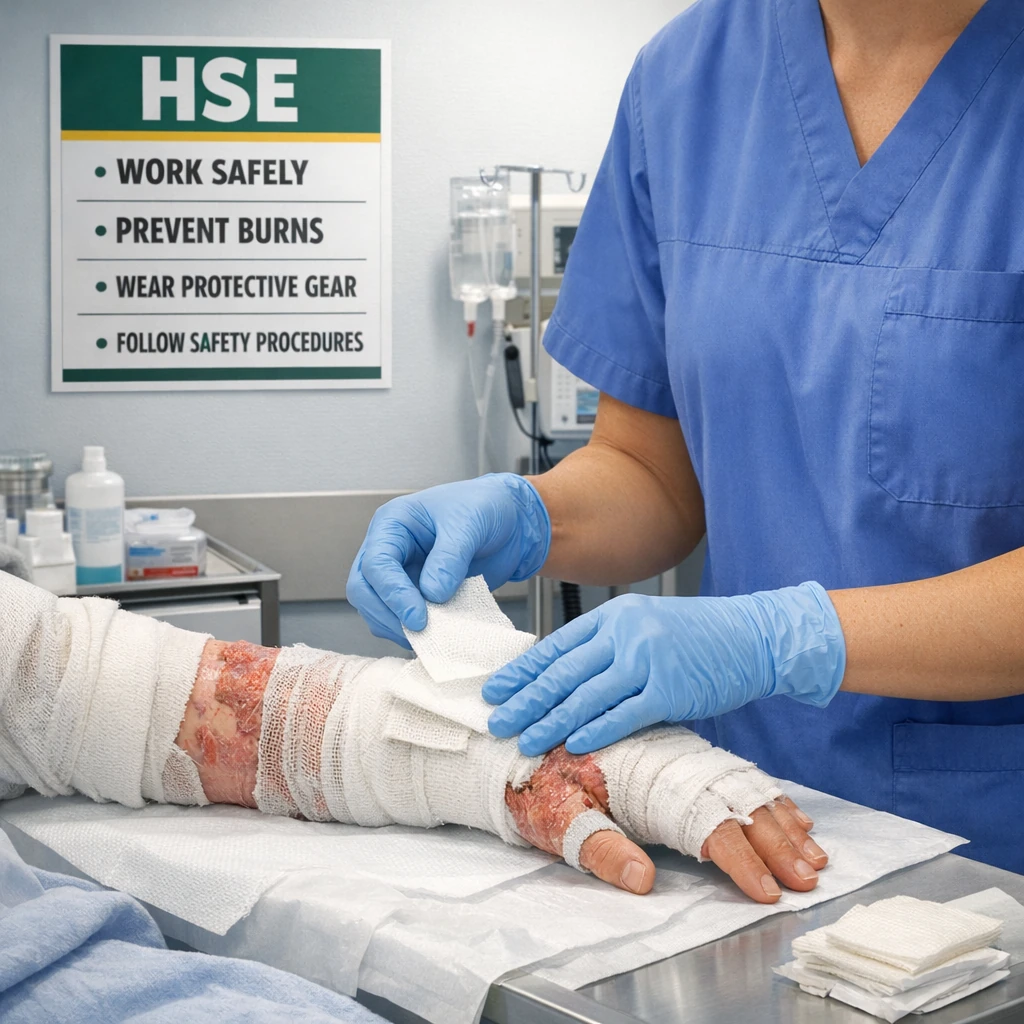
Gaps in Insurance Coverage for Burn Treatment: A Serious Challenge to National HSE Management
The treatment of burn victims is considered one of the most costly and complex areas within the healthcare and safety system. According to medical officials, this sector still faces structural shortcomings in insurance coverage for essential equipment and supplies, particularly specialized burn garments—an issue that can have serious consequences for patient health, rehabilitation, and return to work.
Speaking at a press conference held at the Ministry of Health, Mostafa Deh-Mordeh’i, Head of Shahid Motahari Burn Injury Hospital, emphasized that burn treatment is not limited to hospitalization alone. It encompasses a wide range of specialized services, including medical equipment, protective garments, intensive care, psychiatric services, social work support, physiotherapy, and long-term rehabilitation. However, low government tariffs and limited financial resources have placed additional pressure on both medical centers and patients.
Referring to health equity and regional HSE concerns, he noted that patients from provincial areas face greater challenges due to the shortage of specialized facilities, often forcing families to assume a significant share of the caregiving and financial burden.
Deh-Mordeh’i announced the launch of the new Shahid Motahari Burn Hospital, featuring 160 dedicated beds. He stated that the hospital has been designed in accordance with standards used in leading European burn centers and is capable of admitting up to twice its nominal capacity. In emergency situations, the facility can serve as Tehran’s central burn crisis center, providing advanced burn care services.
According to him, most of the required equipment has already been procured, and only limited budget allocations remain for final completion. With independent operating rooms for each bed, specialized intensive care units, and a comprehensive approach addressing both physical and psychological treatment, the hospital is approaching international standards and is expected to significantly reduce burn-related mortality—an issue of particular importance in HSE and emergency management frameworks.
The head of Shahid Motahari Burn Hospital identified low surgical tariffs in the public sector as a major challenge, warning that this situation discourages future generations of surgeons and nurses from entering the burn care field. If unaddressed, it could pose a serious threat to the sustainability of specialized human resources.
He also highlighted the high rate of occupational burnout among burn unit nurses, noting that constant exposure to severe pain, bleeding, and psychological stress leads many to seek opportunities in less demanding sectors or in private and cosmetic medicine. This trend directly affects patient safety and the quality of care.
Deh-Mordeh’i further stressed the critical importance of post-discharge rehabilitation, explaining that burn patients require continued treatment at specialized centers after hospitalization. These services include physiotherapy, laser therapy, psychotherapy, and, in some cases, reconstructive surgeries to help patients regain functional ability and resume normal social and working lives—an integral component of modern HSE approaches and safe return-to-work programs.
Deh-Mordeh’i further stressed the critical importance of post-discharge rehabilitation, explaining that burn patients require continued treatment at specialized centers after hospitalization. These services include physiotherapy, laser therapy, psychotherapy, and, in some cases, reconstructive surgeries to help patients regain functional ability and resume normal social and working lives—an integral component of modern HSE approaches and safe return-to-work programs.
However, Deh-Mordeh’i emphasized that specialized burn medications are still not covered by insurance, though follow-up efforts are ongoing. He added that burn protective garments also remain uninsured, despite the fact that each set costs between 5 and 40 million tomans, depending on type and application—underscoring the urgent need for policy revisions in insurance coverage and preventive HSE strategies.
author: DGS
- source:HSENK
- 1404/10/08