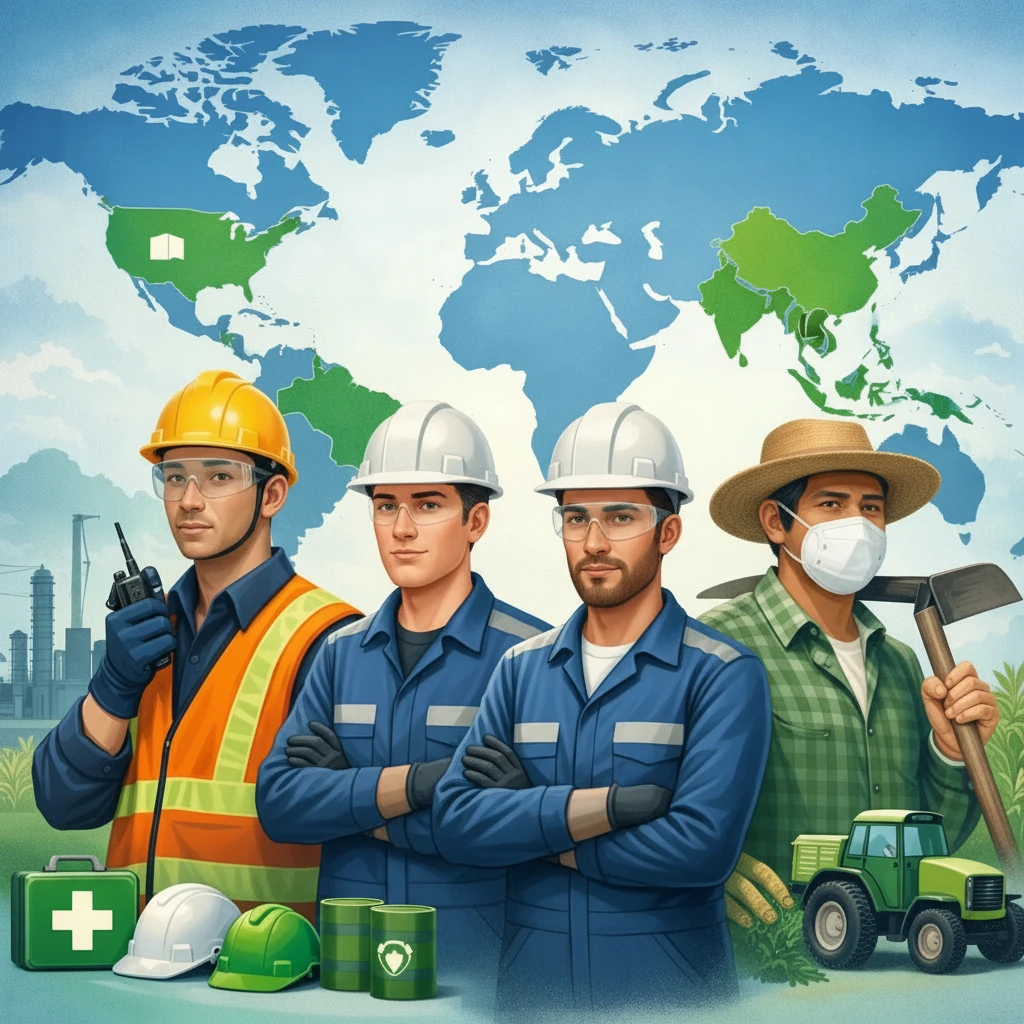
Countries with the Largest Workforces in the World: Opportunities and HSE Challenges in the Global Labor Market
In today’s world, the workforce is recognized as one of the most fundamental pillars of sustainable development, playing a decisive role in economic growth, industrial productivity, and social stability. A review of global statistics indicates that the concentration of labor forces in certain countries—particularly across Asia—not only represents an economic advantage but also presents significant challenges and requirements in the field of Health, Safety, and Environment (HSE).
China: The World’s Largest Workforce on the Path Toward Safety Transformation
With more than 780 million active workers, China ranks first globally in terms of workforce size. The extensive development of heavy industries, mining, construction, and manufacturing facilities has exposed the country to elevated occupational risks. In recent years, the Chinese government has sought to reduce workplace accidents and occupational diseases by reforming labor safety regulations, digitizing HSE monitoring systems, and expanding safety training programs.
India: Large-Scale Employment with Occupational Health Challenges
India, with approximately 520 million workers, is the second-largest country in terms of active labor force. The high share of employment in the informal sector, agriculture, and small workshops represents one of the main HSE challenges in the country. Occupational safety experts believe that inadequate insurance coverage, insufficient training, and the lack of standard personal protective equipment are among the primary causes of workplace accidents in India.
United States: Organized Workforce with Advanced HSE Standards
The United States, with around 165 million active workers, has a smaller labor force compared to China and India; however, it maintains a high level of development in HSE management systems. The presence of regulatory bodies such as OSHA, continuous workplace inspections, and strict employer obligations to comply with safety and health standards have contributed to a relative reduction in workplace incidents and improved workforce well-being.
Indonesia and Brazil: Emerging Economies and the Need to Strengthen Occupational Safety
Indonesia and Brazil, each with labor forces exceeding 100 million workers, are considered emerging global economies. Rapid growth in industrial activities, infrastructure projects, and the service sector in these countries requires the parallel development of strong HSE cultures. Imbalances between the pace of economic growth and the implementation of safety systems may increase the risk of occupational accidents and environmental consequences.
HSE Dimensions in Countries with Large Workforces
High concentrations of labor without sound HSE planning can lead to irreversible consequences. Key considerations in this regard include:
- Increased workplace accidents in high-risk industries
- The spread of occupational diseases and workforce fatigue
- Environmental pressure caused by industrial and service activities
- Rising social and healthcare costs for governments
conclusion
An examination of countries with the largest workforces in the world demonstrates that a large working population, alongside economic opportunities, requires intelligent and integrated HSE management. The successful experiences of countries that have aligned economic growth with improvements in workforce safety and health confirm that investing in HSE is not a cost burden, but rather a guarantee of sustainable development, reduced incidents, and enhanced national productivity.
Under current global conditions, the attention of policymakers, employers, and industry managers to the safety and health of the workforce as a nation’s most valuable asset is more essential than ever.
author: DGS
- source:HSENK
- 1404/10/09