
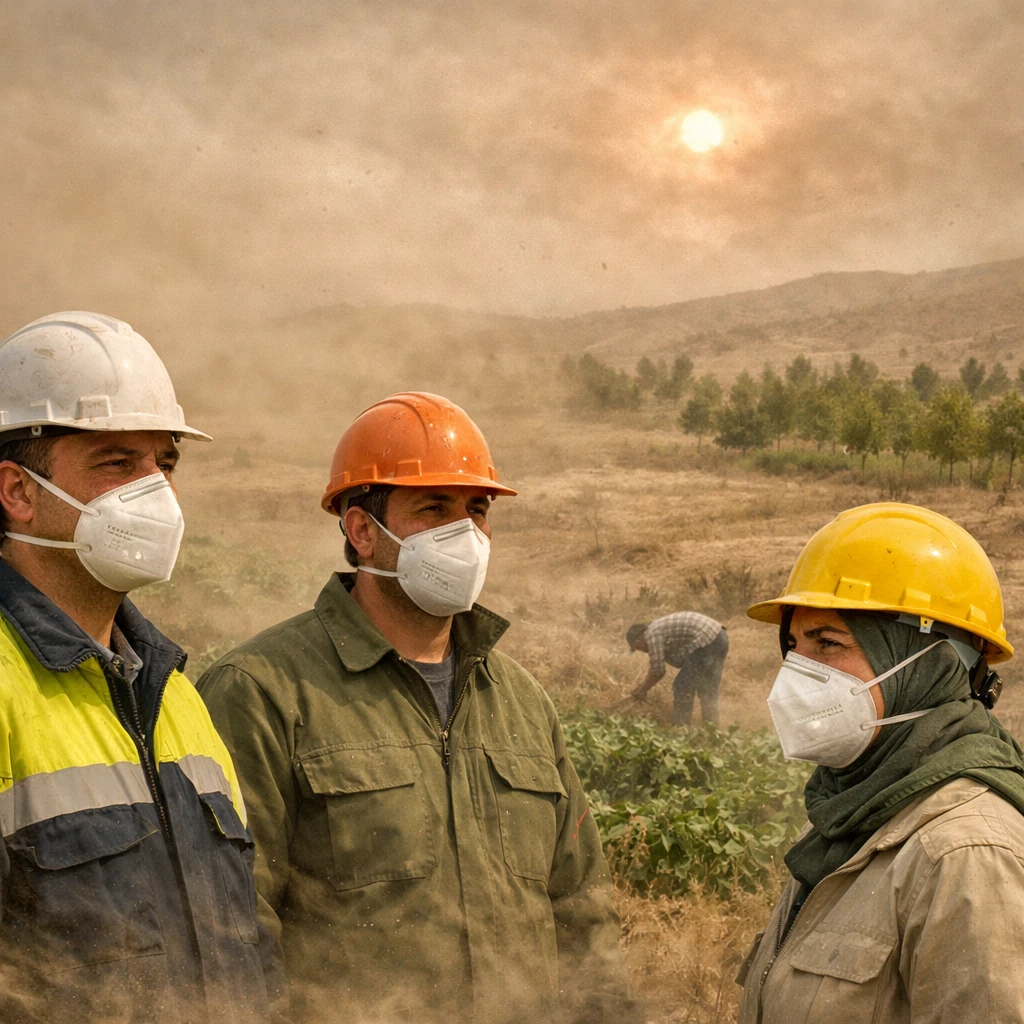
HSE Warning on the Dust Storm Crisis in Golestan: Public Health Threat Driven by Transboundary Sources and Intensified by Local Climate Impacts
In recent months, Golestan Province has been facing one of its most serious environmental and health-related challenges: dust storms. According to expert assessments, this phenomenon has severely affected air quality, public health, occupational safety, agriculture, and the sustainability of natural ecosystems across the province. Studies indicate that approximately 85 percent of the dust affecting Golestan originates from transboundary sources, mainly from active dust hotspots in the Karakum Desert of Turkmenistan, while only 15 percent is attributed to internal sources.
From an HSE (Health, Safety, and Environment) and environmental risk management perspective, the complexity of this crisis lies in the coincidence of transboundary dust inflows with aggravating local factors. A severe and unprecedented decline in precipitation in the northern parts of the province over recent years has weakened soil structure, led to the loss of significant vegetation cover, and increased the vulnerability of rangelands to wind erosion. These conditions amplify the adverse impacts of incoming dust on air quality and public health.
Environmental and occupational health experts warn that the continuation of this situation could result in serious consequences, including an increase in respiratory diseases, reduced horizontal visibility, disruptions to road and air transportation, damage to agricultural production, and threats to occupational safety, particularly for outdoor workers, farmers, and livestock breeders.
In this regard, the Director General of Natural Resources and Watershed Management of Golestan Province, in an interview with ILNA, emphasized the environmental and health dimensions of the issue, stating that more than 85 percent of the dust affecting the province currently originates from external sources, with only a limited share coming from internal hotspots. However, he noted that the sharp decline in rainfall in northern Golestan has led to the loss of a substantial portion of vegetation cover, thereby intensifying the impacts of dust storms.
Ali-Asghar Nikouei highlighted preventive and control measures aligned with HSE principles, adding that watershed management projects, regulated grazing management, and the cultivation of drought-resistant plant species are being implemented to reduce environmental damage and control domestic dust sources. These measures play a critical role in soil stabilization, reducing wind erosion, and enhancing the resilience of natural ecosystems.
He described the national public campaign to plant one billion trees as a strategic capacity to counter dust storms, stating that restoring vegetation is not only an environmental action but also a preventive HSE measure to reduce health and safety risks associated with airborne dust. In this context, the wood cultivation program is being actively pursued in Golestan, and from 2008 to the end of 2024, more than 5,000 hectares of land have been planted with fast-growing species such as poplar.
Nikouei further reported that 580,000 rangeland seedlings have been produced since the beginning of the current year and will be planted across 950 hectares of land in the province, 700 hectares of which will be implemented through participatory projects involving local communities and the private sector. This participatory approach, within the framework of social responsibility and stakeholder engagement, plays a crucial role in the sustainable protection of natural resources.
According to the Director General of Natural Resources, Golestan Province has 862,000 hectares of rangelands, including 101,000 hectares classified as high-quality summer rangelands. Protecting these areas, from an HSE perspective, is vital for preventing desertification, controlling dust storms, and safeguarding ecosystem and community health.
Experts emphasize that achieving sustainable control of dust storms in Golestan requires integrating domestic policies with regional environmental diplomacy, strengthening vegetation cover, implementing smart water resource management, and institutionalizing the HSE approach in development planning. Such a comprehensive strategy can prevent the escalation of environmental and health-related risks in the coming years.
- منبع: حامیان سلامت وایمنی نیروی کار
- author:DGS
- 1404/10/15