
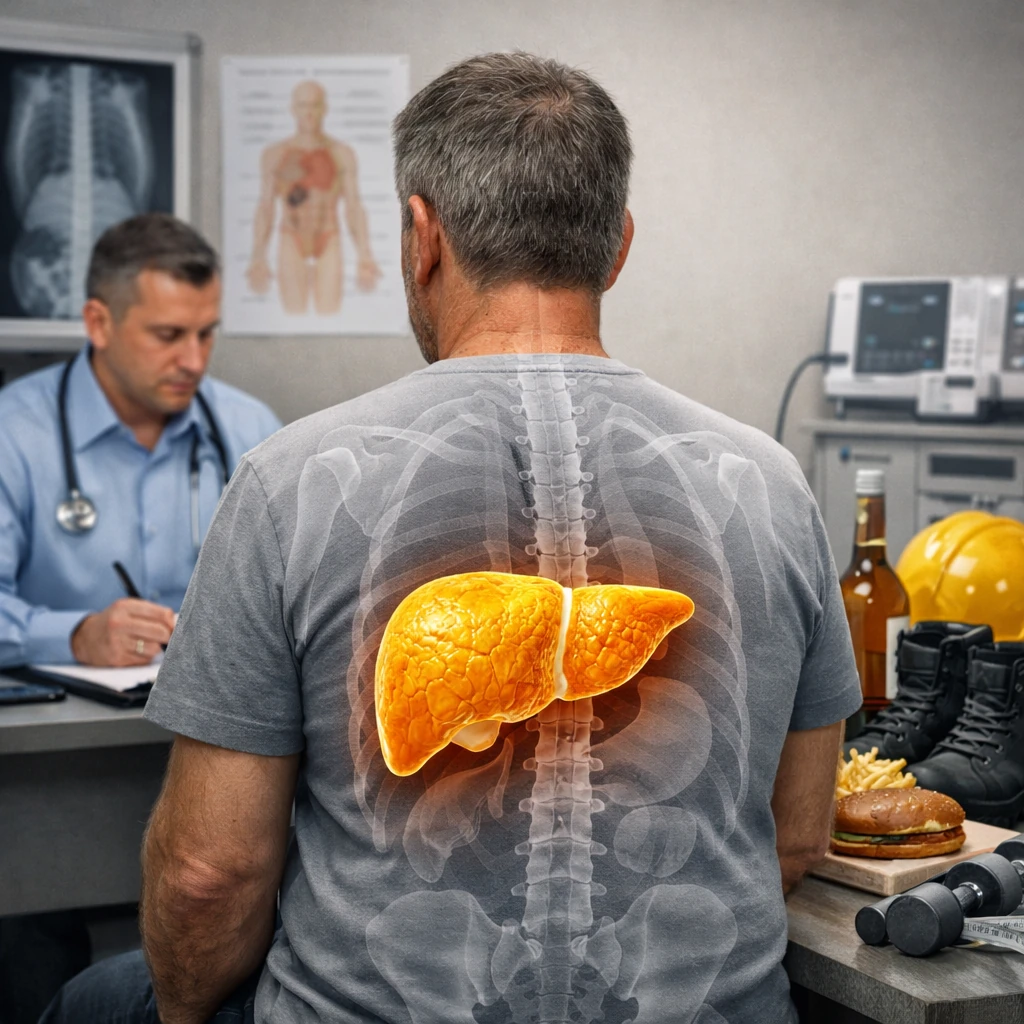
A Silent Disease Threatening Workforce Health
Fatty Liver Disease; A Hidden Risk Factor for Occupational Health and Cardiovascular Events
Many people—and even a large proportion of the working population—are unaware that they are affected by one of the most common yet dangerous non‑communicable diseases. This condition may remain asymptomatic for years, but in reality it can significantly reduce life expectancy, work capacity, and occupational safety.
According to a report by Mehr News Agency, fatty liver disease is recognized as the most prevalent liver disorder, affecting a substantial segment of Iran’s population. A large number of patients remain undiagnosed while continuing to work in low‑mobility or high‑risk occupational environments.
📊 Concerning Dimensions of an Occupational Health Challenge
Dr. Reza Malekzadeh, Head of the Digestive Diseases Research Institute at Tehran University of Medical Sciences, stated:
Approximately 30% of Iran’s population and nearly 35% of Tehran’s residents suffer from fatty liver disease. In many cases, the first serious clinical manifestation is a heart attack or stroke.
He emphasized that fat accumulation is not limited to the liver; it also deposits in the blood vessels of the heart and brain, significantly increasing the risk of cardiovascular incidents—an issue of critical importance from an HSE and workforce safety perspective.
🚨 Increased Risk of Occupational Incidents and Reduced Work Capacity
According to this specialist, the risk of heart attack in individuals with fatty liver disease is around ten times higher than in healthy individuals. The disease can also lead to kidney failure, reduced concentration, chronic fatigue, and decreased job performance, all of which may elevate the likelihood of human error and workplace accidents, particularly in industrial and operational settings.
🩺 Health Surveillance Beyond Liver Enzyme Tests
Dr. Malekzadeh noted that fatty liver disease is often painless and symptom‑free, stressing that:
- Normal liver enzyme levels do not rule out fatty liver disease
- Individuals with abdominal obesity, excess weight, or a sedentary lifestyle should undergo ultrasound screening
- Monitoring blood pressure, blood glucose, and blood lipids—especially LDL cholesterol—is essential in occupational health surveillance programs
🏃♂️ Lifestyle Modification: A Key HSE Strategy
The Head of the Digestive Diseases Research Institute identified regular physical activity as the most effective treatment, stating:
For fatty liver disease, exercise is even more important than diet. At least 30 minutes of effective physical activity, five days a week, sufficient to cause sweating and increased heart rate, is strongly recommended.
He also referred to major lifestyle changes in Iran, including:
- An increase in average daily calorie intake from 2,000 to nearly 3,000 calories
- Reduced physical activity due to mechanized living and reliance on elevators
- Physical inactivity in nearly 90% of the population and overweight or obesity in about 70%
These factors play a major role in the rising prevalence of fatty liver disease and pose a serious threat to public and occupational health.
🍞 High‑Risk Dietary Patterns
According to Dr. Malekzadeh, rice, bread, potatoes, and sweets are among the main food groups contributing to fatty liver disease. He added that moderate fat consumption alone does not cause fatty liver disease.
✅ HSE Conclusion
Fatty liver disease is a silent but costly condition for individuals, organizations, and the healthcare system.
Through regular exercise, weight reduction, dietary modification, and proper control of blood pressure and lipid levels, it is possible to effectively prevent:
- Cardiovascular complications
- Reduced work capacity and productivity
- Increased occupational accidents and early disability
effectively prevent
Even in the absence of symptoms, liver health should be assessed. Prevention remains the cornerstone of HSE.
- source:https://www.mehrnews.com/
- author:DGS
- 1404/11/20