
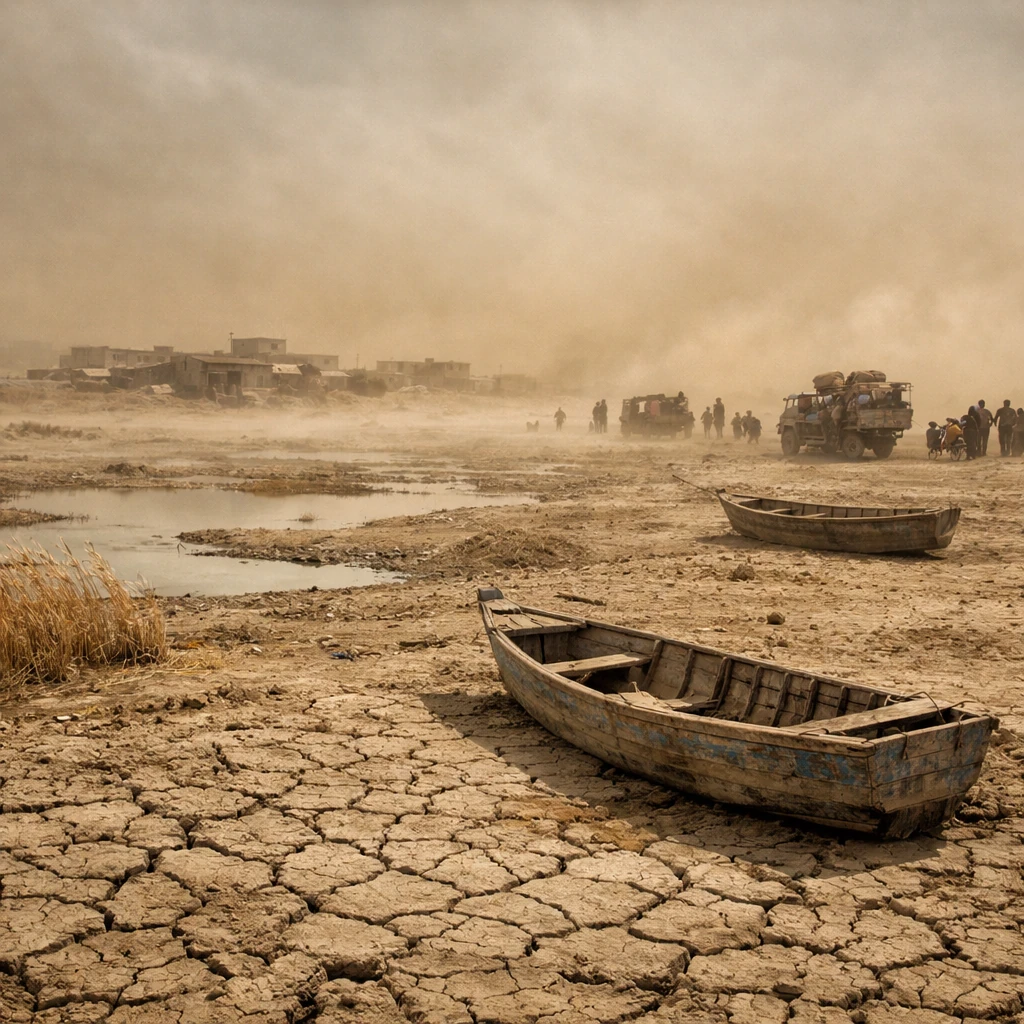
Drying of the Hamoun Wetland: A Serious HSE Threat and a Driver of Forced Migration
According to the Supporters of Occupational Health, Safety, and Environment (HSE) News Agency, quoting ILNA, Shina Ansari emphasized that the environmental sustainability, public health, and safety of communities in the Sistan region are directly dependent on securing the environmental water rights of the Hamoun Wetland. She stated that the survival of this international wetland relies on floodwaters from the Helmand River and that, under the 1973 treaty between Iran and Afghanistan, the minimum water requirements of the Hamoun must be supplied in a stable and continuous manner.
She added that one of the main focuses of current technical and diplomatic negotiations is preventing the diversion of floodwaters toward the Godzareh depression and directing them instead to the Hamoun Wetland. Although floodwaters have entered the country intermittently, from an HSE management perspective, this process must be institutionalized through legal frameworks, continuous monitoring, and clearly defined implementation commitments.
Referring to the direct impacts of the wetland’s desiccation on public health, safety, and local livelihoods, the Head of the Department of Environment stressed that failure to secure the environmental water allocation has led not only to ecosystem degradation but also to an increase in dust storms, the spread of respiratory diseases, threats to the health and safety of agricultural and livestock workers, and the deterioration of safe living conditions in the Sistan region. These developments have intensified forced migration and imposed significant social and economic pressures on local communities.
Addressing the situation of other wetlands across the country, Ansari noted that under Iran’s Seventh National Development Plan, the total water requirement of the country’s wetlands has been estimated at more than 11 billion cubic meters, and the Ministry of Energy is legally obligated to release this volume as environmental flow. The Department of Environment, within its sovereign mandate, continues to monitor and pursue the implementation of these decisions through the National Wetlands Management and Coordination Headquarters.
She emphasized that even under conditions of water scarcity and prolonged drought, the allocation of environmental water rights is not only an ecological necessity but also a legal obligation and a core component of national HSE policy, as neglecting it poses direct threats to human health, environmental safety, and the long-term viability of human settlements.
The internationally recognized Hamoun Wetland, located in northern Sistan and Baluchestan Province along the Iran–Afghanistan border, is one of Iran’s most critical aquatic ecosystems. It plays a vital role in dust control, local climate regulation, biodiversity conservation, and the provision of sustainable livelihoods for local communities. A severe decline in water inflow over the past two decades has resulted in widespread desiccation, turning the wetland into one of the country’s most acute environmental and public health crisis zones.
Registered in the Ramsar Convention list of international wetlands in 1975, Hamoun has lost large portions of its ecological functionality due to reduced inflow from the Helmand River, climate change, and unsustainable water resource exploitation. The continuation of this trend not only threatens biodiversity but also represents a serious risk to public health, occupational safety, and social stability in the region. Consequently, the restoration of the Hamoun Wetland has been designated as a strategic HSE priority by the government and relevant environmental authorities.
- source:HSENK
- author:DGS
- 1404/11/25