
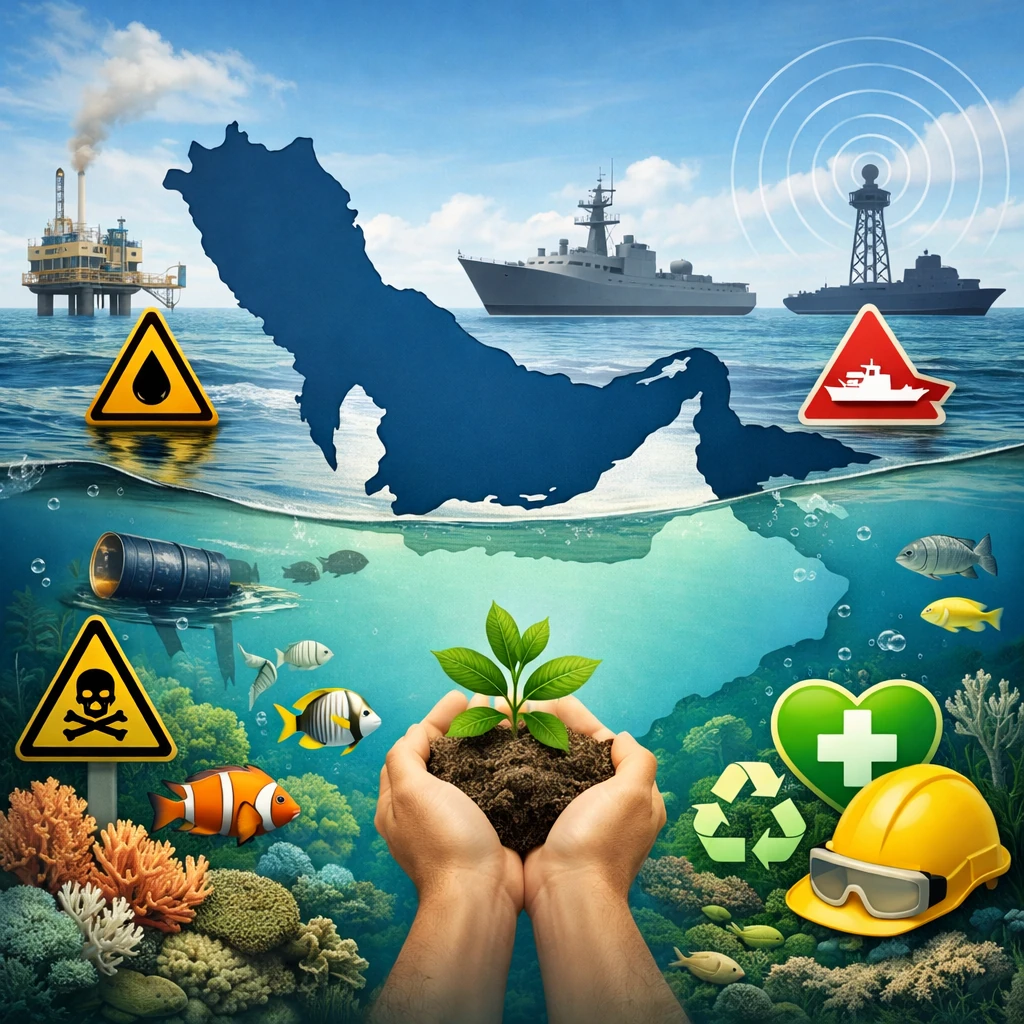
Iran Issues Environmental and HSE Warning to Regional Countries over the Militarization of the Persian Gulf and the Sea of Oman
According to the Supporters of Occupational Health and Safety News Agency, citing ILNA, the Department of Environment of the Islamic Republic of Iran has warned about the wide‑ranging consequences of the increasing militarization of the Persian Gulf and the Sea of Oman, stressing that the environment and human health are the silent victims of armed conflicts and military tensions.
The warning was delivered through an official letter addressed to the Ministers of Environment of the United Arab Emirates, Bahrain, Kuwait, Saudi Arabia, Qatar, and Oman, emphasizing the urgent need for regional governments to consider the Health, Safety, and Environment (HSE) risks arising from escalating military activities.
........
The letter states that the Persian Gulf and the Sea of Oman, as marine areas with unique, fragile, and highly sensitive ecosystems, play a vital role in ensuring food security, public health, livelihoods of coastal communities, and economic stability for millions of people across the region. Any military confrontation or expansion of high‑risk activities, it warns, could directly lead to water, soil, and air pollution, destruction of habitats, loss of biodiversity, and serious threats to human health.
Referring to the devastating experiences of past wars and conflicts in the region, the Department of Environment highlighted consequences such as the destruction of oil and industrial infrastructure, large‑scale leakage of oil and hazardous chemicals, release of persistent pollutants, and severe damage to coastal and marine habitats. These impacts, the letter notes, are long‑lasting, cumulative, and transboundary, with their effects still evident in marine sediments, food chains, and biological cycles throughout the region.
In another section, the letter addresses the attack by the United States and the Israeli regime on Iran’s peaceful nuclear facilities, expressing deep concern over nuclear safety, environmental security, and the health of present and future generations.
It emphasizes that any damage to such facilities could result in the release of radioactive materials, contamination of water and soil resources, increased carcinogenic and genetic risks, and irreversible environmental disasters. The letter stresses that these risks are not confined to national borders and could affect the entire region and beyond.
In conclusion, the Department of Environment underscored the shared responsibility of regional countries to protect the environment and human health, calling for strengthened regional cooperation, adherence to international environmental law, and the integration of HSE considerations into all security and military‑related decisions.
- source:HSENK
- author:DGS
- 1404/12/01