
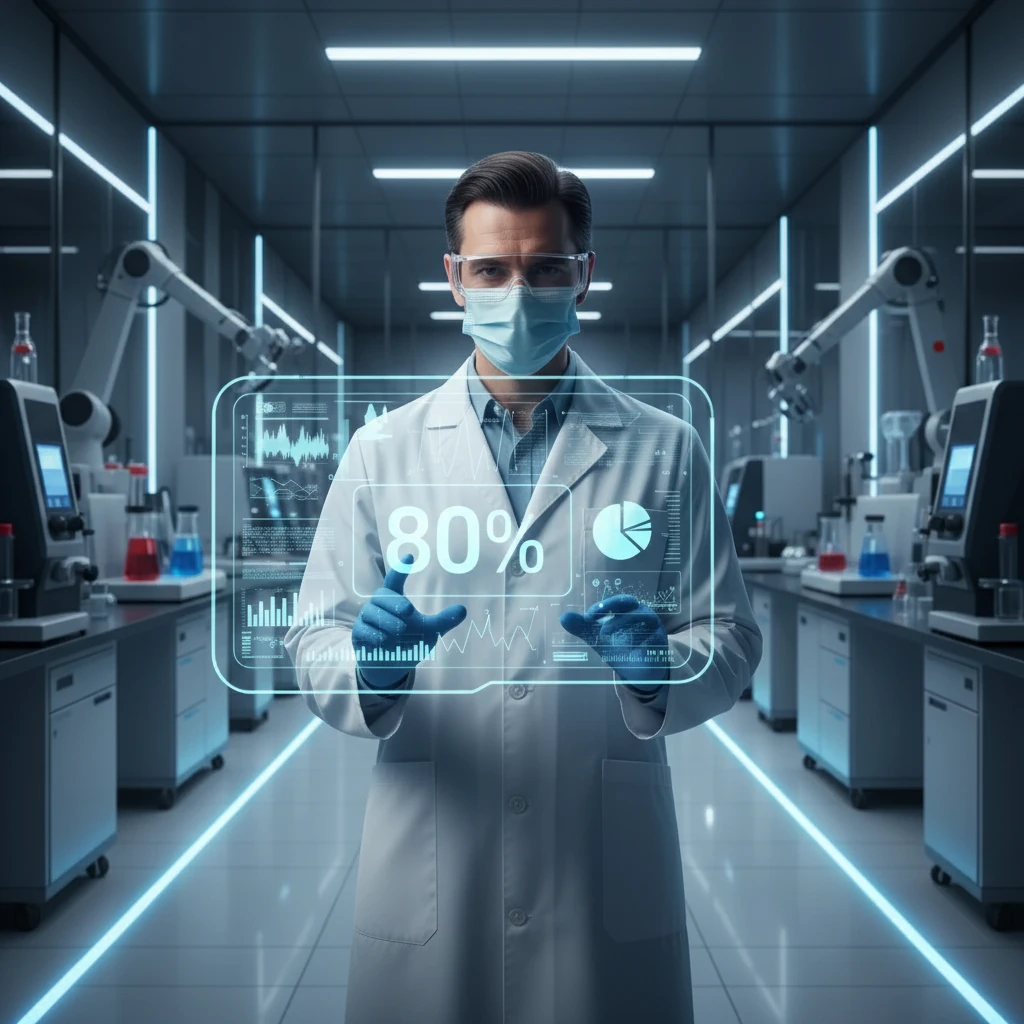
The Strategic Role of Laboratories in Healthcare: 80% of Critical Physician Decisions Rely on Accurate Diagnostic Results
Health & Safety Service: Professor Ahmad Gharabaghian, Head of the Iran Blood Transfusion Organization and Scientific Secretary of the 17th International Congress on Quality Improvement of Medical Diagnostic Laboratories, on the eve of this major scientific event scheduled from May 4-7, 2026, at the Milad Tower in Tehran, detailed the critical importance of laboratory infrastructure. He emphasized a key statistic, stating that currently, over 80% of physicians’ diagnostic and therapeutic decisions are dependent on laboratory results. This reality underscores that any disruption in this field poses a significant challenge to public health security and the efficiency of the healthcare system.
Quality Assurance and Process Safety (HSE Approach)
In alignment with Health, Safety, and Environment (HSE) management standards, Professor Gharabaghian highlighted “Quality Assurance” as the cornerstone of blood and blood product safety. Citing World Health Organization (WHO) requirements, he identified the establishment of a comprehensive quality control system, alongside voluntary donation and advanced screening, as fundamental pillars for maintaining biosafety. In this context, rigorous monitoring of processes “from the donor’s vein to the patient’s vein” signifies risk management, identification of error sources, and continuous procedural correction, with the ultimate goal of ensuring patient safety and enhancing public trust.
Compliance with International Standards and Health Diplomacy
The Congress Secretary pointed to Iran’s leading regional position, stating that the compliance of domestic processes with the most stringent international standards and European protocols has led to the establishment of a plasma-derived medicinal product manufacturing cycle. The export of surplus plasma to Europe and its transformation into vital medicines serve as evidence of Iran’s laboratories’ capability in adhering to global safety and quality protocols.
Artificial Intelligence and the Transition Towards Personalized Medicine
One of the novel aspects highlighted in this report is the paradigm shift of laboratories from being mere “result providers” to becoming “arms of prediction and prevention.” With the advent of next-generation technologies, Artificial Intelligence (AI), and Big Data analytics, medical diagnostic laboratories are now moving towards personalizing healthcare. These innovations not only accelerate treatment but, through a preventive approach, significantly reduce the costs associated with treatment-related incidents and chronic diseases.
Economic Resilience and Future Challenges
Given the accelerating shift in the country’s demographic pyramid towards an aging population, the demand for laboratory services is projected to see a significant surge in the coming years. Consequently, the 17th Congress places a special emphasis on topics such as “Health Economics” and “Enhancing Laboratory Resilience.” The objective is for laboratories to be able to provide services that are both cost-effective and sustainable, while maintaining the highest HSE and quality standards amidst the current economic conditions.
This scientific event, covering specialized fields such as biochemistry, hematology, immunology, and oncology, will serve as a platform for aligning the knowledge of Iranian specialists with successful international models and fostering interdisciplinary collaboration to elevate the professional standards in this sector.
- source:https://www.mehrnews.com/
- author:DGS
- 1404/12/04