
Ministry of Science Emphasizes “Safety, Health, and Continuity of Education” as Top Priorities in Crisis Management; Reviewing Economic and Social Impacts on the Sustainability of Higher Education
News Code: 1796822
Publication Date: June 10, 2026
The Deputy Minister of Science, Research and Technology for Education, in a press conference held this morning (June 10), outlined the latest status of the country’s higher education system and underscored that crisis management measures have been guided by HSE principles (Health, Safety, and Environment). He stated that rising unemployment, increased migration tendencies, restricted international interactions, and economic pressures have had both direct and indirect impacts on Iran’s scientific standing and the overall quality of higher education.
At the beginning of the session, Dr. Abolfazl Vahedi expressed appreciation for the responsible role of the media in accurate reporting and noted that throughout recent months, three strategic principles have guided all educational decisions: “safeguarding the health and safety of students, faculty members, and staff,” “ensuring the continuity of the educational process,” and “protecting the quality and scientific standing of the country.”
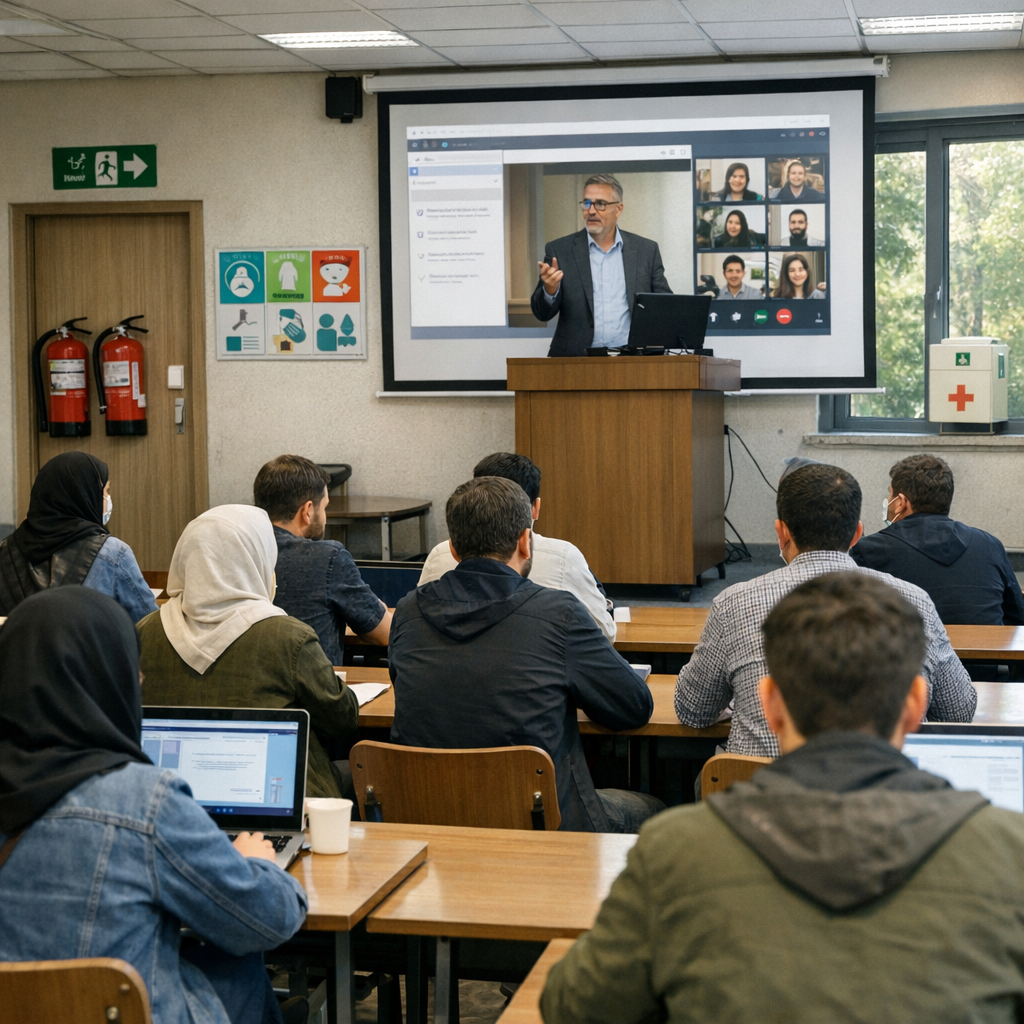
Referring to the unique circumstances of the past academic year, he explained that the continuation of unfinished examinations, incidents earlier in the year, and conditions arising from imposed war created unprecedented challenges for universities. As a result, institutions were required to redesign educational processes, adjust instructional methods, and adopt flexible decision-making approaches. To reduce safety risks and protect the university community, a portion of undergraduate instruction and examinations was conducted online. At the same time, universities were authorized to hold practical, laboratory, and workshop-based courses in person, provided that safe conditions were ensured, in order to prevent a decline in educational quality.
Emphasizing that “the light of knowledge never goes out under any circumstances,” the Deputy Minister announced that the Ministry is currently developing a “post-crisis measures package” aimed at restoring stable academic conditions, strengthening institutional resilience, reconstructing damaged infrastructure, and compensating for potential learning losses.
Addressing the direct impacts of war on higher education, Vahedi noted that more than 30 universities were directly or indirectly affected. Beyond infrastructure damage, these events have resulted in significant human, social, and economic consequences. Rising unemployment and reduced job opportunities for graduates, increased migration among elites, limitations on international academic cooperation, and financial pressures on universities are among the outcomes that have influenced scientific productivity indicators and educational quality.
Providing statistical data on student enrollment, he stated that the total student population has decreased from approximately 4.8 million in 2014 to about 3.4 million in 2023. In the 2022–2023 academic year, around 2 million students were enrolled at the bachelor’s level, 450,000 at the associate degree level, nearly 500,000 at the master’s level, and approximately 140,000 at the doctoral level. Women constitute more than half of the country’s total student population.
He identified changing public perceptions toward university education and declining interest in certain fields as additional challenges. The number of applicants for the national university entrance exam has decreased from over 1.1 million in 2011 to approximately 900,000 in 2025. During this period, foundational sciences and engineering disciplines have experienced reduced demand, highlighting the need for policy revisions in academic guidance and higher education planning.
Regarding financial matters, Vahedi noted that higher education accounts for only 2–3 percent of the national public budget. Meanwhile, universities’ current expenditures have increased by more than 50 percent compared to the previous year, widening the gap between available resources and actual needs. If this trend continues, it may negatively affect the quality of educational, research, and welfare infrastructure, requiring serious attention from policymakers.
Vahedi further stated that universities are gradually returning to in-person instruction in phases, taking into account safety requirements and institutional conditions. Examinations for postgraduate programs are being conducted in person, while undergraduate exams are being held online under the current circumstances.
Vahedi further stated that universities are gradually returning to in-person instruction in phases, taking into account safety requirements and institutional conditions. Examinations for postgraduate programs are being conducted in person, while undergraduate exams are being held online under the current circumstances.
In conclusion, he announced that the national university entrance examination will be held on August 20–21, with various scenarios under consideration for announcing results and commencing studies for new students. These plans are designed to ensure both the health and safety of applicants and the uninterrupted continuation of academic activities.
The Deputy Minister reaffirmed that strengthening the resilience of the higher education system, safeguarding the health and safety of the academic community, and enhancing safety standards within scientific environments remain top priorities for the Ministry of Science moving forward.
source:ilna
author:DGS