
Implementation of a Comprehensive Risk and Safety Management System for Tehran’s Mass Gathering: Maximum Operational Readiness to Mitigate Potential Crises
The Tehran Fire Department and Safety Services Organization has launched an unprecedented operational initiative focused on “Mass Gathering Safety,” mobilizing all headquarters and field resources to ensure the well-being of millions of attendees. Recognized as the largest non-incident operation in the history of the Fire Department, this initiative centers on proactive hazard identification, environmental heat management, and the deployment of rapid response teams across all entry points and transit routes to guarantee public safety.
Proactive Protocols: From Hazard Identification to Deployment
The spokesperson for the Tehran Fire Department and Safety Services Organization described this operation as one of the most complex projects in mass gathering safety management. The process began with extensive hazard identification (HAZID) one month prior to the event. Expert teams conducted a meticulous, meter-by-meter inspection of the Imam Khomeini (RA) Mosalla and all surrounding transit routes, identifying safety gaps and coordinating the remediation of environmental hazards, infrastructure improvements, and the removal of physical obstructions with the Tehran Municipality.
Mobilization of Operational and Support Capacities
In accordance with the event’s comprehensive safety plan, all 138 Tehran fire stations have been placed on “Red Alert” (Full Operational Readiness). The plan involves the mobilization of 6,000 firefighters and 400 volunteers, with operational shifts adjusted to a 24/24 pattern to ensure maximum manpower coverage. Furthermore, hundreds of light and heavy emergency vehicles, motorcycles, and specialized equipment have been stationed at strategic points—including city entryways, parking facilities, and pilgrim accommodation sites—to significantly reduce “Response Time” in the event of an incident.
Strategies for Environmental Stress and Public Health
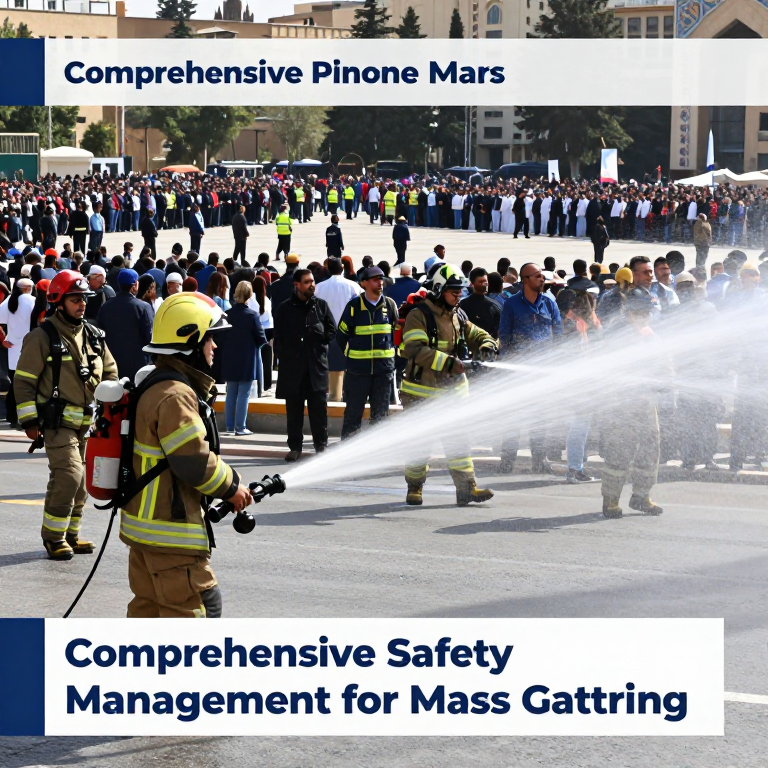
To mitigate the risks associated with heat stress, the Fire Department has installed and commissioned approximately 20 industrial-grade misting systems within the Mosalla grounds and along the procession routes. These systems serve as an “engineering control” to regulate the ambient temperature and stabilize the physical condition of the attendees, effectively preventing heat-related illnesses.
HSE Standards and Compliance
- Risk Management: The pre-event technical inspections reflect a proactive approach, fully aligned with international mass gathering safety standards (such as NFPA 101).
- Emergency Preparedness: The structural adjustment of shift patterns and the decentralized deployment of forces demonstrate organizational maturity in managing large-scale incident responses.
- Continuous Monitoring: The constant presence of firefighters among the crowd (foot patrols) for real-time monitoring and rapid intervention addresses a critical safety gap often missed in large public events.
Health & Safety Recommendations
As the lead entity for site safety, the Fire Department urges citizens to adhere to the following protocols:
- Logistics Management: Utilize public transportation (metro and buses) to reduce traffic congestion and peripheral environmental risks.
- Crowd Dynamics: Maintain order while moving within the crowd and avoid sudden changes in direction to prevent crowd-related incidents (e.g., crowd crush).
- Protecting Vulnerable Groups: Prioritize the safety and health of children, the elderly, and individuals with specific physical health conditions.
- Emergency Exit Protocol: In the event of feeling faint or experiencing difficulty breathing, individuals should exit the crowd flow gradually and diagonally—rather than stopping suddenly—to avoid causing bottlenecks or disrupting the flow of the crowd.
- source:https://www.mehrnews.com/
- author:DGS
- 1405/04/14