
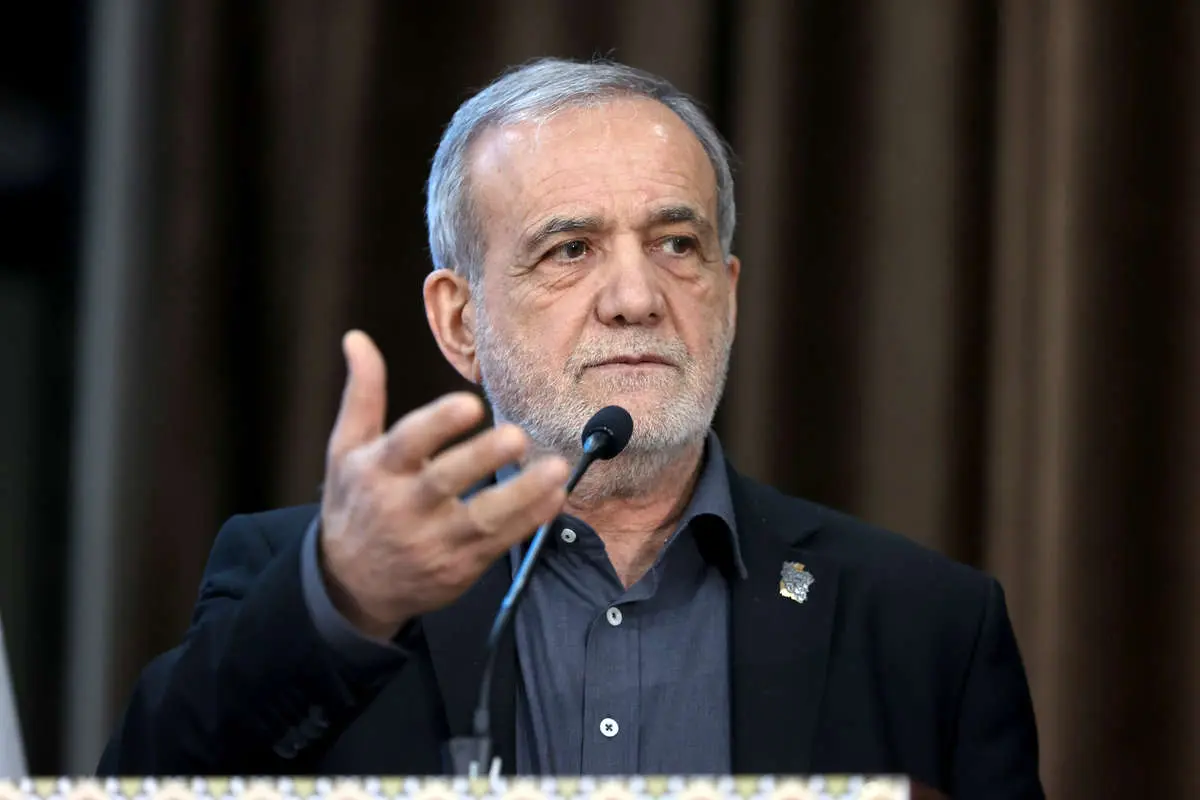
Strategic Roadmap for National HSE Development: President Emphasizes “Balanced Development” and “Sustainable Environmental Governance”
TEHRAN – In a specialized summit with prominent academics, professors, and environmental experts, President Masoud Pezeshkian outlined the essential requirements for sustainable governance. He underscored the necessity of integrating Health, Safety, and Environment (HSE) principles into the nation’s macro-level policymaking processes, identifying “continuous education” and “scientific resource management” as prerequisites for overcoming climatic crises and achieving balanced industrial growth.
Risk Management and Ecological Carrying Capacity
Criticizing past development models that lacked environmental oversight, the President stated: “Imposing demographic and industrial loads on regions lacking ecological capacity is a disregard for the fundamental principles of risk management. Nature responds to pressures that exceed its carrying capacity through phenomena such as land subsidence, water crises, and climatic instability—consequences that impose immense human and economic costs on both the state and society.”
Enhancing Industrial and Environmental Standards
Addressing current government policies in the industrial sector, Dr. Pezeshkian emphasized the strict enforcement of Environmental Impact Assessment (EIA) standards. He noted: “The suspension of industrial projects lacking environmental compliance and the prohibition of water-intensive industries in water-stressed regions are key strategies to mitigate environmental risks. We believe that industrial development without considering the safety of fundamental resources—such as water, soil, and energy—is inherently unsustainable and a precursor to future crises.”
Renewable Energy: Transitioning to a Low-Carbon Economy
The President identified the development of renewable energy as a strategic necessity for managing the nation’s energy imbalance. He remarked: “In implementing power plants and particularly solar energy systems, we must adopt a systemic approach. Utilizing innovative solutions to optimize water consumption for solar panel maintenance and integrating renewable energy projects with smart agriculture are examples of the holistic operational chain management that must be institutionalized.”
Cultivating an HSE Culture: From Schools to Society
Dr. Pezeshkian identified “education” as the cornerstone for shifting consumption patterns and enhancing social responsibility. He emphasized: “A culture of HSE and the protection of natural resources must be ingrained from early childhood. Without fostering a national sensitivity toward the efficient use of water, electricity, and gas, even the most massive infrastructure investments will fail to prevent resource depletion.”
Constructive Engagement with Civil Society
In his closing remarks, the President addressed the perception of environmental activism, stating that the government is committed to transparency. “The government is prepared to support the innovative ideas and practical research of experts that aim to protect national interests and environmental sustainability. Executive bodies are tasked with creating the necessary frameworks for cooperation with specialized organizations, as environmental protection is a core pillar of national security.”
The summit concluded with technical proposals from experts focusing on “water recycling in industry and agriculture,” “the utilization of drones for real-time natural resource monitoring,” and “modernizing waste management systems.” The President has directed these proposals to be reviewed and operationalized within specialized technical committees.
- source:HSENK
- author:DGS
- 1405/06/13