
🚨 Safety Alarm in Universities: Fire Caused by a Non‑Standard Device at Sharif University
A small fire in the drilling laboratory of Sharif University of Technology once again brought the issue of inadequate laboratory equipment safety and budget shortages at universities to the forefront of experts’ warnings; an incident that could have turned into a major disaster had preventive measures not been in place.
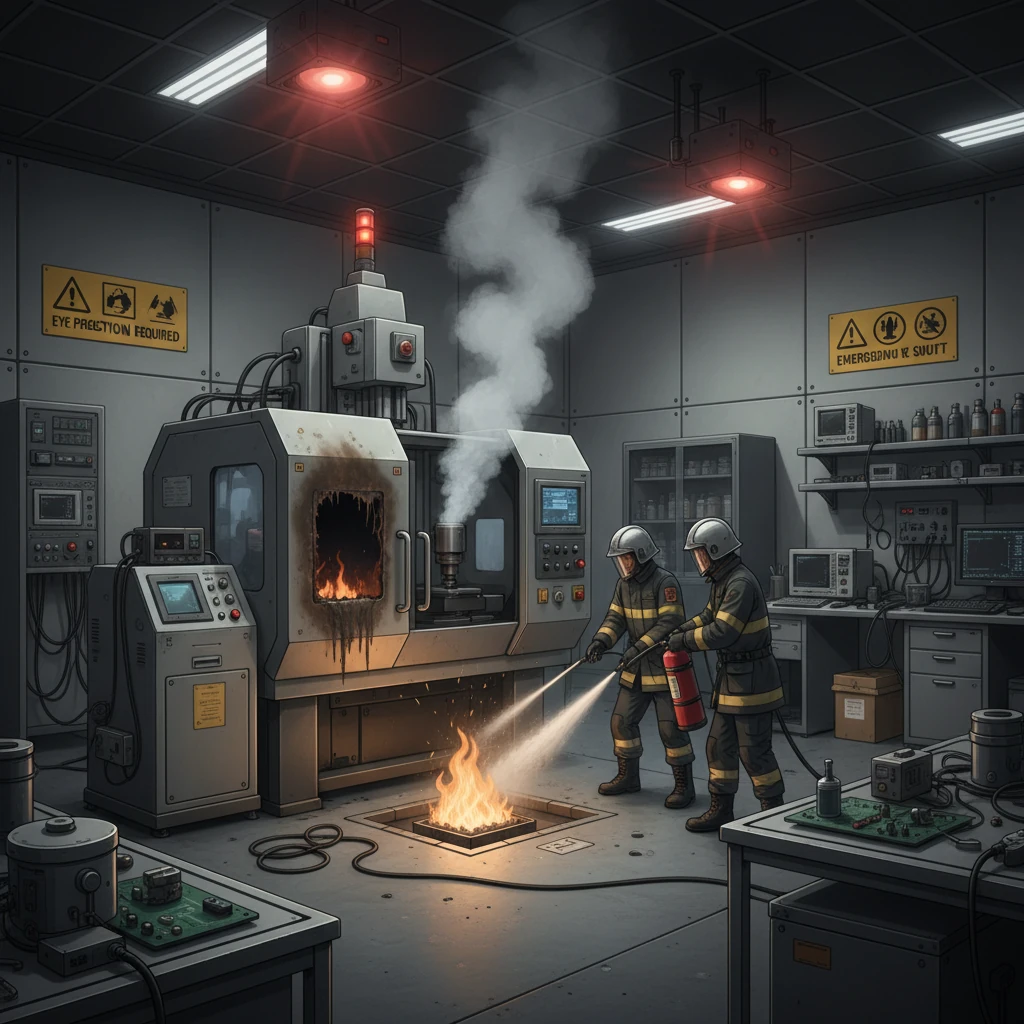
To report Mehr NewsIn recent days, one of the drilling laboratory equipments of the Faculty of Chemical and Petroleum Engineering of Sharif University of Technology caught fire in the absence of the laboratory members. The fire was detected by the timely activation of the fire alarm system, and the laboratory staff members and the students present were able to contain it in the early stages using fire extinguishers.
Although this incident did not result in any casualties, the repetition of such incidents in the country's higher education centers has once again highlighted the need for a serious review of the safety of university equipment, infrastructure, and monitoring processes.
History of similar incidents; a chain of warnings
The fire at Sharif University’s drilling laboratory is not an isolated incident. In December 2022, the Mineral Research Laboratory of the Faculty of Chemistry at Isfahan University of Technology caught fire, resulting in the death of a PhD student. In May 2023, the Soil Engineering Laboratory of the Faculty of Civil Engineering at Sharif University was also engulfed in flames, causing damages estimated at between 8and10 million. Most recently, in March 2025, a fire in one of the student dormitories in Ilam endangered the lives of 20 students.
These same incidents led Sharif University of Technology to launch the "Health, Safety and Environment (HSE) Management" after the unfortunate events of 1401; a management that operates directly under the supervision of the university president.
Where did the fire start?
Bahman Haji, HSE Director of Sharif University of Technology, explained the details of this fire in an interview with Mehr reporter and said:
"A device in the drilling laboratory called Wheel Test "Or there is a wheel test that is used to examine oil samples and oil products. This device should have a temperature of about 70 degrees Celsius, which is provided by a heating element."
According to him, the heating element in this device was built into the floor, and a leak from one of the oil samples caused a flammable substance to spill onto the element, ultimately causing a fire.
Non-standard equipment; the root cause of the accident
The Director of HSE at Sharif University clearly emphasized:
"The appliance that caused the fire was not of standard. In such equipment, the element should not be located in the bottom of the appliance. Proper design requires that the heat source be built into the ceiling or walls, similar to what is seen in appliances such as microwaves."
He added:
"A typical leak in devices with a foam element creates a virtually permanent potential risk of ignition."
Referring to the construction of this device, Haji stated:
"Based on the investigations conducted, it appears that this equipment was handmade and domestically manufactured, and its design did not comply with safety standards."
Effective prevention; a factor for rapid fire suppression
Referring to the safety measures taken at the university, the HSE Director of Sharif University said:
"The building's fire alarm system had been fully serviced two months prior to the incident and was fully operational during the incident. Also, powder, gas, and CO₂ fire extinguishers were available on time and the staff had received the necessary training; therefore, the fire was contained in the initial minutes."
He added: Replacing the laboratory ceiling with non-flammable gypsum tiles also played an important role in preventing the spread of fire; an issue that had not been observed in the previous incident at Sharif Civil Engineering College due to the presence of glass wool in the ceiling, which had caused the fire to spread.
Infrastructure renovation to prevent recurrence of accidents
Referring to the university's security programs, Haji said:
"Currently, the roofs of university buildings are being replaced with gypsum tiles, and the lighting system is being changed from transformer-powered skylights to LED lights so that such dangers do not occur again."
Risk assessment while waiting for financing
The HSE director of Sharif University explained the possible existence of other non-standard equipment at the university:
"A comprehensive risk assessment plan has been developed since last year and a contract is to be signed with a specialized consulting company. The company has been selected, but the implementation of the plan is subject to securing financial resources."
According to him, the risk assessment will begin with the Faculty of Electrical Engineering as a priority and then be extended to the entire university; a process that will take between two and three years due to the breadth and diversity of the university's activities.
Serious safety management gap in the country's universities
Criticizing the safety situation at other universities, Haji said:
"In most universities in the country, HSE management does not exist in a structural or executive manner, and is often limited to committees that are merely supervisory in nature and have no implementation capabilities."
He emphasized:
"Sharif University of Technology is the only university that has independently established HSE management, while the lack of such a structure in the Ministry of Science and Universities is one of the serious weaknesses in the field of safety."
Lack of budget: a common root of destructive events
The HSE Director of Sharif University concluded by referring to the main safety challenge and said:
"In the area of safety, the least budget is always allocated. This is while any expenditure on safety prevents damages that will be several times that cost."
According to him, many HSE programs are only implemented minimally due to financial constraints, which is what leads to the recurrence of accidents.
From university to national disasters
According to Mehr, the experience of major accidents such as the collapse of the Plasco building and the explosion at Shahid Rajaee Port shows that ignoring safety requirements can lead to irreparable damage.
Although the recent fire at Sharif University was contained without casualties, experts warn that if investment in safety is not taken seriously, the next disaster may not be contained this time.
- source:https://www.mehrnews.com/
- author:DGS
- 1404/09/22