
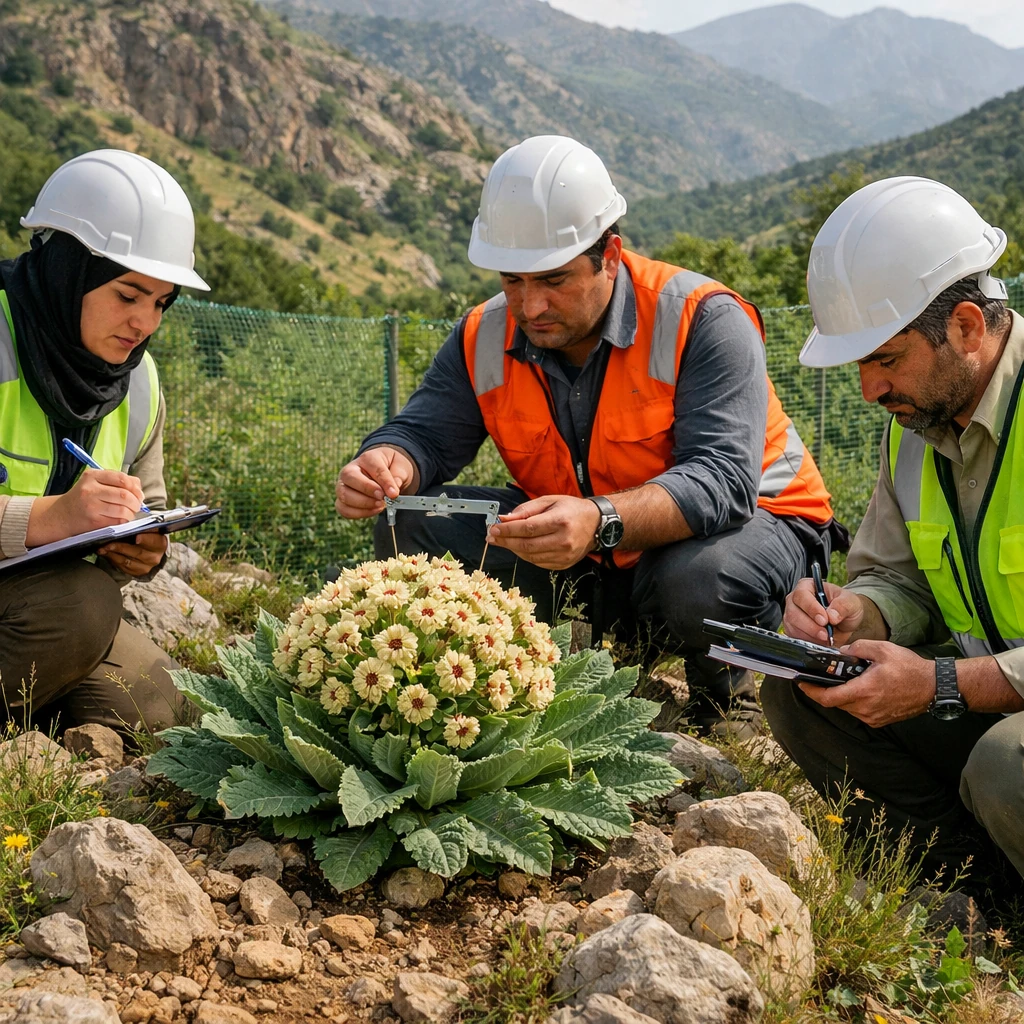
Launch of a National HSE Program to Protect the Endangered Plant Species Luristan Hawthorn in the Zagros Ecosystem
In line with strengthening environmental management, reducing ecological risks, and safeguarding the country’s genetic resources, the Department of Environment of Iran has announced the launch of a comprehensive HSE‑based program aimed at the conservation, restoration, and population enhancement of the endangered endemic plant species known as Luristan Hawthorn. This valuable species, threatened by both environmental and human‑induced pressures, is recognized as being at high risk of extinction.
According to the Public Relations Office of the Department of Environment, Alireza Najimi, Head of the National Museum of Natural History and Genetic Resources Office, stated that the species, which has a very limited distribution in Lorestan Province, is considered one of the most environmentally sensitive components of the Zagros ecosystem. Based on the criteria of the International Union for Conservation of Nature (IUCN), Luristan Hawthorn requires urgent, targeted conservation and management measures.
He explained that the species, scientifically known as Sorbus luristanica and referred to in recent taxonomic literature as Hedlundia luristanica, faces serious threats due to the extremely small number of mature parent plants, restricted and fragmented habitats, high sensitivity to climate change, uncontrolled grazing, and other anthropogenic pressures. Addressing these challenges, he emphasized, requires the implementation of a scientifically driven and systematically structured program aligned with HSE principles.
Najimi further noted that the program has been designed to ensure the long‑term survival of the species, improve biological safety within its natural habitats, protect the ecological health of the Zagros region, and prevent the irreversible loss of national genetic assets. Key objectives include strengthening natural populations, restoring degraded habitats, and significantly reducing the risk of extinction.
He added that during the first phase of implementation, the project will focus on the accurate identification and registration of mother plants, continuous monitoring of natural habitats, comprehensive environmental risk assessment, and the identification of major threat factors such as climate change, livestock grazing, and human activities. In addition, both in‑situ and ex‑situ conservation measures will be implemented as core components of an integrated environmental safety and biodiversity management approach.
In conclusion, the Head of the National Museum of Natural History and Genetic Resources Office described the initiative as an effective step toward fulfilling the Department of Environment’s HSE‑oriented mission in biodiversity conservation and sustainable natural resource management. He emphasized that the continuation of such programs will enhance ecosystem resilience, reduce long‑term environmental risks, and ensure the protection of Iran’s natural and genetic heritage for future generations.
author: DGS
- source:https://www.ilna.ir/
- 1404/10/15