
Climate Change: An HSE Alarm for Iran’s Forests Rising Risks of Wildfires, Pest Outbreaks, and Threats to Forest Ecosystem Safety
Recent meteorological data indicate that all provinces across the country experienced winter temperatures above the long-term average this year, with northern provinces recording the highest anomalies. According to the Head of the Supreme Forest Council, this alarming trend is a clear manifestation of climate change, carrying direct and indirect consequences for environmental safety, ecosystem health, and risk management in forested areas, particularly the Hyrcanian forests.
In an interview with ISNA, Rasoul Ashrafipour stated that all national ecosystems are affected by the impacts of climate change, and the Hyrcanian forest ecosystem is no exception. Rising annual long-term average temperatures, along with reduced or highly variable precipitation in certain years, have created unstable conditions that, from an HSE perspective, have significantly increased environmental risk levels.
Climate Change and Escalating Biological Risks
He explained that higher temperatures and altered precipitation patterns disrupt the natural distribution mechanisms of plant species. If multiple drivers of degradation are not effectively controlled, climate change impacts will intensify, potentially leading to physiological stress in vegetation types and, consequently, the emergence and even epidemic outbreaks of plant pests and diseases. From an HSE standpoint, this represents a serious threat to forest sustainability and ecosystem services.
The Head of the Supreme Forest Council cited the fungal boxwood blight disease, followed by the spread of the box tree moth, as a clear example of the combined effects of climate change and localized human-induced degradation in northern forests—highlighting shortcomings in preventive biological risk management.
Forest Fires: A Growing Environmental Safety Threat
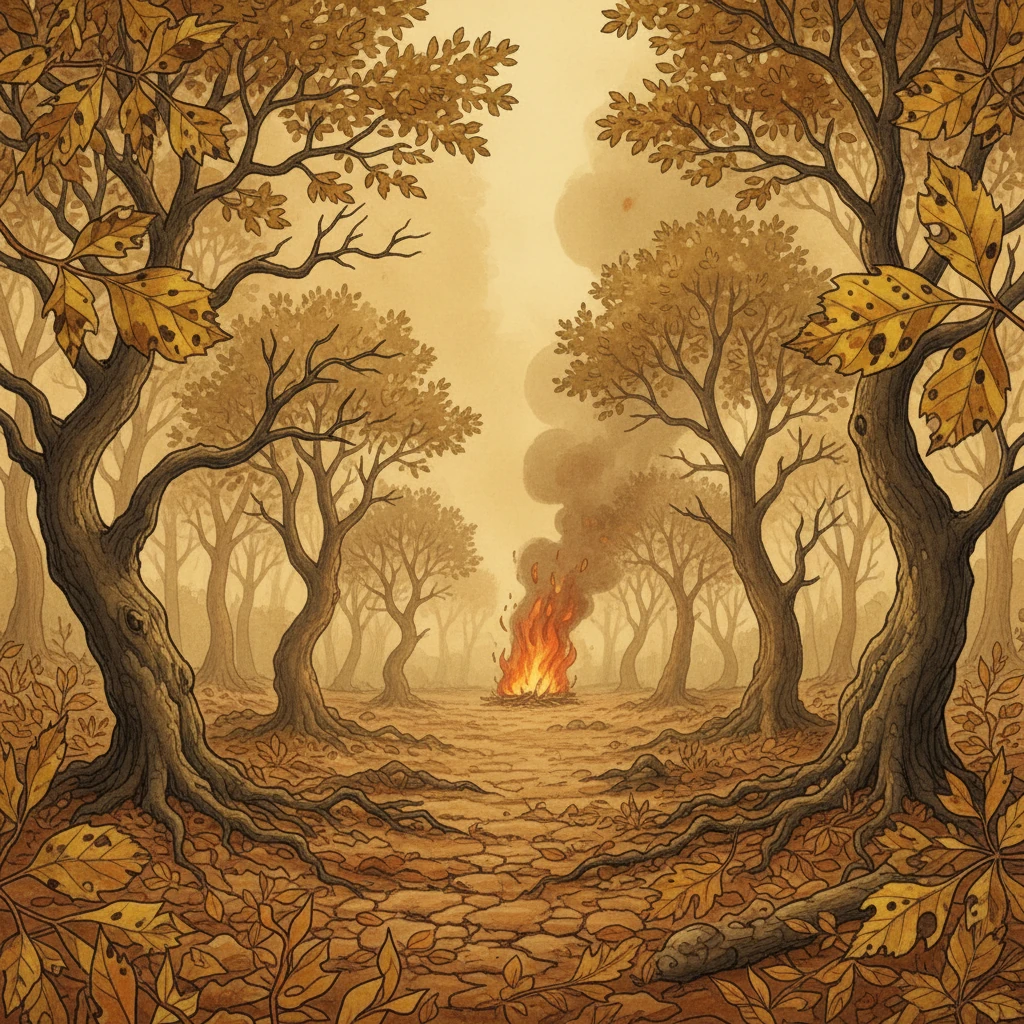
Ashrafipour also identified the increasing frequency and recurrence of forest fires, particularly in the Hyrcanian forests, as another major consequence of climate change. He noted that while forest fires have occurred historically and have been documented, reduced precipitation during the second half of the year, combined with the occurrence of the warm and dry “Garmesh” winds (a seasonal phenomenon north of the Alborz Mountains), has led to more frequent and scattered wildfire incidents across northern forests.
He warned that, given the rise in daily temperatures, it is likely that additional fire hotspots may emerge toward the end of the current year or in early next year. From an HSE perspective, this situation underscores the critical need for operational preparedness, enhanced firefighting equipment, and effective emergency response planning.
Preventive Measures and the Role of Technology in Forest HSE Management
Referring to recent actions taken by the Forests, Rangelands, and Watershed Management Organization, Ashrafipour noted that increased emphasis has been placed on strengthening fire prevention and suppression equipment, as well as controlling pests and plant diseases. These efforts are aligned with a broader risk management strategy aimed at reducing HSE impacts associated with climate change.
He emphasized that continuous monitoring and surveillance of forest areas is a key pillar of effective HSE management. In addition to ground patrols by executive forces and strong cooperation with local communities to prevent degradation, illegal logging, and timber trafficking, the use of modern technologies—such as long-range cameras, thermal imaging systems, satellite image analysis, and high-resolution monitoring drones—is essential. He added that establishing integrated monitoring centers tailored to different ecological zones is crucial, noting that encouraging progress has already been made in this area in recent years.
Increased Forest Floor Flammability
In conclusion, Ashrafipour pointed to another consequence of rising winter temperatures in northern regions, stating that climate change and warming trends lead to greater dryness of the forest floor. Under such conditions, the decomposition process of leaf litter becomes slower, resulting in significant accumulation of combustible material. This, in turn, substantially increases forest flammability, making ecosystems far more vulnerable to large-scale environmental incidents caused by human negligence.
- منبع:ایسنا
- author:DGS
- 1404/11/19