
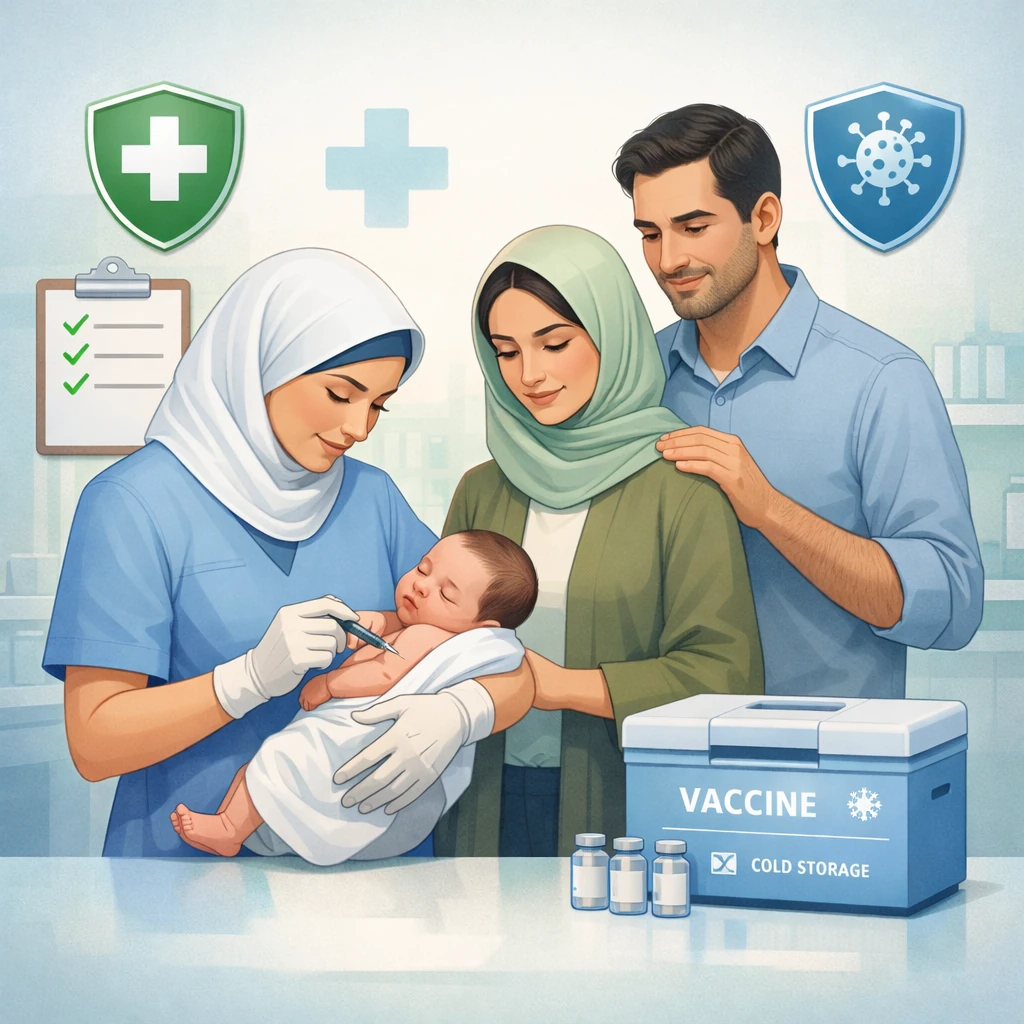
Strengthening HSE Considerations in Immunization and Newborn Health Programs in Iran
Experts in the field of Health, Safety, and Environment (HSE) emphasize that the implementation of public health programs—particularly those related to newborn immunization—must consistently adhere to scientific evidence, ethical principles, and safety requirements. International experience demonstrates that any decision affecting newborn health, if not grounded in credible evidence and comprehensive risk assessment, may result in irreversible consequences for both individual and public health.
In Iran, given the extensive infrastructure of the healthcare system and the high national immunization coverage, strict compliance with HSE principles at all stages—from policy design to implementation and monitoring—is of paramount importance. HSE professionals stress that prevention is the cornerstone of health and safety, and that no operational or resource limitations should ever justify reducing the level of protection afforded to vulnerable populations, particularly newborns.
From an HSE perspective, the omission, delay, or restriction of proven health interventions is fundamentally inconsistent with risk management principles, professional ethics, and social responsibility. Risk assessment clearly indicates that failure to provide effective preventive services can increase disease burden, impose long-term healthcare costs, and lead to broader social and economic impacts.
Experts further highlight the necessity of continuous monitoring, transparent reporting, workforce training, and effective use of health data to support ongoing improvement of public health programs. Strengthening supply chains, ensuring cold-chain integrity, enhancing last-mile logistics, and providing comprehensive training for healthcare personnel are recognized as core components of HSE practice in public health settings.
Ultimately, the HSE approach requires policymakers, researchers, and health system implementers in Iran to draw on global best practices and lessons learned, ensuring that all health programs—especially those targeting mothers and newborns—are implemented in accordance with robust scientific evidence, ethical standards, and the highest levels of safety. Such an approach is essential to safeguarding the health of future generations and ensuring the long-term sustainability of the national healthcare system.