
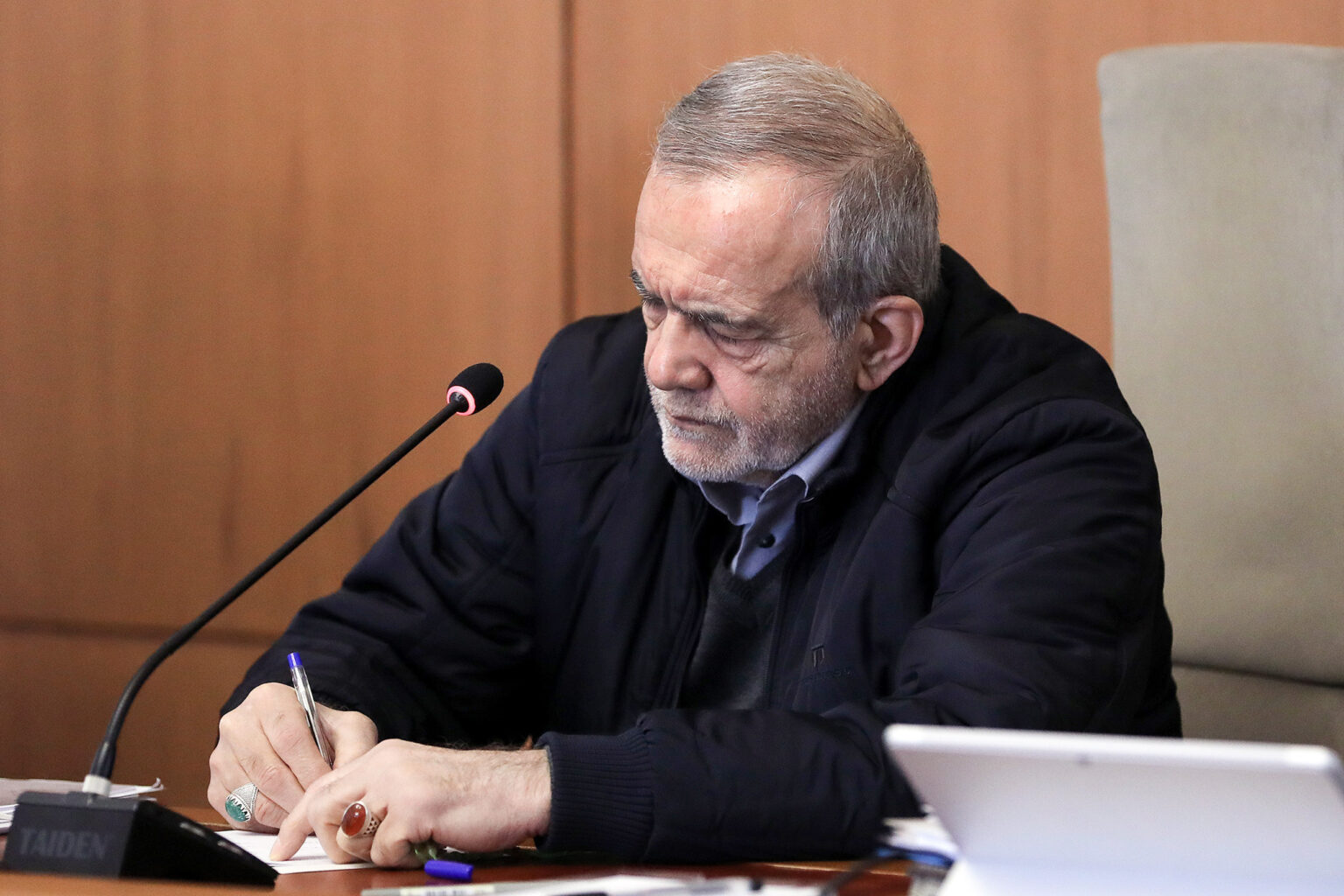
President Emphasizes Establishing Environmental Crisis Management Post-War; Comprehensive “Ecocide” Remediation Plan to be Drafted
During an unannounced visit to the Department of Environment (DoE), the President of Iran reviewed specialized reports on the destructive environmental impacts of the “Ramadan War.” He emphasized the urgent need to revise safety protocols, enhance national infrastructure resilience, and activate international legal diplomacy to combat environmental crimes, specifically “Ecocide.”
According to the Department of Environment’s Public Relations office, Iranian President Masoud Pezeshkian made a surprise visit to the DoE headquarters this morning to assess emerging challenges and the state of the country’s environmental stability following the Ramadan War.
In a technical meeting attended by the Head of the Department of Environment and her deputies, “Environmental Resilience Management in Emergency Situations” was the focal point of the discussion.
Documenting Damages and Combatting Ecocide
Shina Ansari, Vice President and Head of the Department of Environment, detailed the organization’s wartime performance, stating: “With the onset of hostilities, the DoE adopted a proactive approach centered on health and environmental diplomacy, issuing necessary warnings to international bodies, including the UN Secretary-General and the head of the UN Environment Programme (UNEP).”
Ansari added: “The Ramadan War, beyond infrastructural damage, involved ‘Ecocide’—the extensive destruction of ecosystems. Currently, expert teams are conducting precise field monitoring and scientific documentation of the war’s destructive effects on water, soil, and biodiversity, preparing sufficient evidence for legal proceedings in international courts.”
Inter-agency Synergy for Safety and Environment
Emphasizing the necessity of integrating HSE guidelines during crises, the Head of the DoE stated: “Under wartime conditions, the organization’s priority was to ensure the continuity of safety-driven activities and reduce infrastructure vulnerability. In this path, close operational cooperation with the Islamic Republic of Iran Customs for facilitating the import of vital equipment, as well as the continuous interaction of provincial environmental forces with military units, prevented any suspension of the country’s environmental protection efforts.”
She also noted recent consultations with Inger Andersen, Executive Director of UNEP, highlighting the need for technology transfer to remediate areas contaminated by war-related materials.
Integrating Social Responsibility and Resource Conservation
Addressing cultural aspects, Ansari highlighted the “Green Muharram” campaign, stating: “The goal of this campaign is to enhance social responsibility and promote optimal energy and waste management by leveraging the country’s cultural capacities, turning environmental protection into a continuous public demand.”
Presidential Strategic Guidelines
Concluding the visit, the President appreciated the efforts made and emphasized three key pillars:
Knowledge-based Development: Maximizing the use of academic and scientific capacities to rapidly assess damages and draft comprehensive bio-restoration plans.
۲. مدیریت بهینه منابع: ضرورت سختگیری در رعایت استانداردهای زیستمحیطی در تمام پروژههای ملی، با اولویت مدیریت مصرف آب و انرژی.
۳. تابآوری ملی: لزوم بازنگری در ساختار مدیریت بحران سازمان برای مقابله با هرگونه تهدیدات آینده علیه سلامت عمومی و پایداری محیطزیست.
در پایان این نشست، گزارشی از میزان آسیبدیدگی زیرساختهای زیستمحیطی توسط معاونین سازمان ارائه شد و رئیسجمهور دستورات لازم برای تخصیص منابع و تسهیل در اجرای طرحهای فوریتیِ پایش و بازسازی را صادر کرد.
گفتنی است، این سومین حضور رئیسجمهور در سازمان حفاظت محیطزیست در بازه زمانی سالهای ۱۴۰۳ تا ۱۴۰۵ است که نشاندهنده اولویتبخشی ویژه دولت به موضوع ایمنی و پایداری زیستمحیطی در برنامههای کلان کشوری است.
- source:HSENK
- author:DGS
- 1405/04/01