Development of the Integrated Waste Management System: A Strategic Step Toward Strengthening HSE and Environmental Governance in Iran
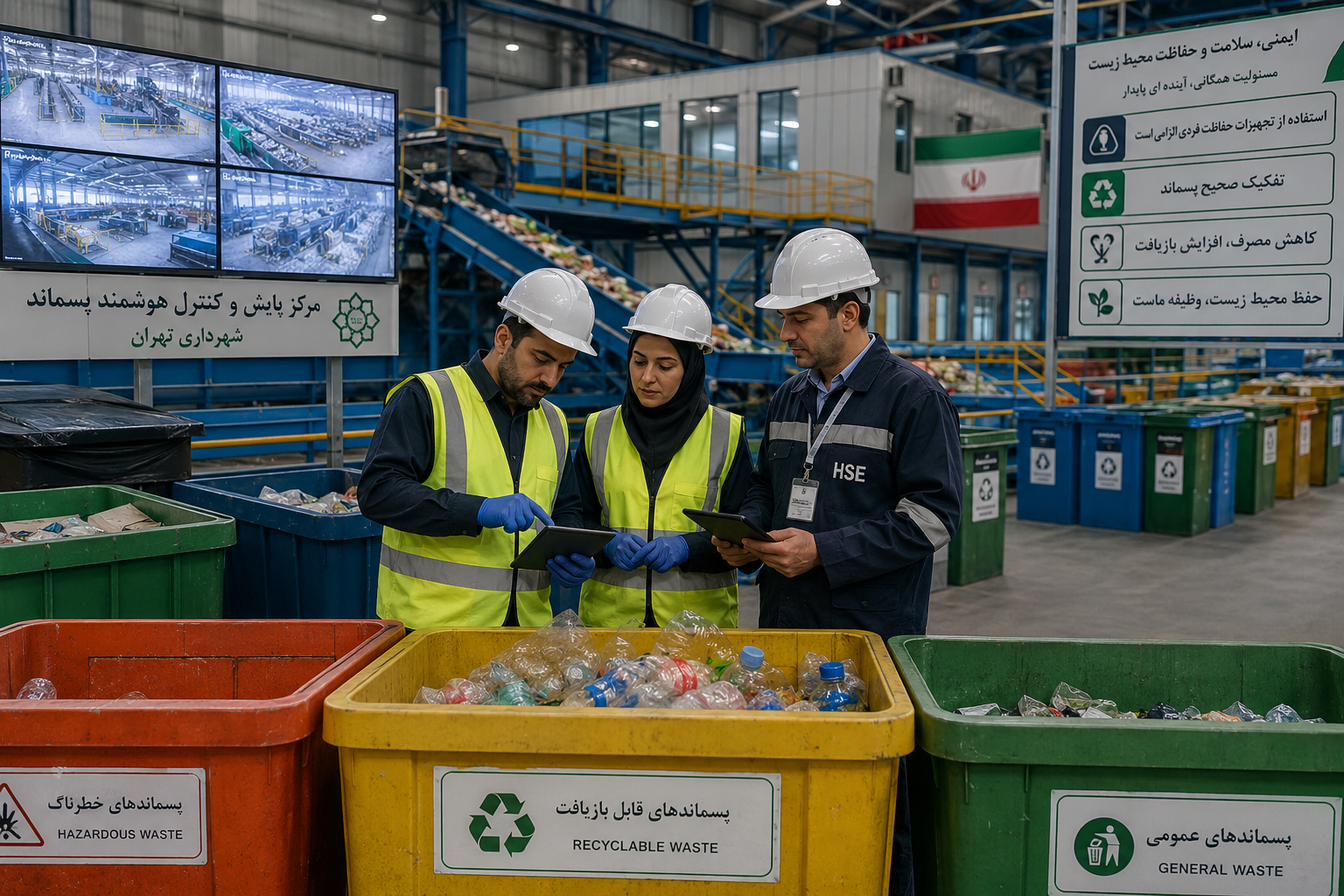
Tehran – The Deputy for Human Environment at Iran’s Department of Environment described the lack of data integration and the inconsistency in information structures across executive bodies as the most significant challenge facing the completion and full-scale operation of the Integrated Waste Management System—a platform that can play a key role in enhancing the national HSE framework, reducing environmental risks, and improving waste monitoring at the national level.
According to the Supporters of Workers’ Health and Safety News Agency, citing IRIB News Agency, Sedigheh Torabi, in an interview with the Agriculture and Environment correspondent, referred to the obligations set forth in the Seventh National Development Plan regarding the establishment of integrated waste management and stated that the infrastructure of this system had been created in previous years. She added that the process of review, technical improvement, and operational completion is currently underway with the participation of both public and private sector stakeholders.
She noted that the system is currently active in certain specific areas, including monitoring and controlling waste imports, and that part of its executive functions has already entered the operational stage. However, she emphasized that achieving full and nationwide implementation still requires greater information convergence among responsible institutions.
Data Integration: The Missing Link in Effective Waste Management
The Deputy for Human Environment stressed that the core issue lies not in the creation of the system itself, but in the lack of compatibility among datasets and the absence of a common information framework across institutions. She explained that each executive body produces and maintains waste-related data using different structures, formats, and indicators. This situation, she said, makes it difficult to achieve integrated monitoring, accurate analysis, rapid decision-making, and effective intervention in the field of waste management.
Torabi added that if such information were standardized and made exchangeable and aggregable within the system, it could serve as a national tool for monitoring the entire waste chain, including generation, transportation, recycling, treatment, and final disposal of various types of waste.
The System’s Role in Strengthening HSE Requirements
Referring to the importance of the system from a Health, Safety, and Environment (HSE) perspective, she stated that poor waste management—particularly in the industrial, medical, special, and hazardous sectors—can lead to risks such as soil and water contamination, the release of harmful pollutants, threats to public health, increased occupational risks, and environmental incidents.
According to the official, the completion of the Integrated Waste Management System can, by creating data transparency, accurate tracking of organizational performance, continuous environmental monitoring, and stronger accountability among institutions and operators, become one of the key pillars of the country’s HSE framework.
Monitoring Importing Companies: An Example of the System’s Current Performance
Torabi further explained that one of the current practical applications of the system is the identification, registration, and monitoring of companies importing waste. These companies have been defined within the system, and their environmental performance is being assessed by the provincial departments of the Department of Environment.
She said this measure represents an effective step toward strengthening regulatory oversight, reducing potential violations, and improving environmental discipline across the waste import and management chain.
The Need for Cross-Sector Coordination Among Responsible Institutions
The Deputy of the Department of Environment also pointed to the cooperation of institutions such as the Ministry of Industry, Mine and Trade; Ministry of Energy; Ministry of Petroleum; Ministry of Interior; and Ministry of Health and Medical Education in the process of completing the system. She noted that although inter-agency cooperation does exist, achieving an effective national system requires faster progress in cross-sector coordination, data standardization, and efficient interconnection of information databases.
She emphasized that as long as inter-agency data lack coherence, accuracy, and interoperability, it will not be possible to establish a smart and outcome-oriented system for large-scale waste management.
The System’s Evolution Is Ongoing
In conclusion, Torabi stated that the implementation of major national projects naturally requires gradual refinement, expert feedback, and phased development. She said the Department of Environment, through continuous expert meetings and coordination with public and private stakeholders, is working to eliminate technical and informational gaps and transform the system into a comprehensive, efficient, and inclusive tool for managing all types of waste.
She added that the ultimate objective is to establish an integrated system for managing all categories of waste, including municipal, industrial, special, medical, and other waste streams requiring specialized control—an approach that can play a decisive role in environmental protection, safeguarding public health, and advancing HSE indicators across the country.
- source:HSENK
- author:DGS
- 1405/05/02