HSE Experts Warn of an Emerging Environmental and Safety Crisis from Electronic Waste: Disposable Vapes Pose a Triple Threat to Public Health, Soil, and National Waste Management Systems
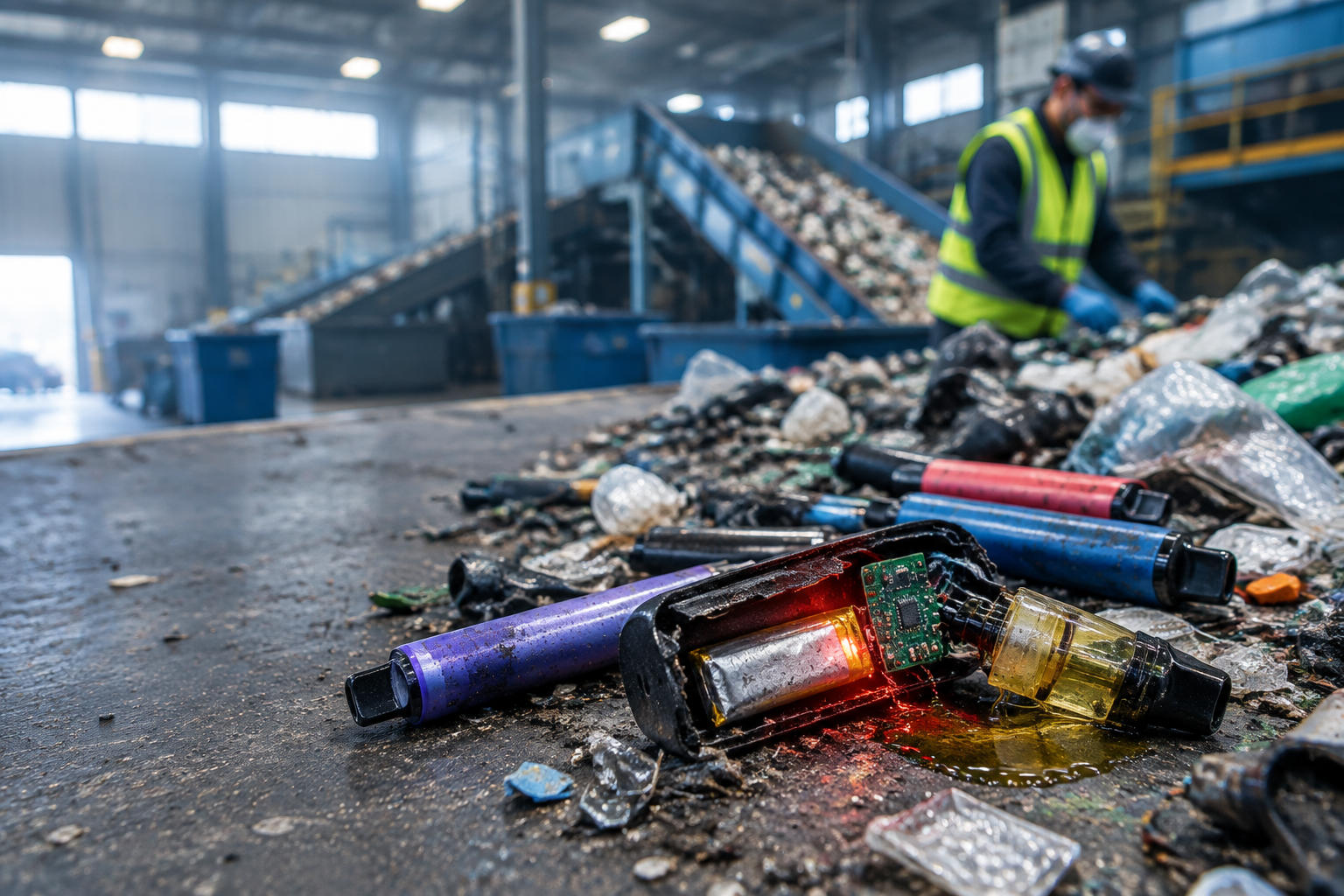
The growing use of disposable electronic cigarettes, commonly known as vapes, particularly among younger populations, extends beyond individual respiratory and health effects. It is increasingly becoming a serious concern for special-waste management, urban safety, and the protection of water and soil resources. Recent findings by researchers at the University of Illinois indicate that discarded vape devices may contain critical levels of heavy metals, including lead, zinc, and copper. Due to their compact and non-separable design, these devices can also create fire and safety risks throughout waste-disposal systems.
Heavy Metals in E-Liquids: A Direct Threat to Water and Soil Resources
Laboratory assessments have identified lead concentrations in the cartridges and residual e-liquids of certain widely used vape brands among the highest levels reported in electronic smoking devices. The findings suggest that contamination may not be caused solely by corrosion in solder joints or heating elements; rather, the original formulation of e-liquids may already be contaminated with these metals during non-standard manufacturing processes. This issue could place users of lower-cost products at greater risk of exposure to toxic heavy metals, as lower-priced and lower-quality brands may be more likely to contain contaminants. When disposed of through conventional municipal waste streams, these metals may leach into landfill leachate and potentially contaminate soil and groundwater resources.
Fire and Process-Safety Risks in Waste-Management Systems
From a process-safety perspective, one of the most significant hazards is the presence of lithium-ion batteries inside compact plastic housings that are difficult to dismantle. During waste collection, mechanical compaction in garbage trucks, or processing at waste-transfer stations, physical damage to these batteries may lead to short circuits, thermal runaway, and sudden ignition. International reports have linked discarded disposable vapes to fires in waste-processing facilities. Without dedicated segregation and handling protocols, municipal waste-management infrastructure in Iran may also face increased exposure to costly and potentially hazardous fire incidents.
Relevance to Current Conditions and Regulatory Requirements in Iran
While this issue has raised concerns internationally, the use and distribution of electronic smoking devices in Iran present additional regulatory and monitoring challenges:
- Unregulated Supply Chains and Limited Quality Monitoring: Under current regulations associated with the Ministry of Health, Medical Education, and relevant anti-smuggling authorities, the formal import and distribution of many electronic cigarette products face restrictions. A significant portion of available products may therefore enter the market through informal channels. This limits laboratory quality-control measures, monitoring of heavy-metal levels in e-liquids, and the availability of verified health and safety certification.
- Potential Concerns Under Waste-Management Requirements: In accordance with Iran’s Waste Management Law, waste containing batteries and heavy metals may be classified as special or hazardous waste. The absence of a structured extended producer responsibility (EPR) system for disposable electronic smoking devices can result in batteries this issue has raised concerns internationally, the use and distribution of electronic smoking devices in Iran present additional regulatory and monitoring challenges:
- Unregulated Supply Chains and Limited Quality Monitoring: Under current regulations associated with the Ministry of Health, Medical Education, and relevant anti-smuggling authorities, the formal import and distribution of many electronic cigarette products face restrictions. A significant portion of available products may therefore enter the market through informal channels. This limits laboratory quality-control measures, monitoring of heavy-metal levels in e-liquids, and the availability of verified health and safety certification.
.
.
- Potential Concerns Under Waste-Management Requirements: In accordance with Iran’s Waste Management Law, waste containing batteries and heavy metals may be classified as special or hazardous waste. The absence of a structured extended producer responsibility (EPR) system for disposable electronic smoking devices can result in batteries, electronic circuits, plastic components, and residual nicotine liquids should provide separate collection bins for small electronic waste, batteries, and disposable vaping devices to reduce fire hazards and prevent hazardous materials from entering general waste streams.
- Update workplace health and environmental policies: The use of e-cigarettes and vape devices should be explicitly included in smoke-free and tobacco-control policies for enclosed, administrative, and industrial workplaces, in accordance with occupational health standards.
- Strengthen health, customs, and market surveillance: Regulatory agencies should enhance controls over informal distribution networks and conduct periodic laboratory testing of seized or market-available products to assess toxicological risks, heavy-metal contamination, and potential public exposure.
- source:https://www.mehrnews.com/
- author:DGS
- 1405/06/28