
Published: 19 Mehr 1405 (Solar Hijri)
Teaching safe, responsible behavior in childhood is an investment in Iran's future
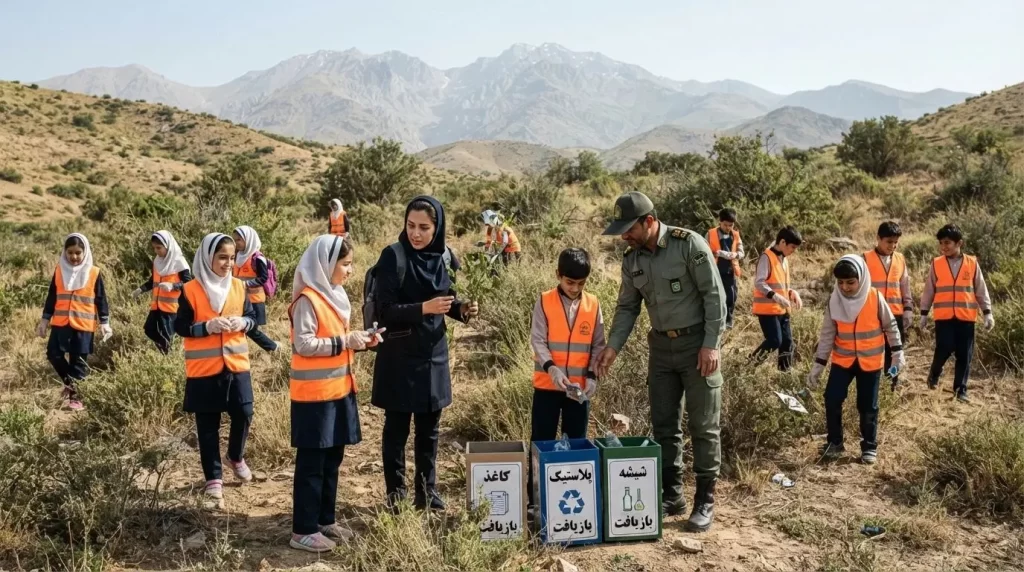
The Workforce Health and Safety Supporters news outlet, citing the Department of Environment's public relations office, reported that Children's and Environment Day and the closing ceremony of the Makan's Mission story-writing competition were held on the morning of 16 Mehr with officials, rangers and students.
Participants included Hadi Kiadaliri, Deputy for Education and Public Participation; Mohammad Modadi, head of the Environmental Education and Ranger Training Center; Hassan Abbasnezhad, Tehran Province environmental director; Zhema Javaheripour, physical education and health deputy for Tehran provincial school districts; Vida Maleki, provincial head of the Institute for the Intellectual Development of Children and Young Adults; rangers and students.
Establishing environmental culture in childhood
Kiadaliri emphasized that environmental behavior change should begin early. Children need opportunities to form emotional connections with nature alongside acquiring knowledge.
Education is effective when it goes beyond information to establish responsible, safe and sustainable behavior. HSE concepts should be age-appropriate and taught through stories, play, group activity, creative methods and direct experience.
Although environmental destruction is global, Iran's climate and geography require particular care. Much of the country is arid or semiarid with limited vegetation, yet it contains valuable biodiversity, including unique species and ecosystems with histories spanning millions of years.
Habits and responsible behavior
Kiadaliri said habits can override awareness. People may understand pollution, resource waste or environmental destruction yet continue harmful behavior because of established habits.
Good habits should therefore be formed early: waste reduction and segregation, water and energy saving, personal and public hygiene, respect for wildlife, avoiding damage to nature and safe behavior outdoors.
Advice alone is insufficient. Children should experience clear, understandable positive consequences from good choices and age-appropriate consequences from harmful behavior. This supports sound, responsible decision-making.
HSE education connects knowledge, attitudes and behavior
Extensive environmental knowledge does not necessarily lead to appropriate behavior. Effective education must address knowledge, attitudes and behavior together.
Children can contribute even through small actions: turning off unnecessary lights, closing taps, using waste bins correctly, caring for green spaces, reporting environmental violations and observing outdoor safety. These are practical contributions to HSE and sustainability.
Families, schools and cultural organizations must cooperate. Lasting change is more likely when messages at home, school and in society align and children see and experience responsible behavior in daily life.
Strengthening emotional connections with nature
Education should not rely only on fear of environmental destruction. Children should know and love nature and develop a sense of belonging.
Knowledge and wisdom show the way; emotion provides motivation. Effective environmental protection needs both. Children with emotional connections to nature are more likely to act responsibly as adults when faced with pollution, resource destruction and risky environmental behavior.
Drawing on Iranian culture
Iranian culture has a long tradition of attention to nature and living things, reflected in literature and cultural heritage. Respect for plants, animals and other life should be renewed for younger generations through suitable language and methods. Storytelling, art, children's literature and participatory activities can communicate environmental and safety concepts effectively.
Investing in the country's future
Kiadaliri concluded that environmental education is an investment in Iran's future. Spending on children's development now can reduce future costs of environmental repair, risk control and correcting harmful behavior.
He called for cooperation among the Department of Environment, Ministry of Education, children's cultural institutions, families and other social and cultural bodies to build a broad educational movement and involve students in environmental protection.
The Makan's Mission competition supports this aim by strengthening creativity, responsibility and social participation while introducing children and young people to environmental protection and HSE culture.
Source links: hsenk.ir
Original publication date (Solar Hijri): 1405/07/19
Author: Dibagostaran Sanat