
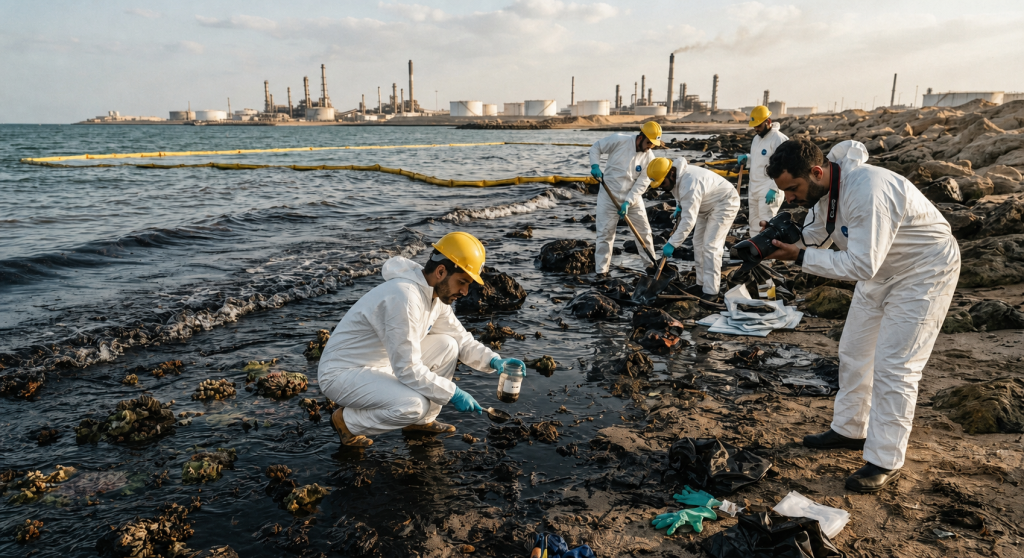
Tehran — According to Mehr News Agency, the Department of Environment's Public Relations and International Affairs office reported a special program of environmental monitoring, HSE-based damage assessment and cleanup following recent tensions affecting industrial and maritime transport infrastructure.
The Deputy for Marine Environment and Wetlands described damage to sensitive Persian Gulf and Caspian Sea ecosystems and emphasized activating civil-defense and industrial safety protocols at ports and oil platforms.
Shidvar and Lavan: oil-spill cleanup and coral recovery
Ahmadreza Lahijanzadeh referred to an oil spill near Lavan Refinery. He said currents and waves had carried pollution to the shores of Shidvar (Maru) Island Wildlife Refuge, threatening a unique island ecosystem and Persian Gulf coral reefs. Heavy hydrocarbons coating rocky seabeds and corals disrupt photosynthesis and aquatic food chains; natural recovery may take decades.
He added that Shidvar is an internationally recognized refuge and a critical nesting habitat for marine turtles, particularly endangered hawksbills, and migratory birds. Despite restricted access in border and military areas, the Department was seeking urgent deployment of specialist monitoring and underwater documentation teams to record seabed damage accurately.
Extent of pollution: Hormozgan to Bandar Anzali
– Persian Gulf and Gulf of Oman: following an attack on a fuel tanker in the Strait of Hormuz, an oil slick reportedly affected approximately 240 km of the Bandar Abbas coastline. Localized pollution near Kharg Island was also recorded and assessed.
– Caspian Sea: an incident involving a naval vessel at Bandar Anzali reportedly released about 150,000 liters of light fuel, or diesel, into the harbor basin and coastal waters. Measures were rapidly implemented to prevent contamination reaching Anzali International Wetland.
Rapid-response checklists and financial damage assessment
The Marine Environment Department stated that a comprehensive environmental emergency response plan had been issued to all coastal provincial environment directorates, drawing on recent crises. Its technical checklists assess and record spread rates, contaminant penetration depth, aquatic mortality and coastal physical stability immediately after incidents.
Lahijanzadeh said international mathematical models had been used to calculate environmental and economic losses from damaged coral and mangrove ecosystem services, with valuations in rials and foreign currency. Reports were referred to the relevant authorities for international legal action and compensation claims.
Interagency physical and biological cleanup
The Department of Environment held high-level coordination meetings with the Ministry of Petroleum and the Ports and Maritime Organization. The first phase of environmentally compatible physical cleanup, using standard oil absorbents, had been completed on parts of Kharg, Shidvar, Lavan, Qeshm and Bandar Abbas shores. A comprehensive plan for biological cleanup and restoration of oil-affected areas was being developed.
Source links: www.mehrnews.com
Original publication date (Solar Hijri): 1405/05/01
Author: Dibagostaran Sanat