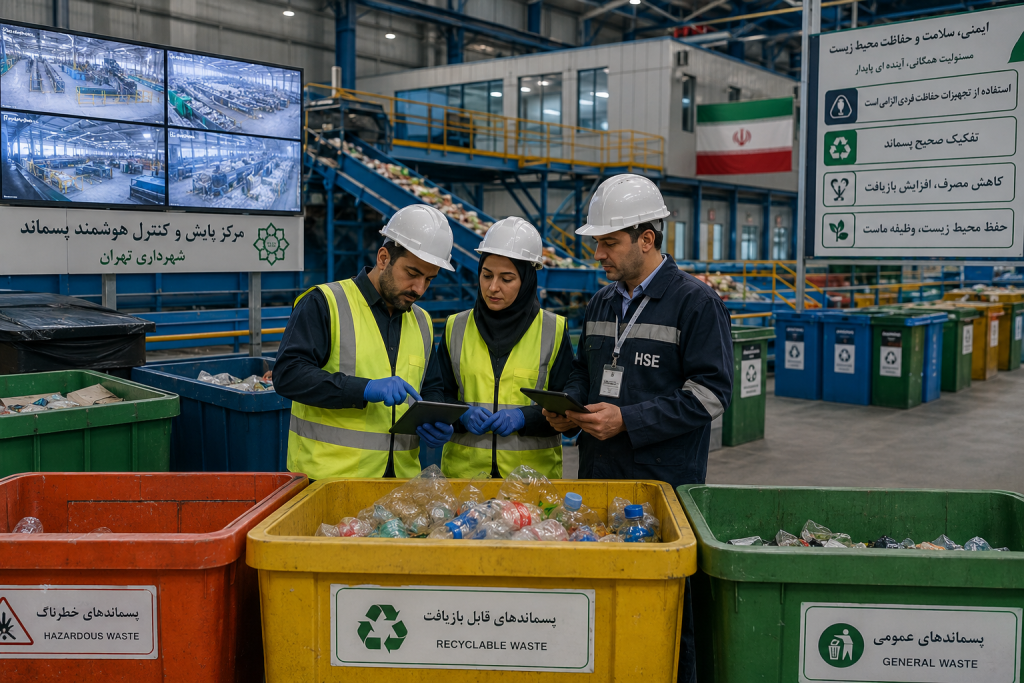
Tehran — The Department of Environment's Deputy for Human Environment identified data integration and incompatible information structures across public bodies as the main obstacles to completing a nationwide integrated waste management system. The platform could strengthen HSE, reduce environmental hazards and improve national waste monitoring.
The Workforce Health and Safety Supporters news outlet, citing IRIB News, reported remarks by Sedigheh Torabi on the Seventh Development Plan's integrated waste management requirements. She said the system's infrastructure had been established in previous years and was now undergoing technical review, correction and operational completion with public- and private-sector participation.
The system was already operational in specific areas, including waste-import control and monitoring. However, full nationwide use still required information convergence among responsible organizations.
Data integration: the missing link
Torabi emphasized that the principal issue was heterogeneous data and the absence of a shared information language, rather than whether the platform existed. Agencies produce and retain waste information using different structures, formats and indicators, making integrated monitoring, accurate analysis, rapid decisions and effective intervention difficult.
If standardized, exchangeable and aggregable information were supplied to the platform, it could serve as a national tool for tracking waste generation, transport, recycling, destruction and disposal.
Strengthening HSE requirements
Ineffective management of industrial, hospital, special and hazardous waste can contaminate water and soil, release harmful pollutants, threaten public health, increase occupational risks and cause environmental incidents.
Completing the platform could make it an important pillar of the national HSE system through transparent information, precise tracking of facilities' performance, continuous environmental monitoring and greater accountability for authorities and operators.
Monitoring importers: an existing function
Torabi cited the identification, registration and monitoring of waste-importing companies as an example of current functionality. Companies are registered in the system and their environmental performance is assessed by provincial environment directorates.
She described this as a step toward stronger oversight, fewer potential violations and improved environmental discipline across the waste-import and management chain.
Cross-sector coordination
The Ministries of Industry, Mine and Trade; Energy; Petroleum; Interior; and Health and Medical Education are participating in completion of the system. Cooperation exists, but effective national operation requires faster cross-sector coordination, data standardization and database connections.
Without consistent, accurate and interoperable interagency information, an intelligent and effective national waste management framework cannot be achieved.
Continuing development
Torabi said major national programs naturally require gradual improvement, specialist feedback and phased development. Through continuing expert meetings and engagement with public and private stakeholders, the Department aims to close information and technical gaps and develop a comprehensive platform.
The ultimate objective is integrated management of all waste groups, including ordinary, industrial, special, medical and other waste requiring specialist controls. This approach can protect the environment and public health and improve national HSE indicators.
Source links: hsenk.ir
Original publication date (Solar Hijri): 1405/05/02
Author: Dibagostaran Sanat