
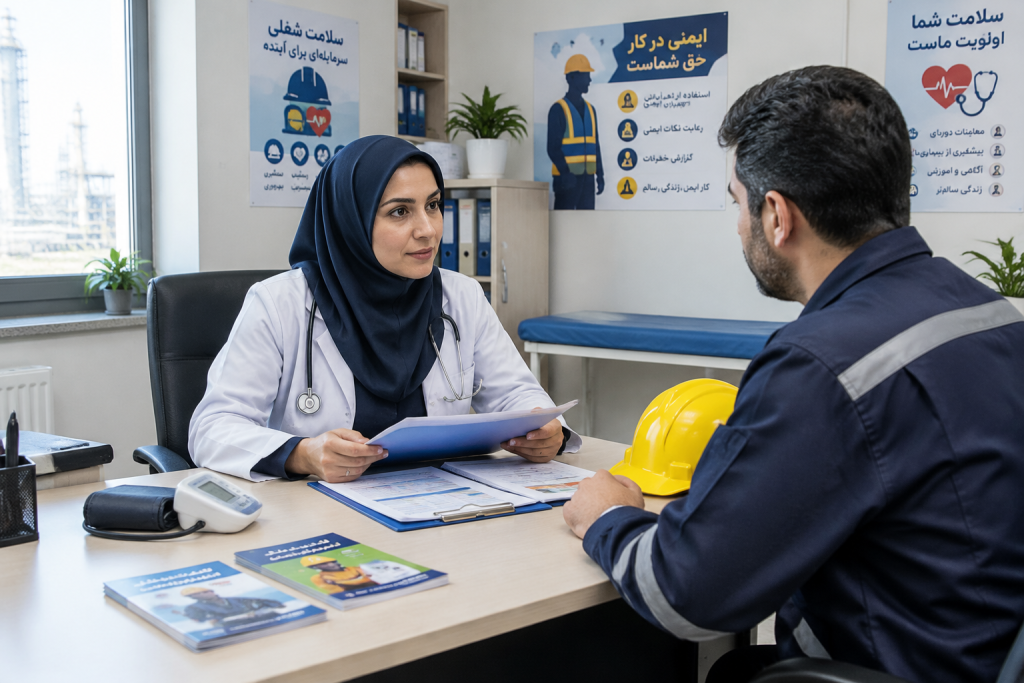
The Director-General of the Ministry of Health's Noncommunicable Diseases Office emphasized the overlap between environmental health, occupational health and chronic-disease prevention. He stated that more than 40% of cancers could be prevented and described risk management, harmful-agent monitoring and early detection as vital.
Tehran — HSE Information Platform. According to the Ministry's central public relations office and the Workforce Health platform, Dr. Jafar Jandaghi addressed the national campaign meeting, Nobody Is Alone: National Cooperation Against Cancer, under the theme From Prevention and Health to Treatment and Palliative Care. He presented epidemiological data, environmental and occupational health indicators and health-system interventions.
He said rising recorded cancer incidence and age-standardized rates require active organizational and occupational-health intervention. Higher reported male incidence was identified in Isfahan, Yazd, North Khorasan and West Azerbaijan (Urmia); among women, Alborz, North Khorasan, Isfahan, Yazd and Fars. The report associates much of this distribution with industrial concentration, demographic change and environmental stress.
The risk triangle: occupation, environment and lifestyle
Jandaghi described malignancy as the interaction of individual factors with structural and environmental hazards. He cited occupational and environmental exposure to air pollution, aromatic hydrocarbons, PM2.5, heavy metals such as cadmium, lead and arsenic, industrial organic solvents and agricultural and organophosphorus pesticides as contributors to mutation and cancer. Shift work, chronic job stress, insurance access and health literacy also shape disease burden.
He said WHO estimates and national cancer data indicate that at least four in ten cases can be prevented by eliminating controllable risk factors, with tobacco and environmental pollution among the leading concerns.
Tobacco and second- and third-hand smoke at work
He called for strict smoke-free workplace policies:
– Among Iranian men, tobacco, including cigarettes and hookah, opioids, inactivity-related excess weight and unhealthy diets were identified as major risk factors.
– Among women, obesity and infections such as papillomavirus and Helicobacter were highlighted, alongside passive cigarette and hookah smoke exposure affecting lung and cellular health.
He warned that toxic and carcinogenic tobacco residues settle on desks, equipment, work clothes, walls and indoor fibers and can persist for months. Controlling third-hand smoke requires integrated occupational hygiene procedures and HSE supervision.
Four levels of prevention and early screening
The Ministry's strategy was described at four levels:
– Primary prevention: organizational education, eliminating industrial chemical exposure and legislative reform.
– Secondary prevention: identifying precancerous lesions and stage I–II tumors. The report states that timely detection can increase five-year survival from below 30% in advanced disease to above 90%.
– Tertiary prevention: treatment, rehabilitation and preventing occupational and personal disability.
– Quaternary prevention: avoiding unnecessary invasive diagnostics or treatment and costly procedures without evidence of effectiveness.
Organizational self-care, productivity and health sustainability
Jandaghi discussed self-care's economic benefits and reduced organizational losses. Citing WHO standards and data, the source states that institutionalizing self-care can produce:
– A 40% reduction in general outpatient visits;
– A 50% reduction in emergency-service needs and specialist admissions;
– Up to a 50% reduction in absence and work-disability days, described as absenteeism and presenteeism.
He concluded that workforce health literacy, joint occupational-health committees and stronger self-care provide a sustainable means of reducing treatment costs for families, industry and pension funds.
Source links: hsenk.ir
Original publication date (Solar Hijri): 1405/06/18
Author: Dibagostaran Sanat