
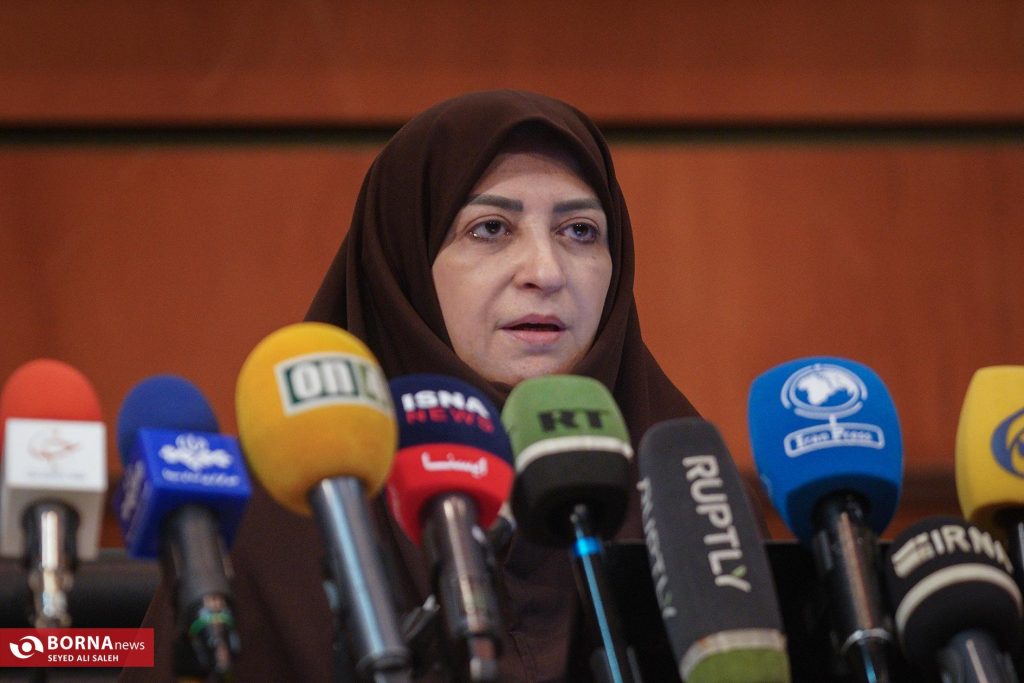
The Strategic Role of the Environment in the National HSE Framework; Head of the Department of Environment Emphasizes the Link Between Safety, Health, and National Security
On the occasion of Environment Week, the Vice President and Head of Iran’s Department of Environment emphasized the vital role of environmental protection within the country’s Health, Safety, and Environment (HSE) framework, stating that national security and resilience cannot be achieved without environmental security, effective environmental risk management, and the protection of natural resources.
According to the Public Relations Office of the Department of Environment, Shina Ansari made the remarks during a press conference held for Environment Week in the presence of environmental and safety journalists. She noted that environmental issues today are not merely ecological concerns but constitute an integral part of the national HSE system, public health protection, crisis management, and sustainable development.
Expressing appreciation for the role of the media in promoting a culture of safety and environmental protection, she stated that specialized environmental and HSE media play a key role in raising public awareness, encouraging responsible environmental behavior, and strengthening social accountability in health and safety matters. Without accurate reporting and active media engagement, the implementation of Article 50 of the Constitution would face serious challenges.
Referring to the country’s special circumstances over the past year, the Head of the Department of Environment said that Iran experienced two imposed wars, which, in addition to human and infrastructural losses, resulted in significant environmental and ecological safety impacts. Wildfires in natural areas, increased environmental pollution, and damage to ranger stations and environmental monitoring infrastructure were among the consequences.
Ansari stressed that these events demonstrated that environmental management is an essential component of the national risk management system. Any environmental threat can directly affect public health, ecosystem safety, and even national security. Ensuring access to clean water, clean air, fertile soil, and biodiversity protection are therefore key sustainability indicators within the national HSE framework.
She also referred to measures taken to manage environmental hazards, including dust and sandstorms. The Comprehensive Dust Control Program has been approved by the Cabinet and entered the implementation phase, with operational measures underway in priority critical hotspots. Additionally, a proposal to establish a Special Forest Protection Unit has been submitted to the government to enhance national preparedness in crisis management, large-scale wildfire control, and natural resource protection.
In the area of air pollution control, Ansari noted that 14 meetings of the National Air Pollution Reduction Task Force have been held under the Fourteenth Government. Key actions include the supply of 421 million liters of low-sulfur fuel to power plants, the signing of 12 contracts for flare gas collection in the energy sector, and the reduction of approximately 10 million cubic meters of daily gas flaring—measures that have significantly contributed to lowering pollutant emissions and improving public health.
Ansari further announced that the assessment of environmental damages resulting from the 12-day war has been completed and submitted to the Vice Presidency for Legal Affairs for international legal follow-up. In addition, during the Ramadan war, administrative buildings, ranger stations, training centers, and monitoring equipment in 13 provinces sustained damage.
She further reported that more than 530,000 worn-out vehicles have been scrapped over the past year and a half, describing this as a major step toward reducing urban pollution, mitigating environmental risks, and improving health and safety indicators in major cities.
Regarding water resources and aquatic ecosystems, Ansari highlighted continuous monitoring of water resources, regular meetings of the National Water and Wetlands Task Forces, issuance of ownership deeds for wetlands, completion of the environmental zoning plan for the Makran coasts, and preparation of the Caspian Sea ecological atlas as key measures undertaken to protect sensitive ecosystems and promote sustainable resource management.
She also addressed the Department’s performance during crisis conditions, stating that environmental personnel continued their missions alongside other executive bodies during wartime. In addition to protecting managed areas, they carried out environmental monitoring operations, wildfire suppression, and relocation of endangered species. These efforts formed part of broader crisis management and environmental impact mitigation measures.
Emphasizing the importance of public participation in environmental protection, she stated that no environmental policy can succeed without community engagement and cooperation with civil society organizations and environmental activists. Strengthening social dialogue and collaboration remains a central pillar of the Department’s policies.
She also announced the development of a National Environmental Curriculum for integration into the country’s education system. Furthermore, three environmental training modules have been incorporated into the general training framework for government employees in order to institutionalize HSE culture within the administrative structure.
Concluding her remarks, Ansari referred to the global Environment Day slogan, “Now is the time for action,” and stressed that overcoming complex environmental challenges requires synergy among executive bodies, public participation, scientific risk management, and a preventive approach within the national HSE system. Environmental protection is a national and intergenerational responsibility that can only be realized through collective cooperation across all sectors of society.
- source:HSENK
- author:DGS
- 1405/03/18