
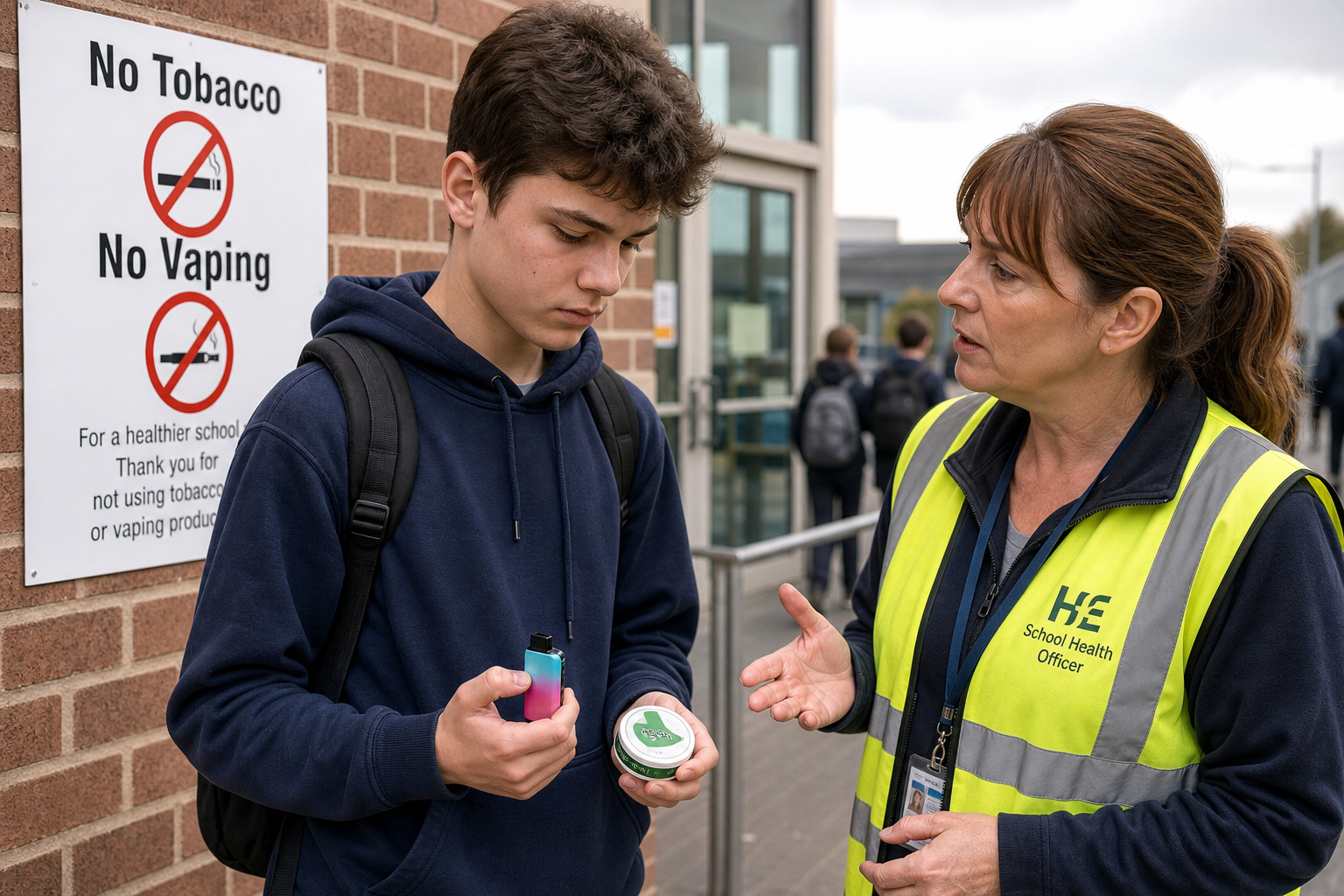
Global Warning on Rising Nicotine Use Among Youth; Strengthening HSE Policies Urged to Prevent Addiction
On the occasion of World No Tobacco Day (31 May), the World Health Organization (WHO) has issued a warning about the growing use of nicotine products among adolescents and called on governments to strengthen policies related to Health, Safety, and Environment (HSE) to protect younger generations from addiction to tobacco and emerging nicotine products.
According to the World Health Organization, at least 40 million adolescents aged 13–15 worldwide currently use tobacco products, while the use of e‑cigarettes and nicotine pouches among young people continues to increase at an alarming rate. The organization emphasized that tobacco companies are reshaping their business models by introducing new products that are easier to use, more appealing, and harder to quit, posing a serious threat to the health of future generations.
Dr. Etienne Krug, Director of the Department of Health Determinants, Promotion and Prevention at WHO, stated that while tobacco continues to kill millions of people each year, major tobacco companies are introducing products such as flavored e‑cigarettes and nicotine pouches to expand their consumer base among adolescents and young adults.
Health experts stress that nicotine is a highly addictive and harmful substance, and its use—particularly among children, adolescents, and young adults whose brains are still developing—can have significant physical and psychological consequences. Increasing nicotine concentrations in some new products have also raised serious public health concerns.
Within the framework of HSE approaches and preventive health policies, WHO has called on governments to implement several regulatory measures, including:
- Banning flavored nicotine and tobacco products that appeal to youth
- Prohibiting advertising, promotion, and sponsorship related to tobacco products
- Ensuring that indoor public spaces are completely smoke‑free and vape‑free
- Strengthening monitoring and enforcement mechanisms regarding the sale and distribution of these products
WHO has also warned about the rapid growth of the nicotine pouch market. These smokeless products are widely promoted through social media influencers, lifestyle marketing, and youth‑targeted advertising campaigns. Colorful packaging, candy‑like flavors, and digital influencer marketing are among the strategies used to attract younger consumers.
Recent assessments show that around 160 countries still lack specific regulations governing nicotine pouches, leaving millions of people potentially exposed to addiction risks. Public health specialists warn that this regulatory gap could contribute to the expansion of nicotine use among adolescents.
At the municipal level, several successful initiatives have also emerged. For example, the city of Rio de Janeiro in Brazil has intensified inspections, enforced restrictions on the sale and advertising of e‑cigarettes, and strengthened smoke‑free policies to protect young people. The city has also conducted large‑scale public awareness campaigns and updated its tobacco control legislation to include all nicotine products, including e‑cigarettes.
On 19 May, WHO also recognized leaders and organizations that have taken decisive action against increasingly sophisticated tobacco industry tactics aimed at attracting young consumers through the 2026 World No Tobacco Day Awards.
Globally, tobacco use causes more than 7 million deaths each year and remains one of the leading causes of preventable mortality. Tobacco consumption is strongly associated with cardiovascular diseases, respiratory illnesses, and more than 20 different types of cancer.
In this context, the World Health Organization encourages more than one billion users of tobacco, e‑cigarettes, and nicotine pouches worldwide to take the first step toward quitting on World No Tobacco Day and break free from nicotine addiction—an important move toward improving public health and advancing health, safety, and environmental objectives in communities and workplaces.
- source:who
- author:DGS
- 1404/03/20