The Inseparable Link Between Occupational Safety, Mental Health, and Livelihoods: ILO Emphasizes the “Living Wage” Mandate Within the HSE Framework / Requirements for Aligning Iran’s Labor Market with the New Platform Work Standards and Just Environmental Transition
In conjunction with high-level international meetings, the International Labour Organization (ILO) has redefined the standards of decent work, declaring a “subsistence-indexed living wage” and “job security” as foundational pillars of occupational health and industrial accident prevention. Experts in Health, Safety, and Environment (HSE) and labor relations emphasize that the widening gap between workers’ real income and inflation rates not only exacerbates occupational burnout and acute workplace stress, but also significantly increases the probability of fatal workplace accidents—a critical alert requiring urgent consideration by Iran’s High Council of Technical Protection and labor market policymakers.
1. Redefining Occupational Health: The Direct Correlation Between Livelihood Stress and Workplace Incidents
According to the latest technical assessments published by the International Labour Organization (ILO), the scope of occupational health is no longer limited solely to physical, ergonomic, or chemical hazards. Instead, psychosocial hazards—particularly income insecurity and livelihood distress—directly compromise operator vigilance and cognitive focus, substantially elevating the incidence of near-misses and catastrophic industrial accidents.
The ILO underscores that the realization of a “safe and healthy working environment” (enshrined since 2022 as a Fundamental Principle and Right at Work) remains unachievable without securing a “Living Wage.” The report highlights that when workers are compelled to endure exhausting overtime hours, back-to-back shifts, and multiple concurrent jobs simply to afford baseline essentials—such as healthcare, adequate nutrition, and housing—they experience degraded situational awareness, chronic muscular fatigue, and severe attention deficits, placing them at the highest risk for both individual and systemic occupational injuries.
2. Alignment with Iran’s Labor Market Context and National Regulatory Framework
In Iran, this perspective directly corresponds to Article 85 and associated bylaws of the National Labor Code, as well as regulations ratified by the High Council of Occupational Safety and Health. Incident statistics across construction sites, mining operations, and contractor workshops indicate that a substantial proportion of root causes attributed to human error originate from chronic fatigue and economic distress among the workforce.
Furthermore, the fundamental distinction between the statutory “minimum wage” and a “living wage” precisely mirrors Article 41 of the Iranian Labor Code—particularly Paragraph 2, which mandates that wage determinations must reflect the real living costs of a standard household basket. HSE professionals stress that compensation is not merely an internal corporate financial matter; rather, it serves as the primary proactive intervention within the occupational health risk assessment matrix.
3. Ergonomics and Emerging Hazards in Platform-Based Work (Ride-Hailing and Online Delivery Services)
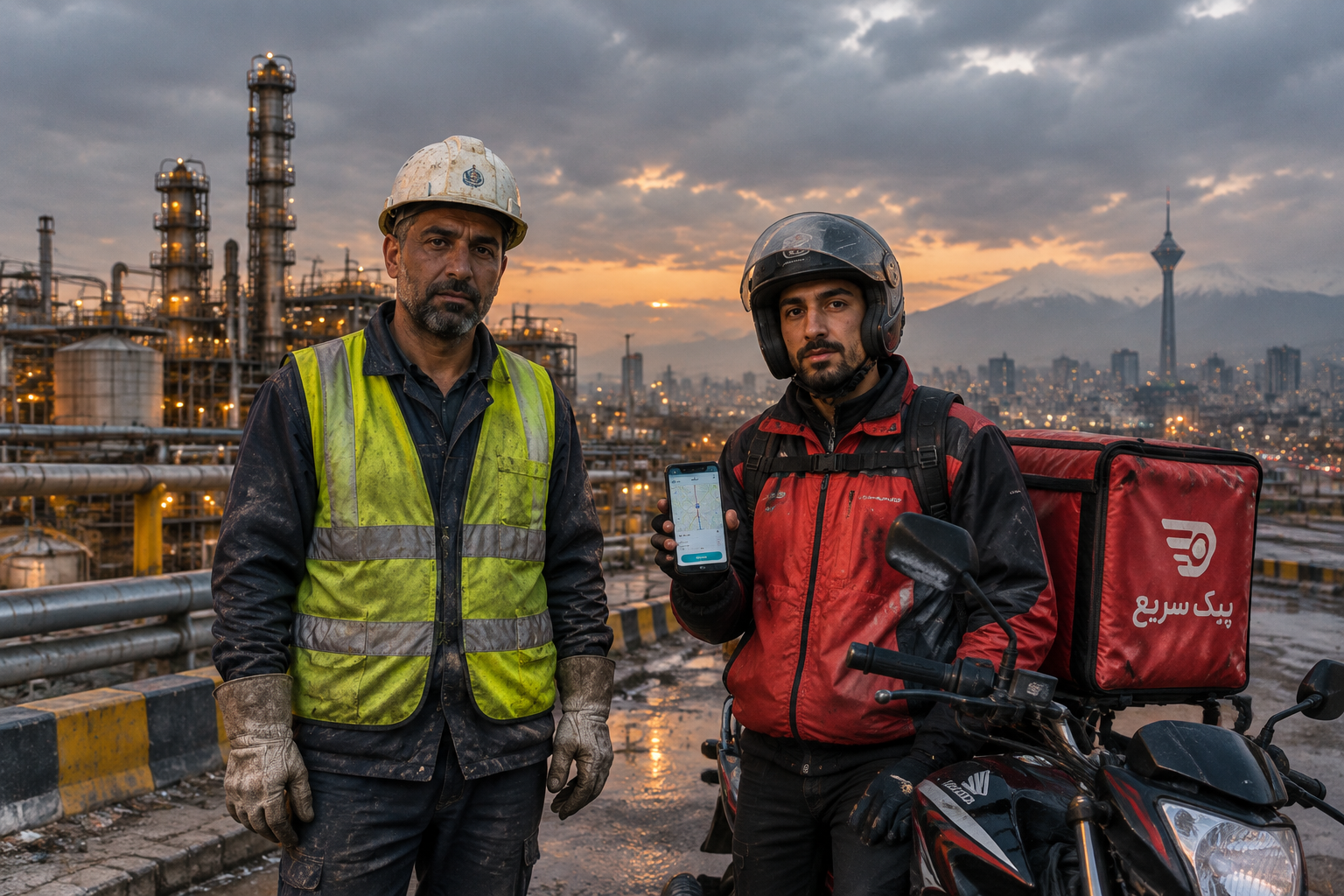
A focal point of the recent ILO agenda is the adoption of the “Decent Work in the Platform Economy Convention, 2026 (No. 193).” Given the rapid expansion of digital ride-hailing, courier, and e-logistics platforms across major Iranian metropolitan areas like Tehran, hundreds of thousands of motorcycle couriers and drivers operate in the absence of comprehensive HSE protections:
- Traffic Safety and Ergonomic Hazards: High spinal and musculoskeletal strain resulting from prolonged, uninterrupted driving shifts, coupled with continuous exposure to hazardous airborne particulates (environmental and occupational respiratory hazards) and substandard safety gear.
- Absence of Accident Compensation and Disability Coverage: The newly established standards require digital platform operators to absorb systemic liabilities, rather than shifting the financial and legal burdens of personal injury and Personal Protective Equipment (PPE) entirely onto independent contractors.
4. Artificial Intelligence and Industrial Automation: Mitigating the Risks of Technological Transition
The deployment of artificial intelligence tools, machine learning, and advanced robotics across manufacturing lines, petrochemical complexes, and logistics hubs introduces novel challenges within cyber-physical safety and mental well-being. From an HSE standpoint, Safety by Design principles must not compromise human dignity through invasive biometric surveillance or workplace isolation stress. Instead, technological innovation must be harnessed to power predictive safety analytics and reduce human exposure to hazardous and arduous working conditions.
5. Just Environmental Transition and Carbon-Intensive Industries
The concluding section of the report addresses climate transition and emission reduction targets. For an energy-intensive economy with substantial oil, gas, and petrochemical sectors like Iran, policies promoting decarbonization must not lead to abrupt project closures, uncontrolled downsizing, or the disregard of early-retirement benefits associated with hazardous and arduous professions. Enhancing reskilling programs, environmental safety protocols, and industrial waste management remains critical during this transition phase.
Conclusion and Strategic Policy Recommendations:
Labor policymakers and national regulatory authorities responsible for HSE oversight are urged to prioritize three fundamental actions:
- Strengthening Labor and Occupational Health Inspections: Intensifying field audits across small enterprises (under 10 workers) and formalizing informal labor contracts to secure mandatory industrial accident insurance coverage.
- Integrating HSE Factors into Compensation Formulas: Factoring dedicated welfare allowances, periodic mental health screenings, and nutritional standards into enterprise compensation packages.
- Drafting a Comprehensive Safety Code for Digital Platforms: Mandating that ride-hailing and on-demand delivery corporations provide compulsory employer liability insurance and scheduled occupational medicine evaluations for all registered workers.
- source:https://www.ilna.ir/
- author:DGS
- 1405/06/26