Aligned with international declarations and the mandates of Article 96 of the National Labor Code;
Institutionalizing HSE Management Systems Through Worker Participation: Occupational Health and Safety is a Fundamental Labor Right, Not a Workplace Privilege News Code: 102197
In alignment with fundamental occupational safety standards, the International Labour Organization (ILO) has underscored that direct worker engagement in hazard identification and the risk assessment process is the sole effective strategy to transcend symbolic, “paper-only” compliance. Within national industrial Health, Safety, and Environment Management Systems (HSE-MS)—most notably across high-risk sectors such as petrochemicals, rubber manufacturing, and heavy industry—this participatory approach plays a pivotal role in mitigating both the accident frequency and severity rates (AFR/ASR).
Elevating Workplace Safety from an “Incentive Perk” to a “Fundamental Legal Right”
According to reports by the Public Relations and Media Department, contemporary assessments of HSE management frameworks demonstrate that the conventional perspective viewing workplace safety as a discretionary employer-granted privilege has become obsolete. With the elevation of occupational safety and health (OSH) within the ILO’s Declaration on Fundamental Principles and Rights at Work (underpinned by Conventions No. 155 and No. 187), this domain has been reclassified as an inalienable right.
Within Iran’s legal and industrial regulatory framework, and in strict accordance with Articles 85, 91, and 92 of the Labour Law of the Islamic Republic of Iran, safeguarding the workforce and establishing standardized sanitary and occupational safety protocols are inherent obligations incumbent upon employers. Workers retain an explicit statutory right to operate within an environment devoid of hazardous physical, chemical, and psychosocial stressors.
Senior HSE specialists emphasize that shop-floor operators actively engaged across primary assembly lines, processing units, and logistics centers are the first to experience unsafe acts and hazardous conditions firsthand. Risk assessments conducted without the direct involvement and technical feedback of frontline workers inevitably produce superficial, desk-bound reports incapable of averting acute occupational accidents or cumulative work-related illnesses.
Multiple Hazards Across the Value Chain: From Aromatics to Ergonomic and Psychosocial Risks
An analysis of operational hazards within the rubber and allied chemical manufacturing sectors reveals multifaceted threats along the entire production chain:
- Acute Chemical Hazards: Exposure to volatile organic compounds (VOCs), hazardous vapors generated during curing and vulcanization stages, carbon black particulates, and specialized solvents—all of which serve as major precursors to chronic occupational and respiratory disorders.
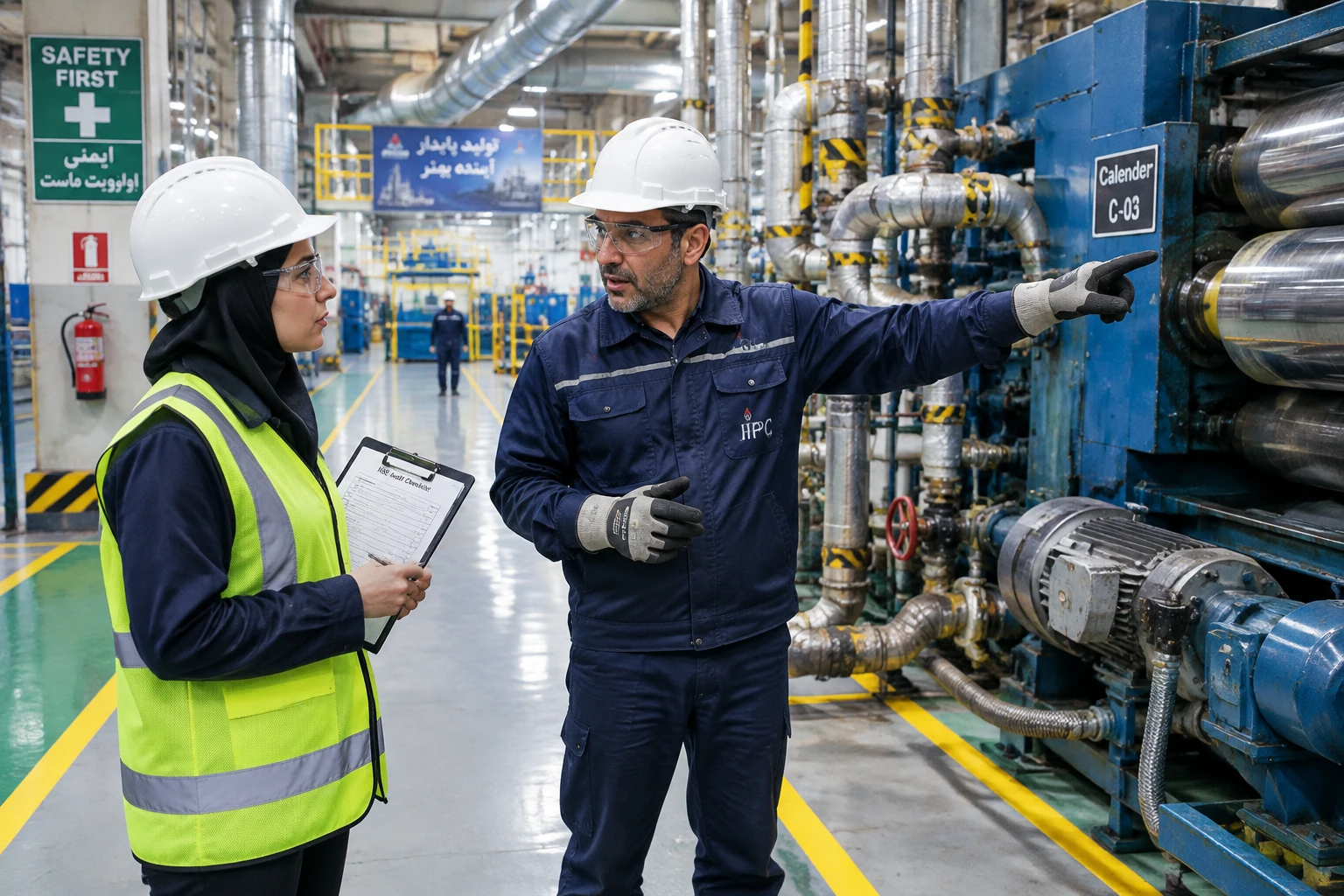
- Mechanical and Physical Hazards: Caught-in/between risks involving calenders, mills, and heavy rotating machinery, elevated ambient noise levels, and systemic ergonomic misalignments across operating stations.
- Psychosocial Risks: Stress generated by extended rotational shifts, operational fatigue, and psychosocial pressures, which are now formally assessed as key occupational health indicators under ISO 45001 standards and modern workplace compliance audits.
The Decisive Role of Joint Occupational Health and Technical Safety Committees in Bridging Training Gaps
Pursuant to Article 93 of the Labor Law, the establishment of a Joint Technical Safety and Occupational Health Committee—comprising worker representatives, safety officers, and occupational health specialists—is mandatory across all industrial enterprises employing more than 25 personnel.
Field assessments demonstrate that a primary operational deficit lies in the ineffective transmission of safety knowledge down to base-tier workers, alongside access limitations regarding specialized Personal Protective Equipment (PPE) suited to specific toxicological profiles. A resilient HSE ecosystem transcends perfunctory training seminars, requiring instead:
Systematic, checklist-driven shop-floor audits.
An institutionalized near-miss and unsafe condition reporting mechanism that operates free of disciplinary retaliation.
The provision of certified PPE coupled with rigorous practical instruction regarding proper donning, doffing, inspection, and maintenance.
Harmonizing International Standards with National Regulatory Enforcement
The international emphasis on worker safety coincides with intensified oversight by national labor inspectors and occupational health officers operating under the auspices of health authorities and the Ministry of Cooperatives, Labour, and Social Welfare, utilizing updated technical safety regulations.
Occupational health authorities maintain that a worker’s guarantee of completing each shift and returning home safely represents the cornerstone of sustainable economic productivity. Capital allocated to HSE infrastructure is not an administrative overhead, but a quantifiable, risk-mitigating investment that prevents statutory indemnities, medical expenditures, permanent disability claims, and catastrophic industrial losses.
- source:HSENK
- author:DGS
- 1405/07/04