
Environmental Education for Children: A Strategic Step Toward Promoting HSE Culture and Sustainable Development in Iran
Publication Date: October 11, 2026
Teaching Safe and Responsible Behaviors from Childhood Is an Investment in Iran’s Future
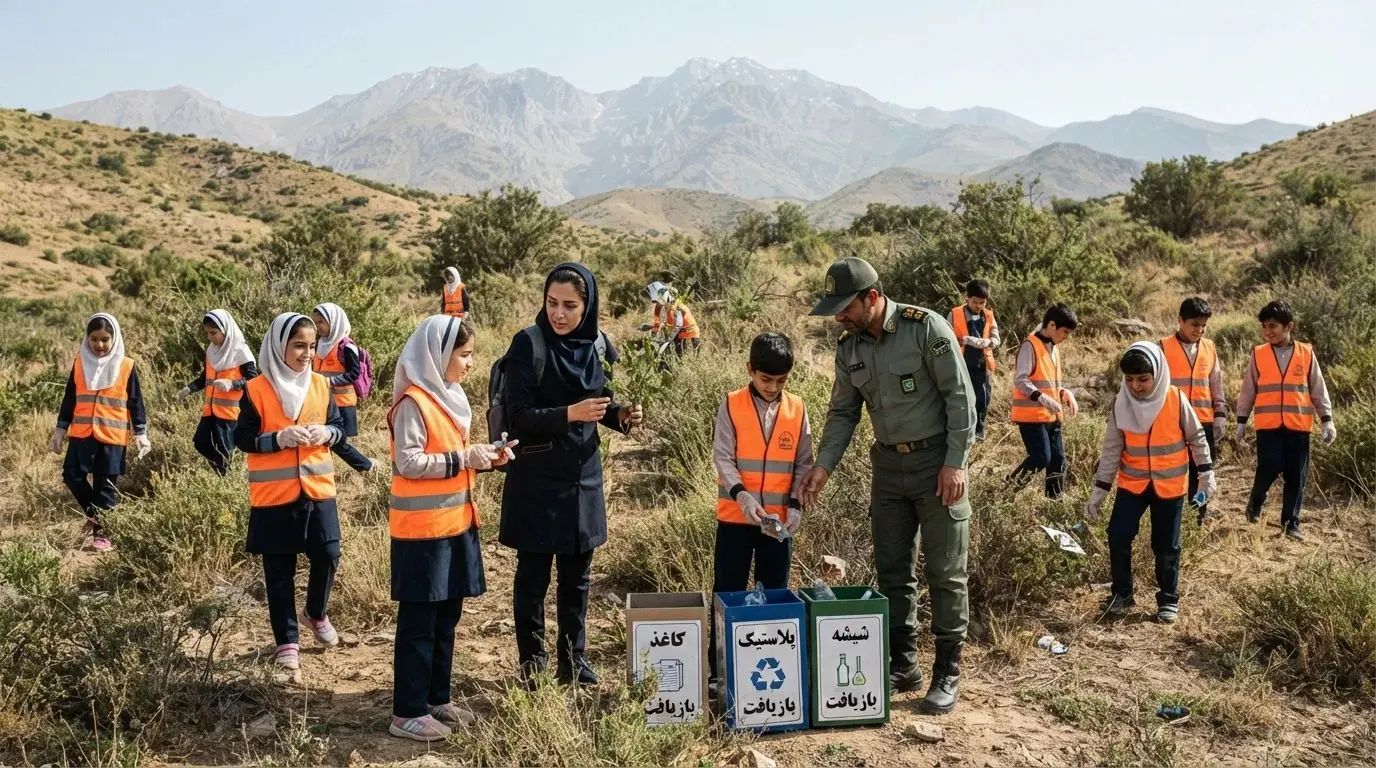
According to the Supporters of Occupational Health and Safety News Agency, citing the Public Relations Office of the Department of Environment, a ceremony commemorating Children and the Environment Day, along with the closing ceremony of the “Makan’s Mission” short-story writing competition, was held on the morning of October 8 in the presence of a number of officials, environmental protection officers, and students.
The ceremony was attended by Hadi Kiadeliri, Deputy Head of the Department of Environment for Education and Public Participation; Mohammad Madadi, Head of the Center for Environmental Education and Environmental Ranger Training; Hassan Abbasnejad, Director General of the Tehran Department of Environment; Zhima Javaheri-Pour, Deputy for Physical Education and Health of the Education and Training Department of the Townships of Tehran Province; Vida Maleki, Director of the Tehran Province Office of the Institute for the Intellectual Development of Children and Young Adults; as well as environmental protection officers and students.
The Need to Institutionalize Environmental Culture from Childhood
Hadi Kiadeliri emphasized the importance of environmental education and awareness-building from the early years of life, stating: “Changes in environmental behavior must begin during childhood. In addition to acquiring knowledge and awareness, children should have opportunities to establish an emotional connection with nature.”
He added: “Environmental education will be effective when it goes beyond the transfer of information and leads to the formation of responsible, safe, and sustainable behaviors. Within this framework, the concepts related to HSE, or health, safety, and environment, should be taught to children in an age-appropriate manner through creative methods, storytelling, games, group activities, and direct experience.”
Referring to the country’s environmental challenges, the Deputy Head of the Department of Environment for Education and Public Participation stated: “Environmental degradation is a global issue; however, Iran’s climatic and geographical conditions make greater attention and sensitivity necessary. A significant part of the country is located in arid and semi-arid climates and has limited vegetation. Nevertheless, Iran possesses valuable biodiversity, including species and ecosystems that are unique to the country, some of which date back millions of years.”
The Role of Habits in Developing Safe and Responsible Behaviors
Kiadeliri emphasized the role of children in creating lasting changes in society, saying: “One of the factors contributing to the continuation of improper environmental behaviors is the dominance of habits over awareness. An individual may be fully aware of the consequences of pollution, excessive consumption of resources, or the destruction of nature, but improper habits may prevent behavioral change.”
He continued: “For this reason, appropriate habits must be developed from childhood. These include reducing waste generation, separating waste, conserving water and energy, observing personal and public hygiene principles, respecting wildlife, avoiding damage to nature, and following safety guidelines when visiting natural environments.”
The official added: “Children should not be exposed merely to advice and moral instructions. Conditions must be created in which correct behavior has positive and understandable consequences, while improper behavior also produces consequences that are clear and appropriate to the child’s age. Such an approach helps children develop sound and responsible decision-making skills.”
HSE Education: Connecting Knowledge, Attitudes, and Behavior
The Deputy Head of the Department of Environment for Education and Public Participation described education as something beyond simply knowing facts and said: “Many people may possess extensive environmental knowledge, but this awareness does not necessarily lead to appropriate behavior. Therefore, effective education must address three components simultaneously: knowledge, attitude, and behavior.”
He added: “Children should learn that every individual, even on a small scale, has a role to play in protecting the environment. Behaviors such as turning off unnecessary lights, closing water taps, using waste bins properly, caring for green spaces, reporting observed environmental violations, and observing safety principles in nature are examples of children’s practical participation in achieving HSE and sustainable development objectives.”
Kiadeliri also emphasized the need for families, schools, and cultural institutions to participate in this process, stating: “Sustainable change can only be achieved when educational messages are consistent at home, at school, and throughout society, and when children observe and experience responsible behaviors in their everyday environment.”
Strengthening Children’s Emotional Connection with Nature
Referring to the importance of children’s emotional relationship with nature, he said: “Environmental education should not rely solely on fear of the consequences of environmental destruction. Children should understand nature, develop affection for it, and feel a sense of belonging toward the environment.”
He added: “Knowledge and wisdom show the right path, while emotions and affection create the motivation to act. Effective environmental protection requires both elements. A child who develops an emotional connection with nature is more likely to act sensitively and responsibly as an adult in the face of pollution, the destruction of natural resources, and environmentally hazardous behaviors.”
Drawing on Iran’s Cultural Heritage
Referring to Iran’s cultural and literary heritage and its long-standing respect for nature and living beings, the official stated: “Iranian culture has historically maintained a special connection with nature. The country’s literature and cultural heritage also contain numerous examples of an ethical and emotional perspective toward plants, animals, and other living beings.”
He noted: “Respect for nature and living beings is part of Iran’s cultural heritage. These concepts must be revisited and strengthened for the new generation through appropriate language and methods. Using storytelling, art, children’s literature, and participatory activities can play an effective role in conveying environmental protection and safety concepts to children.”
Educating Children Is an Investment in the Country’s Future
Kiadeliri concluded by emphasizing: “Investing in children’s education and development in the field of the environment is not an expense; it is an investment in Iran’s future. The more we invest today in educating this generation, the less we will have to spend in the future on repairing environmental damage, controlling hazards, and correcting improper behaviors.”
He stated: “Cooperation among the Department of Environment, the Ministry of Education, the Institute for the Intellectual Development of Children and Young Adults, families, and other cultural and social institutions is essential for creating a broad educational movement and involving students in environmental protection.”
In this regard, the “Makan’s Mission” short-story writing competition provided an opportunity to strengthen creativity, responsibility, social participation, and children’s and adolescents’ familiarity with the concepts of environmental protection and HSE culture.
- source:HSENK
- author:DGS
- 1405/07/19