
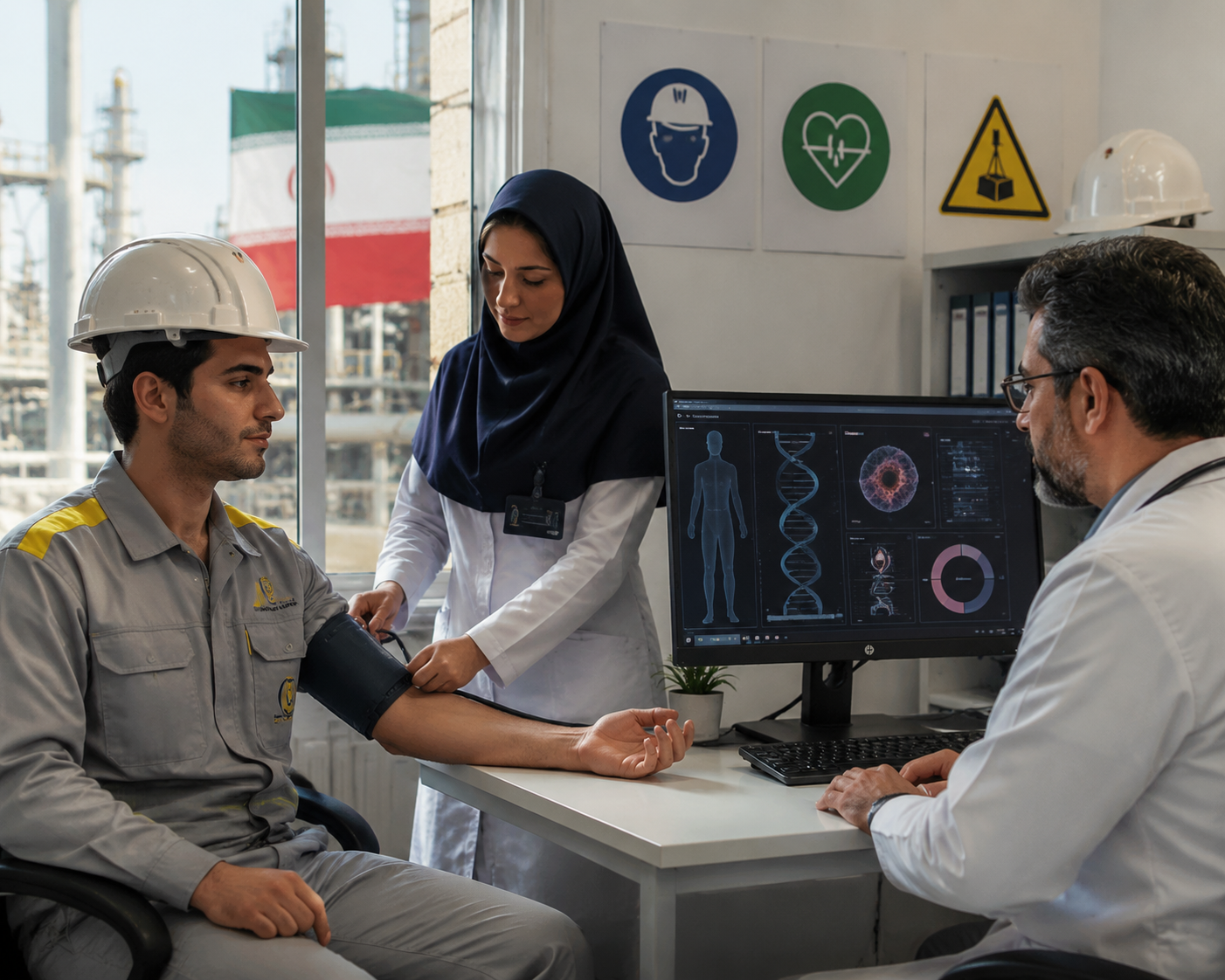
HSE Warning on the Rising Risk of Biological Aging and Cancer Among Young Workforce: A Call for Revising Occupational Health and Early Screening Protocols
Recent international research findings and large-scale health data analyses indicate that accelerated biological aging—defined as premature cellular wear and tear beyond chronological age—may be a key factor behind the increasing incidence of cancer among younger generations. In light of these findings, HSE management has emphasized the urgent need to revise occupational health surveillance frameworks, strengthen workplace exposure control, and adopt early preventive strategies to address premature aging in the workforce.
Tehran – Public Relations and International Affairs | According to the official HSE information portal, recent analyses based on large health biobank data—including genetic and biochemical assessments of more than 164,000 participants in the United Kingdom and the United States—suggest that younger generations, particularly those born between the 1970s and 1990s, are experiencing biological aging at a faster rate than expected for their chronological age. This phenomenon, often described as accelerated cellular wear and tear, appears to weaken immune function and affect organ systems, increasing the risk of early-onset cancers (diagnosed before age 50) by as much as 15 percent.
Scientific Findings and Their Relevance to Occupational Health Challenges in Iran
According to the study, advanced aging of the immune system is directly associated with early-onset lung cancer, while accelerated aging of adipose tissue has been linked to early-onset colorectal cancer.
Within industrial sectors and large organizations in Iran, these findings should be regarded as a serious warning sign for the health of the young workforce. Occupational health experts believe that several workplace and lifestyle-related factors commonly observed in Iranian work environments may contribute to accelerated biological aging, including:
- Long-term exposure to chemical pollutants, airborne particles, and hazardous agents
- Irregular shift work, especially night shifts
- Chronic occupational stress and poor work-life balance
Global data indicate that the incidence of cancers diagnosed in individuals under the age of 50 has increased by approximately 24 percent over the past three decades. Without timely intervention, this trend could negatively affect workforce productivity, increase healthcare burdens, and place growing pressure on national insurance and social support systems.
The Need for Early Identification and HSE Interventions
A senior occupational health official, referring to the statement of researchers from Washington University, emphasized:
“If we can identify younger individuals who appear healthy but show signs of accelerated biological aging, we can focus on targeted prevention strategies and early detection efforts for those who are most likely to benefit from timely intervention.”
In line with this perspective, the organization’s HSE management has highlighted the following strategic priorities to protect human capital and promote long-term workforce sustainability:
- Upgrading occupational health protocols: Integrating modern biological aging indicators and early cancer screening measures—such as immune status monitoring and inflammatory biomarker assessments—into periodic medical examinations, particularly for employees under the age of 40.
- Stricter control of harmful workplace exposures: Reinforcing monitoring and mitigation of chemical, physical, and ergonomic risk factors in industrial environments to reduce oxidative stress and long-term cellular damage.
- Expanding workplace wellness programs: Improving employee nutrition plans, encouraging regular physical activity, and providing mental health counseling to reduce burnout and stress-related biological deterioration.
End of Report
- source:https://www.mehrnews.com/
- author:DGS
- 1405/04/07