
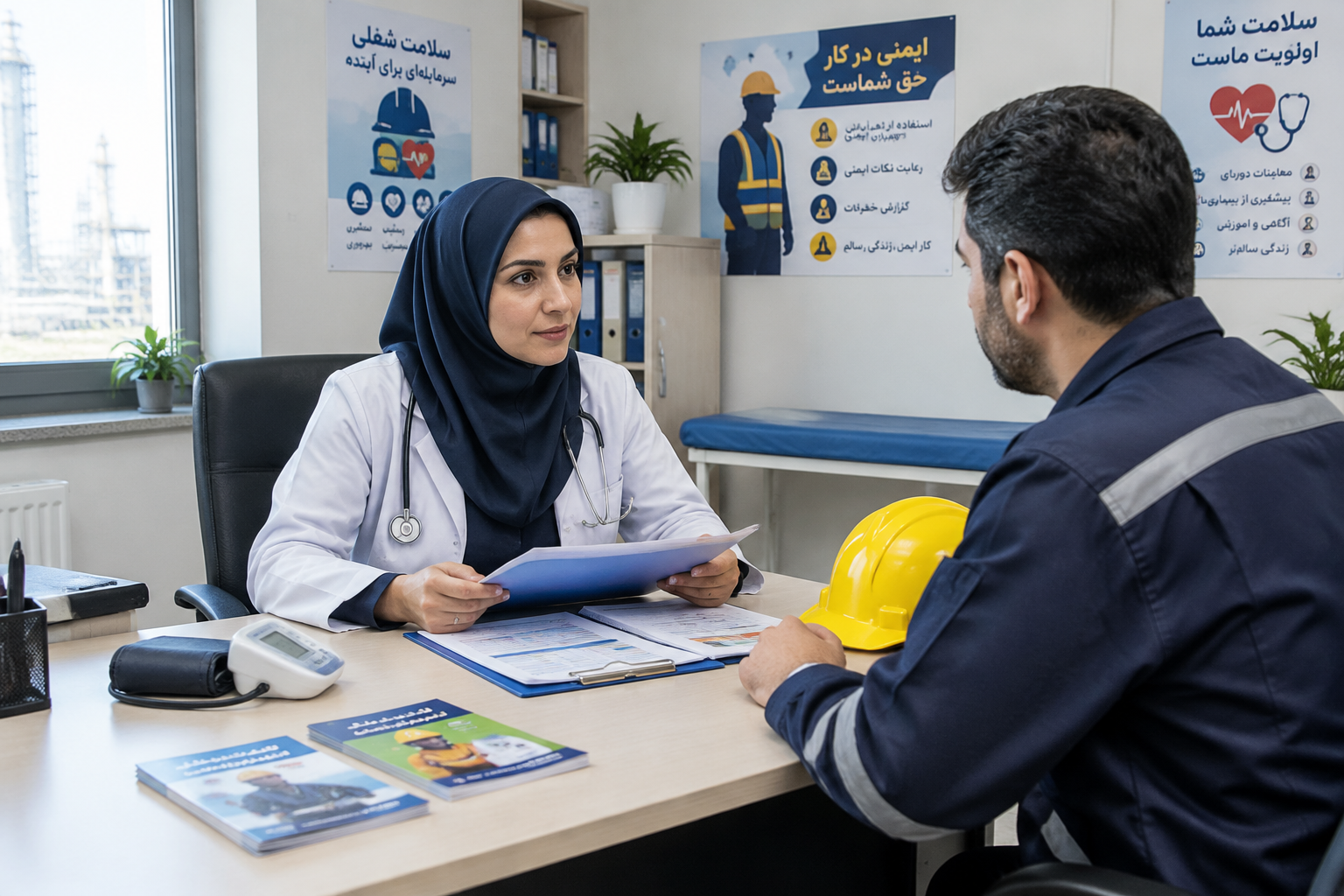
40% of Cancers Are Preventable Through Environmental Risk Monitoring and Occupational Screening / Ministry of Health Outlines Strategy to Integrate Self-Care with Occupational Health
The Director General of the Non-Communicable Diseases (NCD) Office at the Ministry of Health and Medical Education highlighted the overlap between environmental health, occupational wellness, and chronic disease prevention. Emphasizing that over 40% of all cancers are definitively preventable, he underscored the vital role of risk management, workplace hazard surveillance, and early diagnostic screening.
TEHRAN – Health, Safety, and Environment (HSE) Information Network:
According to the public relations department of the Ministry of Health and Medical Education and the Occupational Health Information Network, Dr. Jafar Jandaghi outlined the latest epidemiological findings, environmental indicators, and health intervention policies during the national campaign gathering “No One Is Alone: United Against Cancer,” held under the central theme “From Prevention and Hygiene to Treatment and Palliative Care.”
Pointing to the rising incidence of registered cancer cases nationwide, Dr. Jandaghi stated: “An analysis of age-standardized rates (ASR) underscores the critical need for proactive intervention by organizations and occupational health managers. Notably, among men, the provinces of Isfahan, Yazd, North Khorasan, and West Azerbaijan (Urmia), and among women, Alborz, North Khorasan, Isfahan, Yazd, and Fars, show the highest incidence rates. A significant portion of this distribution correlates with heavy industrial concentrations, demographic shifts, and environmental stressors.”
The Risk Triangle: The Nexus of Occupational Hazards, Environmental Pollutants, and Lifestyle
Deconstructing the root causes of neoplasms through an HSE lens, the Director General emphasized that malignancies stem directly from the interplay between individual factors and structural/environmental exposures.
Addressing environmental and industrial hazards, he added:
“Occupational and environmental exposures to ambient air pollution, polycyclic aromatic hydrocarbons (PAHs), fine particulate matter
, heavy metals (such as cadmium, lead, and arsenic), volatile organic compounds (VOCs), and organophosphate agricultural pesticides act as biological drivers for cellular mutations and carcinogenesis. Alongside these exposures, systemic factors such as shift work, chronic occupational stress, social security and insurance coverage, and health literacy directly shape the burden of disease.”
Dr. Jandaghi further noted that, according to World Health Organization (WHO) benchmarks and national cancer registries, at least 4 out of every 10 cancer cases can be prevented by eliminating modifiable risk factors, with tobacco consumption and toxic environmental exposures ranking highest. . در این میان، مصرف دخانیات و مواجهه محیطی با آلایندهها در صدر قرار دارند.
Tobacco Use, Secondhand, and Thirdhand Smoke in Occupational Settings
Underlining the necessity of strictly enforcing “Smoke-Free Workplace” policies, Dr. Jandaghi highlighted:
- Among Iranian men, primary risk factors include cigarette and hookah consumption, opioid abuse, sedentary lifestyle-induced obesity, and poor dietary habits—with tobacco use playing a dominant role.
- Warning against the perils of thirdhand smoke, he explained:
Warning against the perils of thirdhand smoke, he explained:
“Carcinogenic chemical residues and tobacco-specific nitrosamines deposit onto desks, manufacturing equipment, uniforms, walls, and indoor furnishings, persisting for months. Mitigating this latent risk demands unified occupational hygiene guidelines and rigorous oversight by HSE departments.”
A Four-Tier Prevention Model: Increasing Survival Rates to Over 90% via Early Detection
Dr. Jandaghi detailed the Ministry of Health’s four-tiered preventive framework:
- Primary Prevention (Policy & Hazard Elimination): Institutional training, phase-out of carcinogenic chemicals in industry, and regulatory reinforcement.
- Secondary Prevention (Early Detection): Identification of precancerous lesions and Stage I/II tumors. Timely diagnosis can raise five-year relative survival rates from under 30% in advanced stages to over 90%.
- Tertiary Prevention: Clinical management, physical rehabilitation, and the mitigation of long-term work-related disabilities.
- (Quaternary Prevention Quaternary Prevention: Protection of patients from over-medicalization, non-evidence-based treatments, and invasive or redundant procedures.
Organizational Self-Care: A Foundation for Productivity and Health Sustainability
Concluding his address, Dr. Jandaghi emphasized the direct socioeconomic benefits of workplace self-care and preventive practices. According to WHO figures, embedding structured self-care within organizations and communities achieves:
.
- A 40% reduction in outpatient visits to general practitioners.
- A 50% reduction in emergency department visits and inpatient admissions.
- Up to a 50% decline in absenteeism and presenteeism caused by chronic illnesses.
“Fostering health literacy among employees, establishing active occupational health committees, and expanding routine self-care represent the most sustainable approach to curtailing healthcare costs for families, industrial enterprises, and pension funds nationwide,” he concluded.
- source:HSENK
- author:DGS
- 1405/06/18