
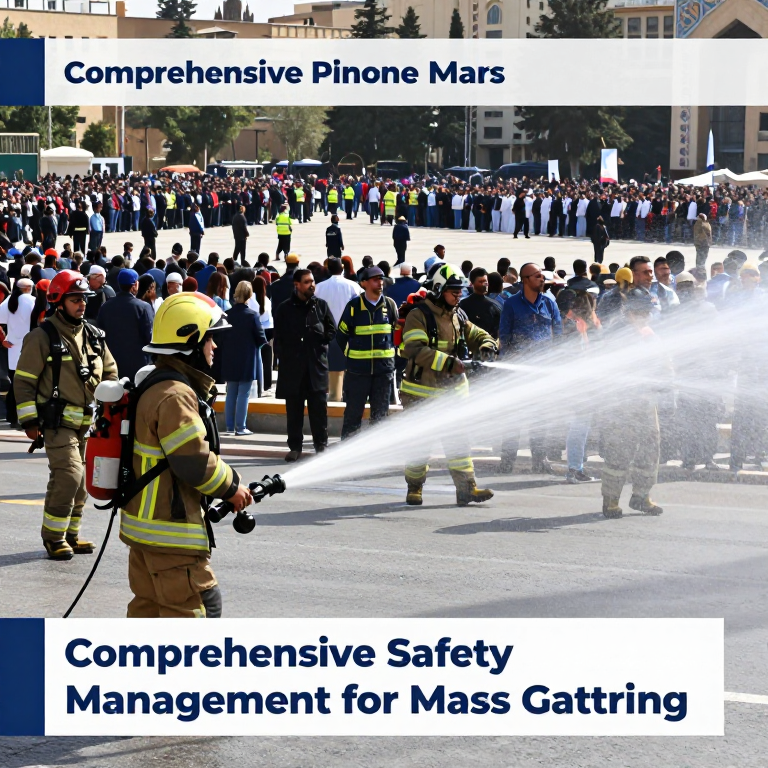
Mehr News Agency reports that the Tehran Municipality Fire and Safety Services Organization deployed all headquarters and operational resources in an unprecedented mass-gathering safety plan to protect millions attending farewell and funeral ceremonies. Described as the organization's largest non-incident deployment, the operation focused on hazard identification, environmental heat management and rapid-response teams at entrances and along circulation routes.
Preventive protocols: inspection through deployment
The fire service spokesperson described the operation as one of its most complex mass-gathering safety projects. Hazard identification began a month beforehand. Specialist teams inspected Imam Khomeini Mosalla and its approaches meter by meter, addressing unsafe conditions, improving passageways and managing physical obstructions.
Mobilizing operational and support resources
All 138 Tehran fire stations were placed on full alert. The plan involved 6,000 firefighters and 400 volunteers, with operational shifts moved to a 24-hours-on/24-hours-off pattern to maximize staffing. Hundreds of light and heavy vehicles, rescue motorcycles and specialist equipment were positioned at strategic locations, including city entrances, parking areas and accommodation sites, to reduce response times.
Environmental stress and public health measures
In view of forecast conditions and heat illness risk, the fire service installed 20 mist-system lines and industrial sprinklers in the Mosalla grounds and along funeral routes. These engineering measures were intended to moderate ambient temperature and protect participants' physical wellbeing.
Alignment with HSE standards in Iran
– Risk management: pre-event technical inspections represent a proactive approach consistent with mass-gathering safety principles under NFPA 101.
– Emergency preparedness: revised shifts and distributed deployment demonstrate organizational capacity to respond to incidents involving very large crowds.
– Continuous monitoring: walking patrols within the crowd enabled real-time observation and rapid intervention, a capability often missing from major gatherings.
Health and safety advice
The spokesperson emphasized:
– Transport management: use metro and bus services to reduce congestion and traffic.
– Movement discipline: maintain orderly crowd flow and avoid sudden changes of direction to reduce crowd-crush risk.
– Vulnerable groups: prioritize children and older adults under difficult environmental conditions.
– Emergency exit: if weakness or breathing difficulties occur, leave the flow calmly and diagonally rather than stopping suddenly and obstructing others.
Source links: www.mehrnews.com
Original publication date (Solar Hijri): 1405/04/14
Author: Dibagostaran Sanat