
The head of the Department of Environment called for industry to move beyond pollution-control-only approaches toward green management and environmental requirements integrated throughout production and service lifecycles, emphasizing industry's role in sustainable development.
The Workforce Health and Safety Supporters news outlet, citing the Department's public relations office, reported that Shina Ansari addressed the 25th National Green Industry, Mining and Services Conference. Attended by officials, executives, industrial representatives and selected facilities, the event highlighted environmental compliance as a scientific, economic and ethical necessity and a pillar of sustainable development, as well as a legal duty.
Ansari identified climate change, global warming, limited freshwater, forest and ecosystem destruction, biodiversity decline and accumulated industrial and plastic waste as major threats to health, economic stability and a livable future.
Industry has contributed substantially to growth and living standards over the past century. However, excessive resource use and inadequate long-term consideration of production impacts have increased waste, habitat destruction and pollution and disturbed ecological balance. Industrial development that disregards environmental, social and safety considerations cannot meet present or future needs.
Green management extends beyond end-of-pipe controls
Green industry is not limited to pollution-control equipment or minimum compliance at the end of a production line. It starts with product design and raw-material selection and covers production, energy and water use, waste, transport, services and product end-of-life.
Within integrated HSE management, environmental protection belongs alongside worker health, process safety and corporate social responsibility. This requires ongoing identification of environmental aspects and impacts, risk assessment, performance monitoring, workforce training and active management participation in strategic decisions.
Climate change, air pollution, water scarcity, land degradation and biodiversity loss also affect the economy, investment, infrastructure, public health, governance and industrial innovation. Clean technology and resource-efficiency investment should therefore be treated as preventive and strategic measures.
Circular economy and resource efficiency
Durable product design, material reuse, recycling, lower primary-resource consumption, digital technologies and value-chain transparency are central to a circular economy. Industries incorporating these principles into investment, process design and business models can gain competitiveness, resilience and social credibility.
Ansari also noted structural and cultural obstacles, relatively low energy and water prices, limited finance and weak incentives to invest in new technology and green productivity. Deterrents such as pollution charges are insufficient on their own. Financial, credit, tariff and tax incentives are also needed for leading environmental and HSE performers.
Effective green-facility practices
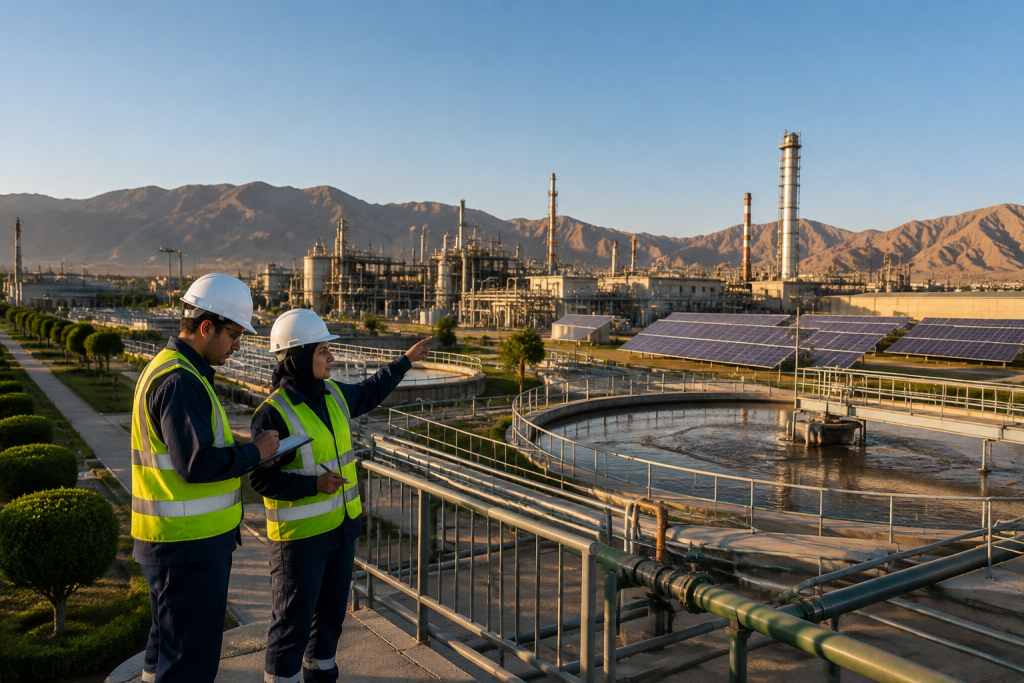
Selected facilities at the conference demonstrated advanced effluent treatment, water recirculation and reuse, energy efficiency, heat recovery, sound waste management, reduced emissions, renewable energy, particularly solar, and participation in environmental awareness programs.
These examples show environmental responsibility to be a strategic investment in lower operational risks, higher productivity, healthier workers and neighboring communities, stakeholder trust and competitiveness, rather than an imposed cost.
The conference should serve as a platform for exchanging experience, showcasing successful models, developing clean technology and strengthening green management culture. Ansari urged industrial, mining and service managers to prioritize environmental and HSE management systems and their continuous improvement. Financial and credit support, pricing and subsidy reform and stronger legal incentives can help industry achieve clean, safe, efficient and sustainable production.
Source links: hsenk.ir
Original publication date (Solar Hijri): 1405/06/03
Author: Dibagostaran Sanat