
Underground project risk management: preventing similar construction incidents in Iran
A methane leak at an Indian construction project, reportedly killing nine workers and leaving others missing, has renewed HSE specialists' attention to confined-space procedures and continuous hazardous-gas monitoring in deep tunnels. The incident highlights failures in underground ventilation and real-time gas monitoring.
The Workforce Health and Safety Supporters news outlet reports that a sudden, extensive methane (CH₄) release filled the tunnel during excavation after ground movement intersected gas pockets. Methane is colorless, odorless, highly flammable and an asphyxiant. At high concentrations it displaces oxygen and can rapidly cause suffocation.
Initial technical assessments indicate major rescue difficulties. Continuing leakage and the risk of an explosion in the enclosed space have prevented rapid access to missing workers. The report identifies the absence of smart gas monitoring and self-contained breathing apparatus (SCBA) near the workforce as factors severely reducing survival prospects.
HSE requirements for tunneling projects
The incident reinforces the following requirements for construction and tunneling in Iran:
– Strict confined-space entry procedures: no work should proceed without a permit to work and atmospheric testing before entry and throughout operations.
– Intelligent mechanical ventilation: variable-capacity supply and extraction systems are essential for diluting contaminants and maintaining oxygen within the stated safe range of approximately 19.5–23.5%.
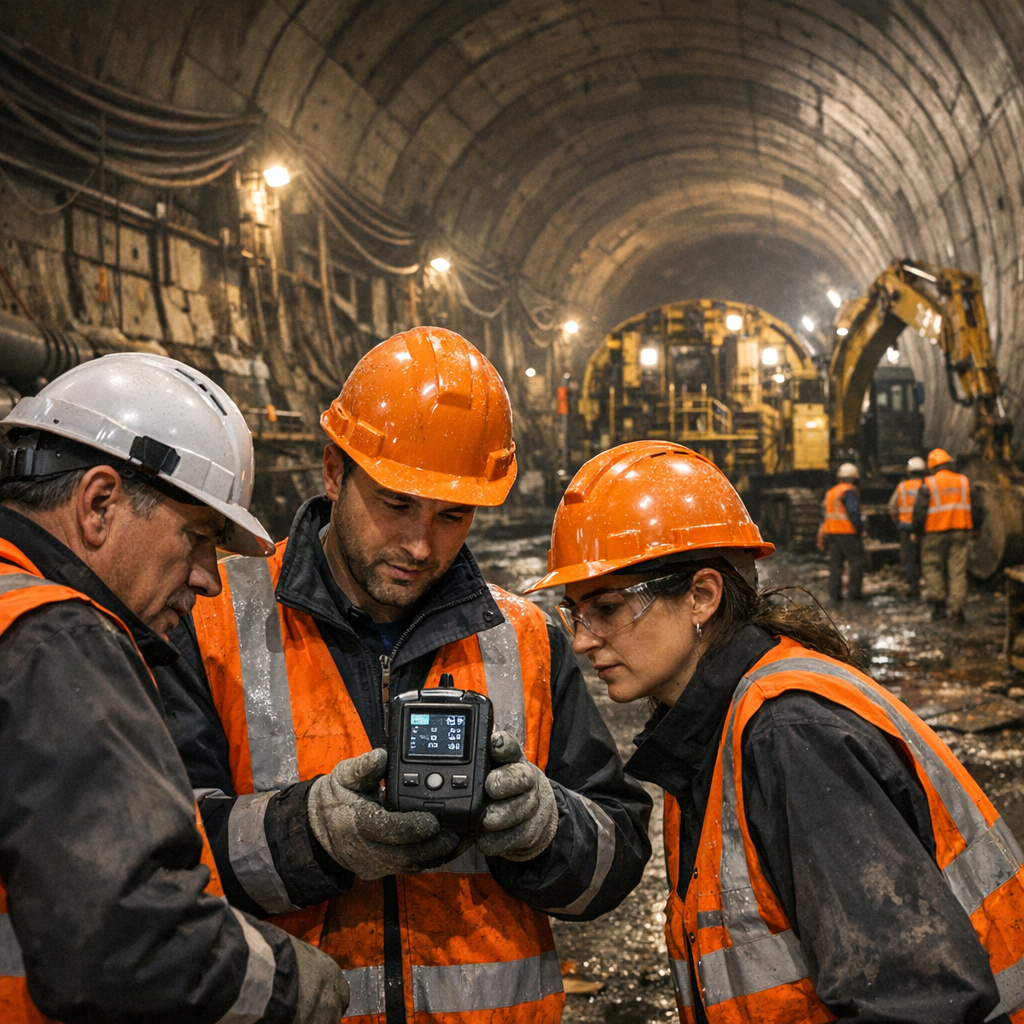
– Real-time monitoring: tunnel workers should carry portable multi-gas detectors that alarm whenever conditions leave the safe range.
– Emergency management and training: regular confined-space rescue drills and training in recognizing hazardous-gas conditions can determine survival during an emergency.
Conclusion
This incident offers a painful lesson to construction and mining project teams. Tunneling safety is a foundation of operations, rather than an incidental cost. Regulators and major contractors are urged to establish preventive roadmaps, improve safety equipment and require modern underground hazard-detection technologies to prevent similar tragedies in national projects.
Note: this report was prepared to raise awareness and strengthen safety culture in construction projects.
Source links: hsenk.ir
Original publication date (Solar Hijri): 1405/05/01
Author: Dibagostaran Sanat