
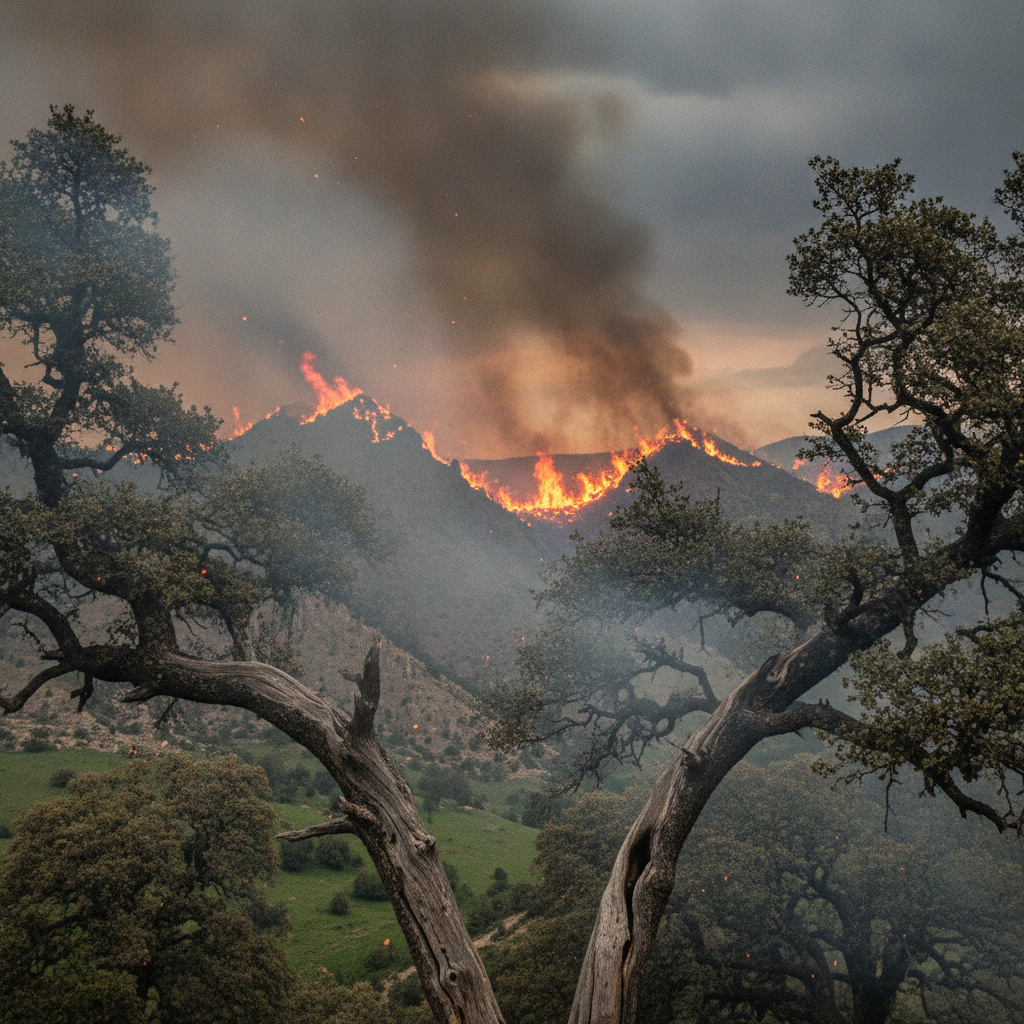
ILNA, citing the Workforce Health and Safety Supporters news outlet, reports that repeated fires in the Zagros landscape have become a serious national-security and crisis-management challenge, extending beyond climatic events. Its examination of evidence suggests that many fires result from deliberate human action rather than natural causes. This HSE-focused report critiques protection for firefighting personnel and calls for a shift from late response to intelligent prevention, supported by incident command systems (ICS).
1. Situation analysis and risk identification
Ecologists and environmental activists argue that simply describing recent events as wildfires understates the issue. They point to evidence of deliberate burning increasing since 1399 (Solar Hijri). Identifying the hazard source is the first step in emergency management. Before 1399, fires were mainly attributed to human error, including uninformed tourist behavior, or lightning. The current concentration in uplands and strategic ecotones suggests deliberate, potentially organized activity requiring investigation by security and judicial authorities.
2. Safety protocols and incident command gaps
Operational personnel safety is among the most critical concerns. Structural shortcomings include:
– Lack of PPE: local volunteers enter dangerous areas without standard fire-resistant clothing, masks, safety footwear or specialist training. The report states that 27 protectors of nature have lost their lives.
– Lack of unified incident command: fragmented command at the scene causes duplicated work, wasted resources and danger to rescuers.
– Training gaps: local communities have not received organized instruction in modern firefighting equipment, including blowers.
3. The Zagros' ecological and economic importance
The Zagros is more than vegetation; it is a defensive barrier against climate change:
– Ecosystem services: the region supplies more than 40% of the country's renewable freshwater resources.
– Domino effects: losing oak forests damages aquifers, reduces spring flows and can trigger forced migration and economic and social insecurity across 11 provinces.
– Biodiversity loss: the disappearance of animals such as squirrels and wild boar, which support forest regeneration, undermines natural recovery.
4. Resource management audit
Official explanations citing insufficient funding and equipment, including water-dropping helicopters and support vehicles, conflict with allocated budgets. The report argues that an allocation of 1,300 billion tomans without a tangible reduction in fires indicates ineffective monitoring and evaluation in natural-resource and environmental bodies. Prioritizing low-impact infrastructure, including unnecessary buildings, over operational equipment and logistics reflects weak strategic prioritization.
5. Strategic HSE recommendations
– Strengthen surveillance: deploy intelligent and drone patrols at critical ecotones to identify fires early.
– Establish standard operating procedures: issue volunteer safety protocols and prohibit untrained people from entering fire zones.
– Improve logistics: target funding toward modern firefighting equipment, standard protective clothing and aerial water-drop capacity.
– Pursue judicial and security investigations: investigate linked fires and identify those responsible and those directing them.
– Empower local communities: establish and train local rapid-response teams with full government-backed insurance and logistical support.
Conclusion
Continuing the present approach risks irreversible environmental, economic and human costs for future generations. Managing the Zagros crisis requires national commitment, transparent expenditure and a shift from extinguishing fires to safeguarding the ecosystem.
Source links: www.ilna.ir · hsenk.ir
Original publication date (Solar Hijri): 1405/04/13
Author: Dibagostaran Sanat